Kolar Milan, Htoutou Sedlakova Miroslava, Urbanek Karel, Mlynarcik Patrik, Roderova Magdalena, Hricova Kristyna, Mezerova Kristyna, Kucova Pavla, Zapletalova Jana, Fiserova Katerina, Kurfurst Pavel
Department of Microbiology, University Hospital Olomouc, Faculty of Medicine and Dentistry, Palacký University Olomouc, 779 00 Olomouc, Czech Republic.
Department of Pharmacology, University Hospital Olomouc, Faculty of Medicine and Dentistry, Palacký University Olomouc, 779 00 Olomouc, Czech Republic.
Antibiotics (Basel). 2021 Jan 19;10(1):93. doi: 10.3390/antibiotics10010093.
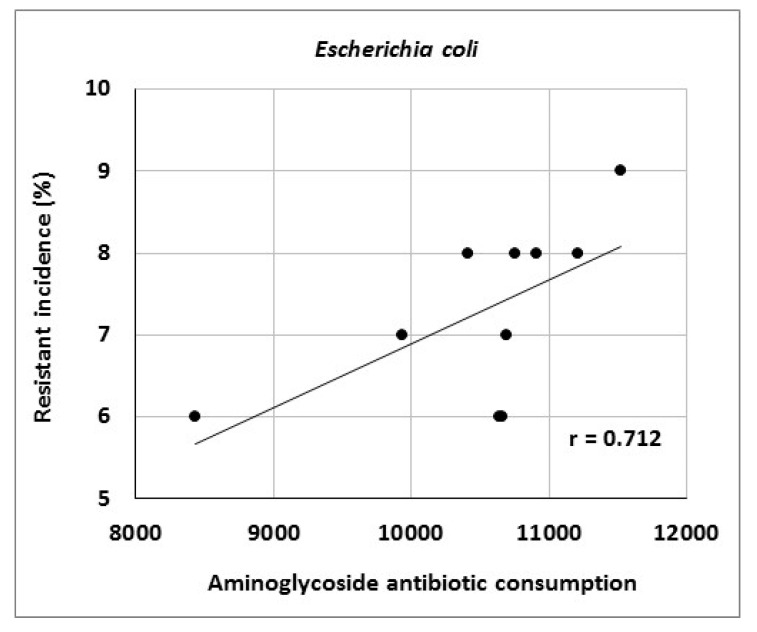
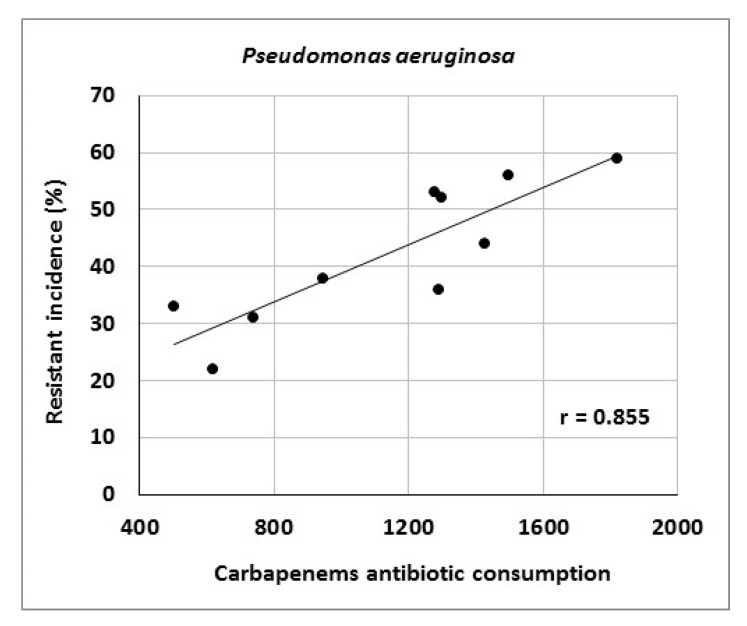
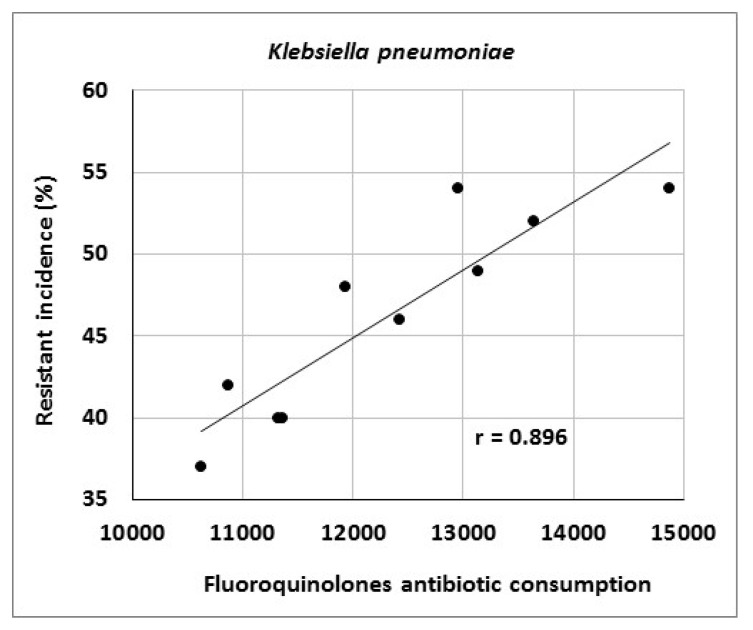
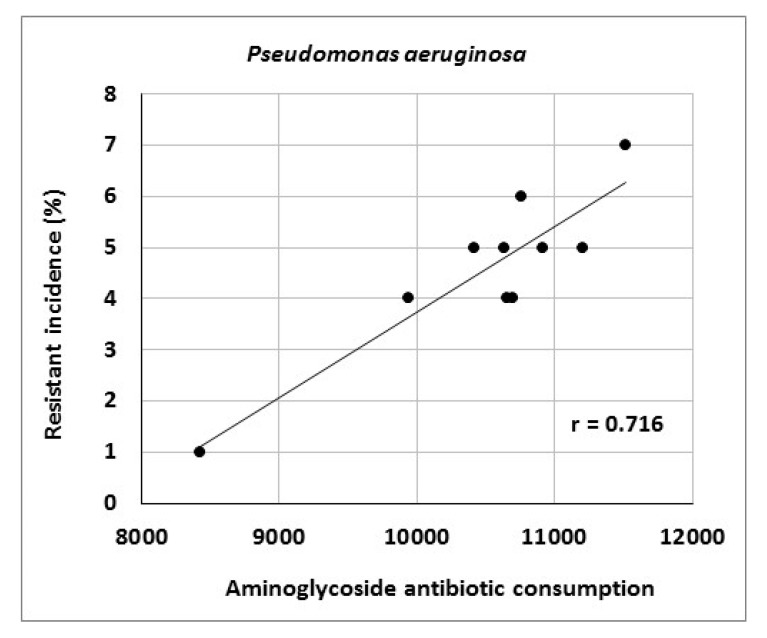
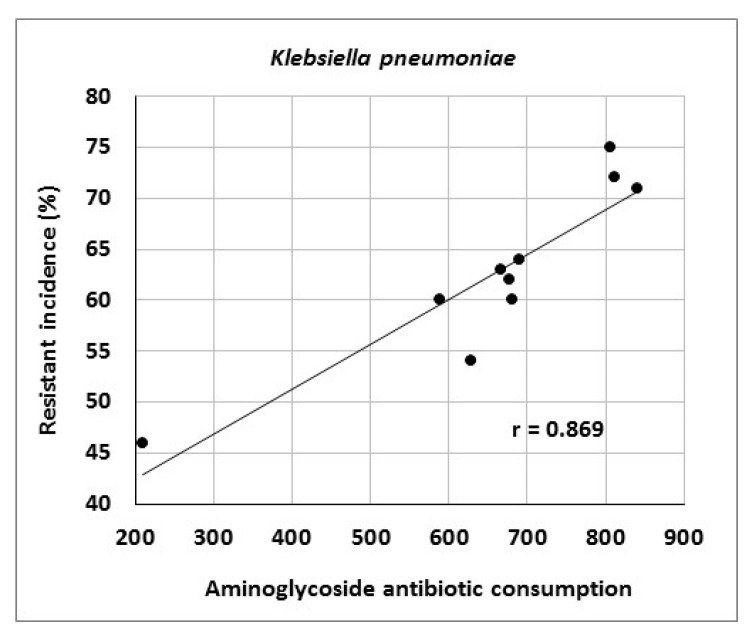
The article describes activities of an antibiotic center at a university hospital in the Czech Republic and presents the results of antibiotic stewardship program implementation over a period of 10 years. It provides data on the development of resistance of , , and to selected antibiotic agents as well as consumption data for various antibiotic classes. The genetic basis of resistance to beta-lactam antibiotics and its clonal spread were also assessed. The study showed significant correlations between aminoglycoside consumption and resistance of and to gentamicin (r = 0.712, r = 0.869), fluoroquinolone consumption and resistance of to ciprofloxacin (r = 0.896), aminoglycoside consumption and resistance of to amikacin (r = 0.716), as well as carbapenem consumption and resistance of to meropenem (r = 0.855). Genotyping of ESBL- positive isolates of and showed a predominance of CTX-M-type; in AmpC-positive strains, DHA, EBC and CIT enzymes prevailed. Of 19 meropenem-resistant strains of , two were identified as NDM-positive. Clonal spread of these strains was not detected. The results suggest that comprehensive antibiotic stewardship implementation in a healthcare facility may help to maintain the effectiveness of antibiotics against bacterial pathogens. Particularly beneficial is the work of clinical microbiologists who, among other things, approve administration of antibiotics to patients with bacterial infections and directly participate in their antibiotic therapy.
本文描述了捷克共和国一家大学医院抗生素中心的活动,并展示了抗生素管理计划在10年期间的实施成果。它提供了关于[具体细菌名称1]、[具体细菌名称2]、[具体细菌名称3]和[具体细菌名称4]对选定抗生素耐药性的发展数据以及各类抗生素的消费数据。还评估了对β-内酰胺类抗生素耐药性的遗传基础及其克隆传播情况。研究表明,氨基糖苷类抗生素的使用与[具体细菌名称1]和[具体细菌名称2]对庆大霉素的耐药性之间存在显著相关性(r = 0.712,r = 0.869),氟喹诺酮类抗生素的使用与[具体细菌名称3]对环丙沙星的耐药性之间存在显著相关性(r = 0.896),氨基糖苷类抗生素的使用与[具体细菌名称4]对阿米卡星的耐药性之间存在显著相关性(r = 0.716),以及碳青霉烯类抗生素的使用与[具体细菌名称5]对美罗培南的耐药性之间存在显著相关性(r = 0.855)。对[具体细菌名称6]和[具体细菌名称7]的ESBL阳性分离株进行基因分型显示,CTX-M型占主导;在AmpC阳性菌株中,DHA、EBC和CIT酶占优势。在19株对美罗培南耐药的[具体细菌名称8]菌株中,有两株被鉴定为NDM阳性。未检测到这些菌株的克隆传播。结果表明,在医疗机构中全面实施抗生素管理可能有助于维持抗生素对细菌病原体的有效性。临床微生物学家的工作尤其有益,他们除其他工作外,批准对细菌感染患者使用抗生素,并直接参与他们的抗生素治疗。