Post Graduate Institute of Medical Education and Research, Sector-12, Chandigarh 160 012, India.
Assistant Professor, AIIMS, Bilaspur, India.
Vaccine. 2021 Feb 12;39(7):1087-1095. doi: 10.1016/j.vaccine.2021.01.011. Epub 2021 Jan 9.
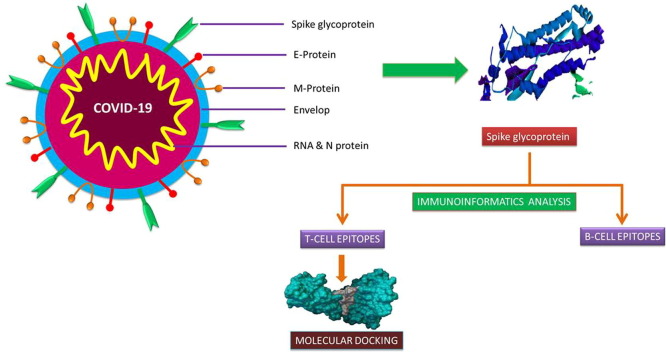
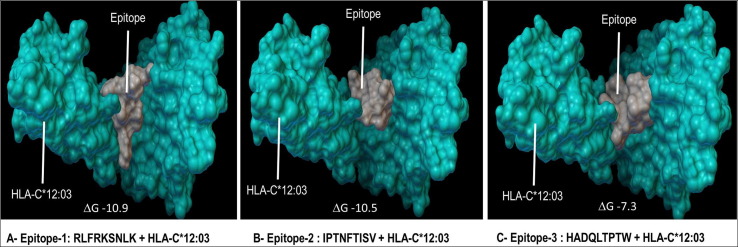
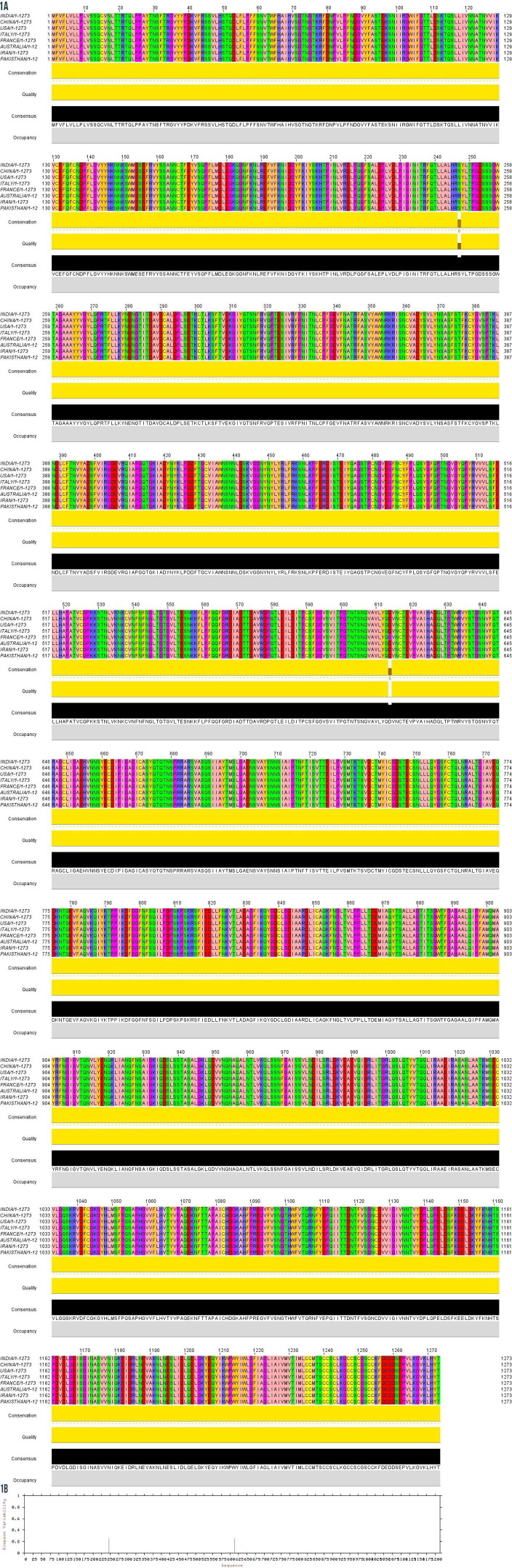
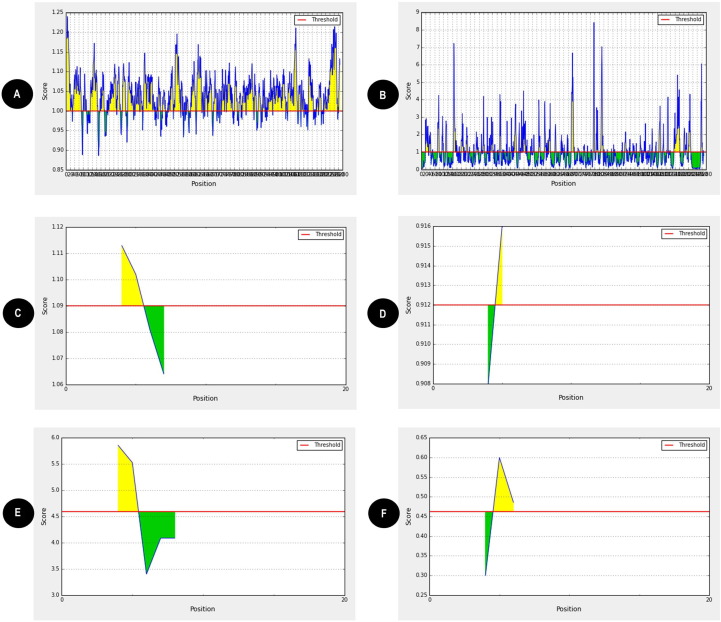
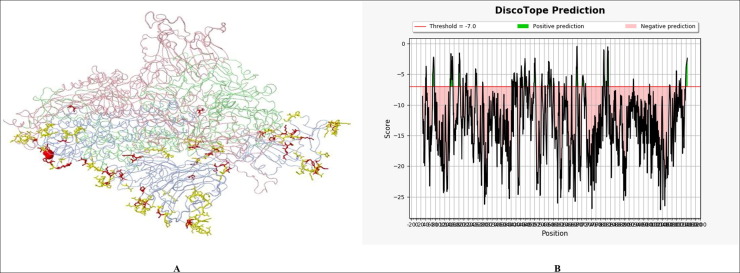
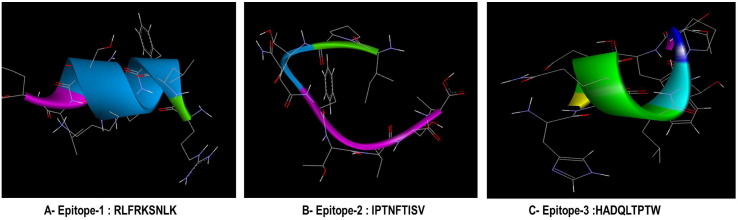
COVID-19 has brought the world to a standstill with a wave of destruction in country after country with tremendous loss of lives and livelihood in advanced to developing nations. Whole world is staring at the prospect of repeated lockdowns with another wave of COVID-19 predicted to hit the world in September of 2020. The second wave is assumed to be even more destructive with severe impact across much of the world. The only way to defeat this pandemic is to quickly develop a safe and effective vaccine against this raging menace and initiate a global vaccination drive. Our study is an attempt to deploy various computational methods to identify B-cell and T-cell epitopes from the spike surface glycoprotein of SARS-COV-2 which have the novel potential for vaccine development against COVID-19. For this we have taken 8 unique strains with one each from India, China, France, USA, Italy, Australia, Iran and Pakistan. The strain data was extracted from NCBI Database. By analyzing the immune parameters like surface accessibility, antigenicity, variability, conservancy, flexibility, hydrophilicity, allergenicity and toxicity of the conserved sequences of spike glycoprotein using various databases and bioinformatics tools, we identified two potential novel linear (SGTNGTKRFDN and ASVYAWNRK) and one structural B-cell epitope as well as two T-cell epitopes (RLFRKSNLK and IPTNFTISV) which can be used as epitope-based peptide vaccines. Docking simulation assay revealed that above T-cell epitopes have minimum free binding energy and showed strong hydrogen bond interaction which strengthened its potential as being a T-cell epitope for the epitope-based novel vaccine against SARS-CoV-2. This study allows us to claim that B-cell and T-cell epitopes mentioned above provide potential pathways for developing an exploratory vaccine against spike surface glycoprotein of SARS-CoV-2 with high confidence for the identified strains. We will need to confirm our findings with biological assays.
COVID-19 以一波又一波的破坏浪潮席卷了一个又一个国家,给先进国家和发展中国家都带来了巨大的生命和生计损失。全世界都在盯着可能再次封锁的前景,预计 2020 年 9 月 COVID-19 将再次袭击世界。预计第二波疫情的破坏性更大,对世界大部分地区的影响将更加严重。战胜这一大流行病的唯一方法是迅速研制出安全有效的针对这一肆虐威胁的疫苗,并发起全球疫苗接种运动。我们的研究试图部署各种计算方法,从 SARS-COV-2 的刺突表面糖蛋白中识别 B 细胞和 T 细胞表位,这些表位具有针对 COVID-19 开发疫苗的新潜力。为此,我们从印度、中国、法国、美国、意大利、澳大利亚、伊朗和巴基斯坦各取一个独特的株系。株系数据从 NCBI 数据库中提取。通过分析利用各种数据库和生物信息学工具对刺突糖蛋白保守序列的免疫参数,如表面可及性、抗原性、变异性、保守性、柔韧性、亲水性、过敏性和毒性,我们确定了两个潜在的新型线性(SGTNGTKRFDN 和 ASVYAWNRK)和一个结构 B 细胞表位,以及两个 T 细胞表位(RLFRKSNLK 和 IPTNFTISV),它们可以用作基于表位的肽疫苗。对接模拟试验表明,上述 T 细胞表位具有最小的自由结合能,并表现出强烈的氢键相互作用,这增强了它们作为 SARS-CoV-2 基于表位新型疫苗 T 细胞表位的潜力。本研究使我们能够宣称,上述 B 细胞和 T 细胞表位为针对 SARS-CoV-2 刺突表面糖蛋白开发探索性疫苗提供了潜在途径,对所鉴定的株系具有高度信心。我们需要通过生物测定来证实我们的发现。