Faculty of Biochemistry and Molecular Medicine and Biocenter Oulu, University of Oulu, PO Box 5400, FI-90014, Oulu, Finland.
Department of Molecular and Cellular Biology, University of Arizona, Tucson, AZ, 85721, USA.
BMC Biol. 2021 Jan 25;19(1):14. doi: 10.1186/s12915-021-00951-3.
Lipoylation of 2-ketoacid dehydrogenases is essential for mitochondrial function in eukaryotes. While the basic principles of the lipoylation processes have been worked out, we still lack a thorough understanding of the details of this important post-translational modification pathway. Here we used yeast as a model organism to characterize substrate usage by the highly conserved eukaryotic octanoyl/lipoyl transferases in vivo and queried how amenable the lipoylation system is to supplementation with exogenous substrate.
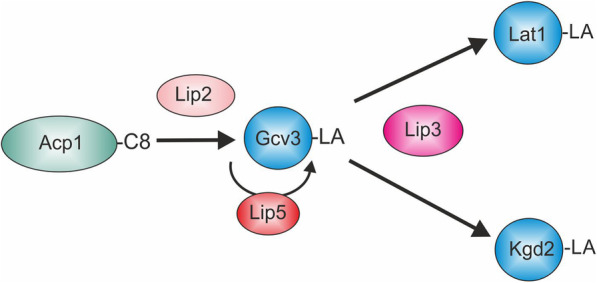
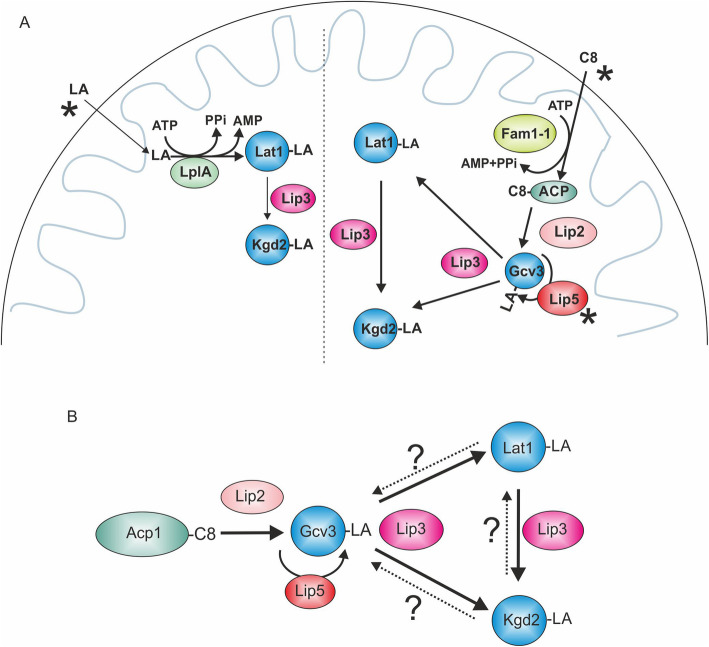
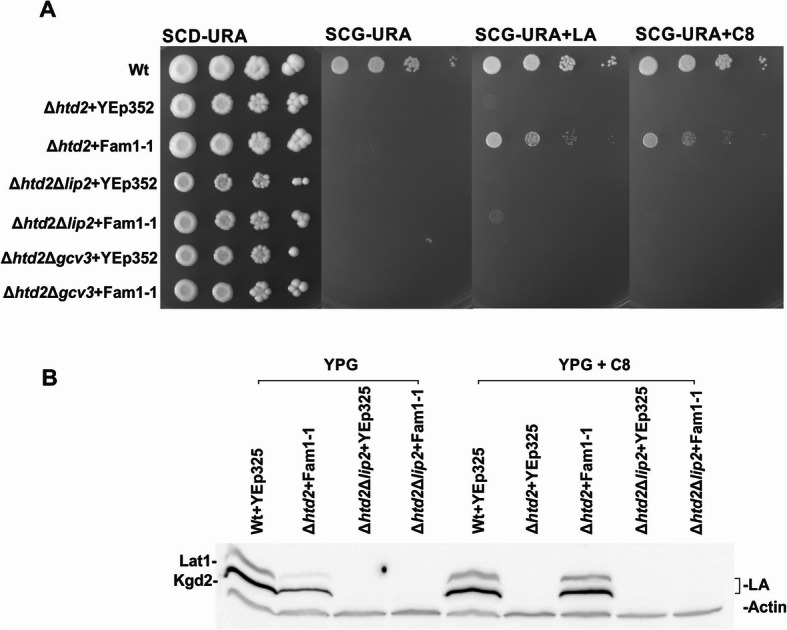
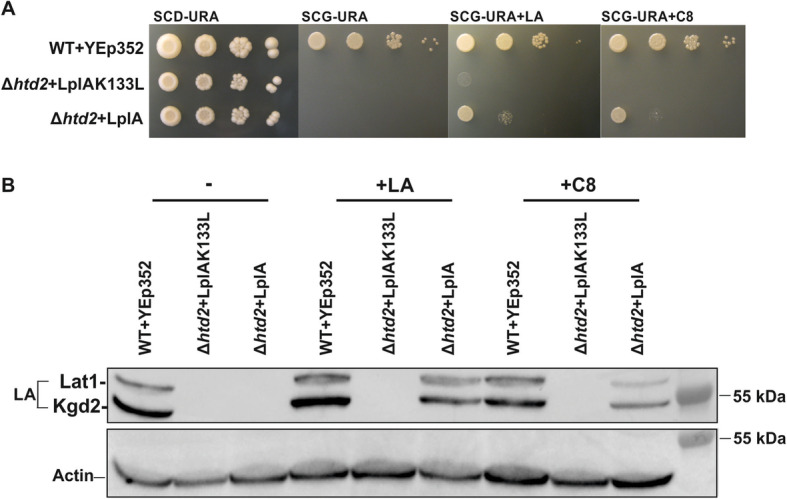
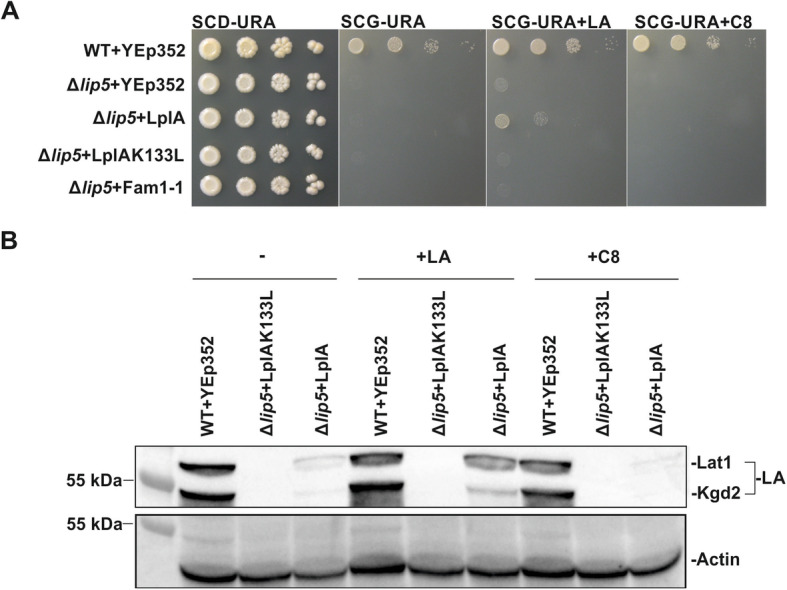
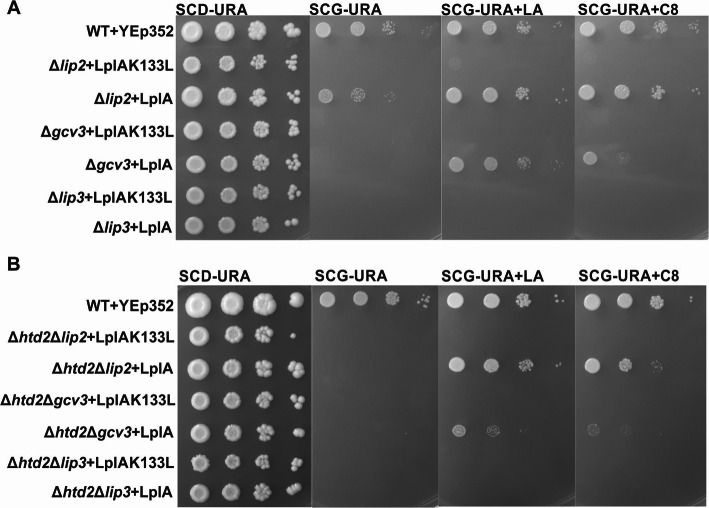
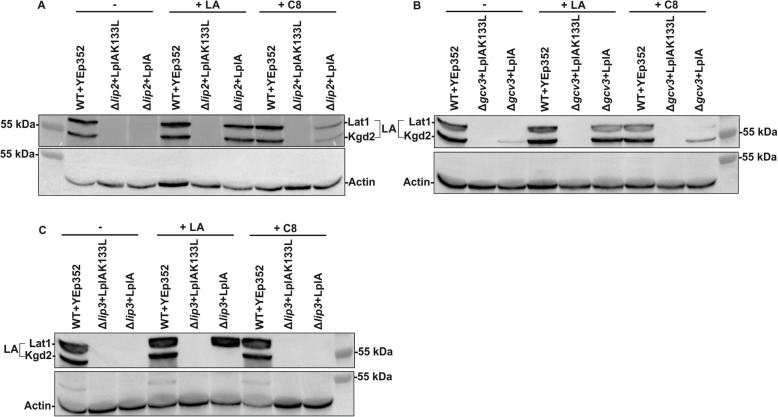
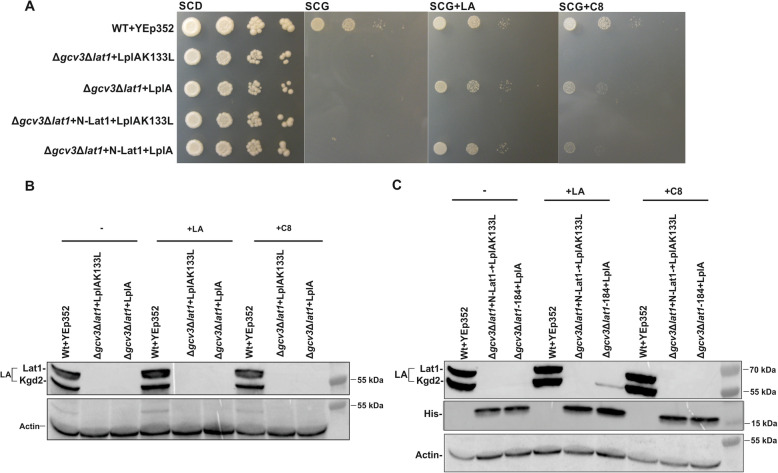
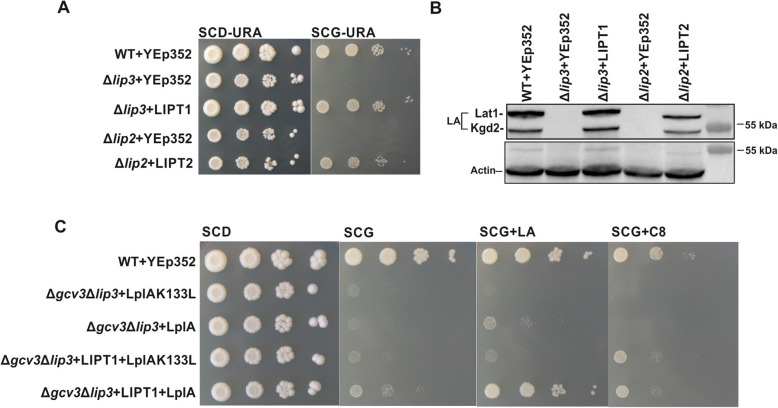
We show that the requirement for mitochondrial fatty acid synthesis to provide substrates for lipoylation of the 2-ketoacid dehydrogenases can be bypassed by supplying the cells with free lipoic acid (LA) or octanoic acid (C8) and a mitochondrially targeted fatty acyl/lipoyl activating enzyme. We also provide evidence that the S. cerevisiae lipoyl transferase Lip3, in addition to transferring LA from the glycine cleavage system H protein to the pyruvate dehydrogenase (PDH) and α-ketoglutarate dehydrogenase (KGD) E2 subunits, can transfer this cofactor from the PDH complex to the KGD complex. In support of yeast as a model system for human metabolism, we demonstrate that the human octanoyl/lipoyl transferases can substitute for their counterparts in yeast to support respiratory growth and protein lipoylation. Like the wild-type yeast enzyme, the human lipoyl transferase LIPT1 responds to LA supplementation in the presence of the activating enzyme LplA.
In the yeast model system, the eukaryotic lipoylation pathway can use free LA and C8 as substrates when fatty/lipoic acid activating enzymes are targeted to mitochondria. Lip3 LA transferase has a wider substrate specificity than previously recognized. We show that these features of the lipoylation mechanism in yeast are conserved in mammalian mitochondria. Our findings have important implications for the development of effective therapies for the treatment of LA or mtFAS deficiency-related disorders.
2-酮酸脱氢酶的脂酰化对于真核生物的线粒体功能至关重要。虽然脂酰化过程的基本原理已经被阐明,但我们仍然缺乏对这一重要翻译后修饰途径细节的全面理解。在这里,我们使用酵母作为模型生物,在体内表征高度保守的真核八碳酰基/脂酰基转移酶的底物利用情况,并探讨了脂酰化系统对外源底物补充的适应性。
我们表明,通过向细胞提供游离的脂酰基辅酶 A(LA)或辛酸(C8)和靶向线粒体的脂肪酸/脂酰基辅酶 A 激活酶,可以绕过线粒体脂肪酸合成为 2-酮酸脱氢酶的脂酰化提供底物的要求。我们还提供了证据表明,酿酒酵母脂酰转移酶 Lip3 除了将 LA 从甘氨酸裂解系统 H 蛋白转移到丙酮酸脱氢酶(PDH)和α-酮戊二酸脱氢酶(KGD)E2 亚基之外,还可以将这种辅因子从 PDH 复合物转移到 KGD 复合物。为了支持酵母作为人类代谢的模型系统,我们证明了人类八碳酰基/脂酰基转移酶可以替代酵母中的对应物,以支持呼吸生长和蛋白质脂酰化。与野生型酵母酶一样,人类脂酰转移酶 LIPT1 在激活酶 LplA 存在的情况下对 LA 补充有反应。
在酵母模型系统中,当脂肪酸/脂酰基辅酶 A 激活酶靶向线粒体时,真核脂酰化途径可以使用游离的 LA 和 C8 作为底物。Lip3 LA 转移酶的底物特异性比以前认为的更广泛。我们表明,酵母中脂酰化机制的这些特征在哺乳动物线粒体中是保守的。我们的发现对于开发治疗 LA 或 mtFAS 缺乏相关疾病的有效疗法具有重要意义。