Ghasemi Negin, Behnezhad Mahsa, Asgharzadeh Mohammad, Zeinalzadeh Elham, Kafil Hossein Samadi
Research Center for Pharmaceutical Nanotechnology, Department of Endodontics, Tabriz University of Medical Sciences, Tabriz, Iran.
Dental and Periodontal Research Center, Tabriz University of Medical Sciences, Tabriz, Iran.
Int J Dent. 2020 Dec 28;2020:8855277. doi: 10.1155/2020/8855277. eCollection 2020.
Use of herbal compounds as an intracanal medicament in the field of endodontics has become noteworthy, one of which is the compound whose antibacterial effect has already been proven in the planktonic form of . The purpose of this study is to evaluate the antibacterial effect of on biofilms at the 4 and 6 week of development.
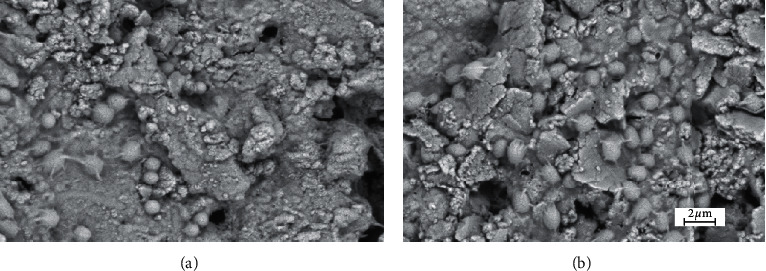
130 single root canal teeth without anomalies and caries were used. They were divided into two groups of 65 teeth for four and six weeks of biofilm production. Five samples of each group were examined for confirmation of biofilm formation under an electron microscope. Study groups were investigated with an antimicrobial agent as an intracanal medicament including 20 samples treated with , calcium hydroxide, and phosphate-buffered saline, and biofilm and survival of pathogens were investigated. Dentin chip suspensions were used for colony-forming unit (CFU) counting to estimate remaining counts.
The CFU mean in the 4 week subgroup in , phosphate-buffered saline, and calcium hydroxide was 0, 69166.66 ± 31688.58, and 25000 ± 30822.07, and in the 6 week, it was 136.36 ± 323.33, 95000 ± 12247.44, and 27501.66 ± 36570.34, respectively, which showed a significant difference between the used materials ( < 0.05).
, in contrast to calcium hydroxide, eliminated 4 and 6 week biofilms and showed remarkable antibacterial properties against biofilm. These results support potency of to use as a natural antimicrobial material in the intracanal medicament.
在牙髓病学领域,使用草药化合物作为根管内药物已受到关注,其中一种化合物的抗菌作用已在浮游形式中得到证实。本研究的目的是评估该化合物在生物膜形成4周和6周时对生物膜的抗菌作用。
使用130颗无异常和龋齿的单根管牙齿。将它们分为两组,每组65颗牙齿,用于生物膜形成4周和6周。每组取5个样本在电子显微镜下检查以确认生物膜形成。研究组用一种抗菌剂作为根管内药物进行研究,包括用该化合物、氢氧化钙和磷酸盐缓冲盐水处理的20个样本,并研究生物膜和病原体的存活情况。牙本质芯片悬浮液用于菌落形成单位(CFU)计数,以估计剩余的细菌数量。
在4周亚组中,该化合物、磷酸盐缓冲盐水和氢氧化钙的CFU平均值分别为0、69166.66±31688.58和25000±30822.07,在6周时分别为136.36±323.33、95000±12247.44和27501.66±36570.3., 4周和6周生物膜,并对变形链球菌生物膜显示出显著的抗菌性能。这些结果支持该化合物作为根管内药物中天然抗菌材料的潜力。