Microbiology and Biotechnology, Institute of Plant Sciences and Microbiology, University of Hamburg, 22609, Hamburg, Germany.
Genomic and Applied Microbiology and Göttingen Genomics Laboratory, Georg-August University Göttingen, Grisebachstraße 8, 37077, Göttingen, Germany.
Sci Rep. 2021 Jan 25;11(1):2139. doi: 10.1038/s41598-021-81103-z.
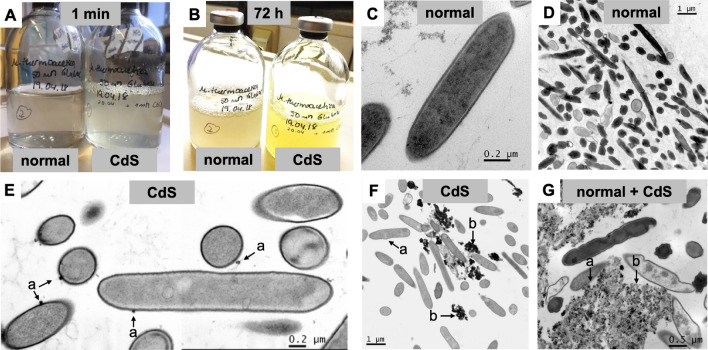
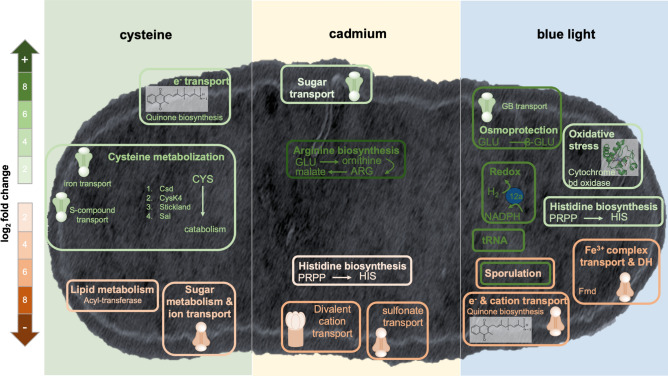
Biohybrids composed of microorganisms and nanoparticles have emerged as potential systems for bioenergy and high-value compound production from CO and light energy, yet the cellular and metabolic processes within the biological component of this system are still elusive. Here we dissect the biohybrid composed of the anaerobic acetogenic bacterium Moorella thermoacetica and cadmium sulphide nanoparticles (CdS) in terms of physiology, metabolism, enzymatics and transcriptomic profiling. Our analyses show that while the organism does not grow on L-cysteine, it is metabolized to acetate in the biohybrid system and this metabolism is independent of CdS or light. CdS cells have higher metabolic activity, despite an inhibitory effect of Cd on key enzymes, because of an intracellular storage compound linked to arginine metabolism. We identify different routes how cysteine and its oxidized form can be innately metabolized by the model acetogen and what intracellular mechanisms are triggered by cysteine, cadmium or blue light.
由微生物和纳米粒子组成的生物杂交体已经成为从 CO 和光能中生产生物能源和高价值化合物的潜在系统,但该系统中生物成分的细胞和代谢过程仍然难以捉摸。在这里,我们从生理学、代谢、酶学和转录组分析的角度来剖析由厌氧产乙酸菌 Moorella thermoacetica 和硫化镉纳米粒子 (CdS) 组成的生物杂交体。我们的分析表明,尽管该生物体不能在 L-半胱氨酸上生长,但它在生物杂交系统中被代谢为乙酸,并且这种代谢与 CdS 或光无关。尽管 Cd 对关键酶有抑制作用,但 CdS 细胞具有更高的代谢活性,因为与精氨酸代谢有关的细胞内储存化合物。我们确定了模型产乙酸菌如何固有地代谢半胱氨酸及其氧化形式,以及半胱氨酸、镉或蓝光触发了哪些细胞内机制。