Spinal Cord and Brain Injury Research Center (SCoBIRC), University of Kentucky, Lexington, KY 40536, USA.
Department of Neuroscience, University of Kentucky, Lexington, KY 40508, USA.
Cells. 2021 Jan 20;10(2):199. doi: 10.3390/cells10020199.
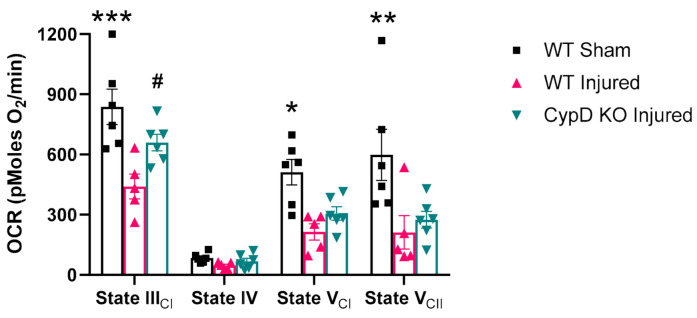
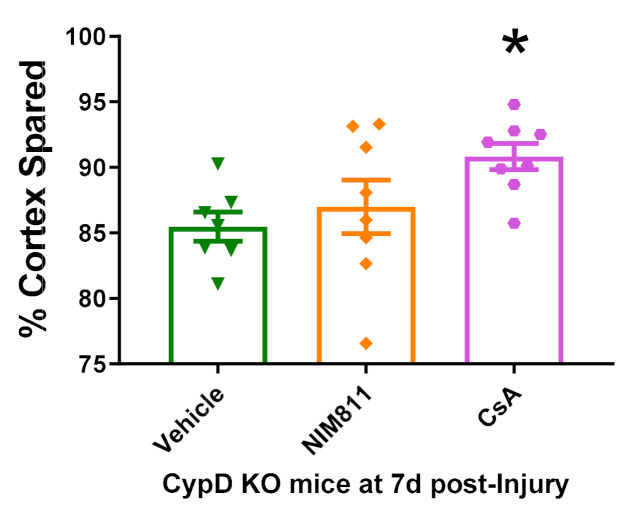
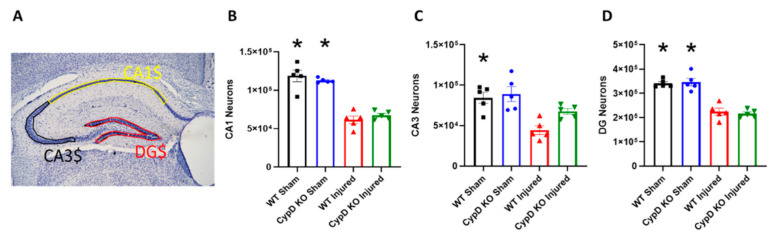
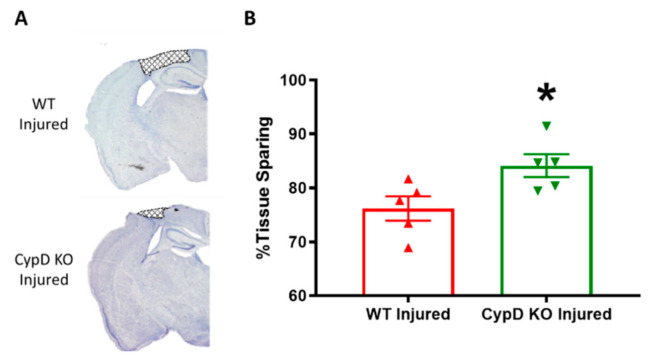
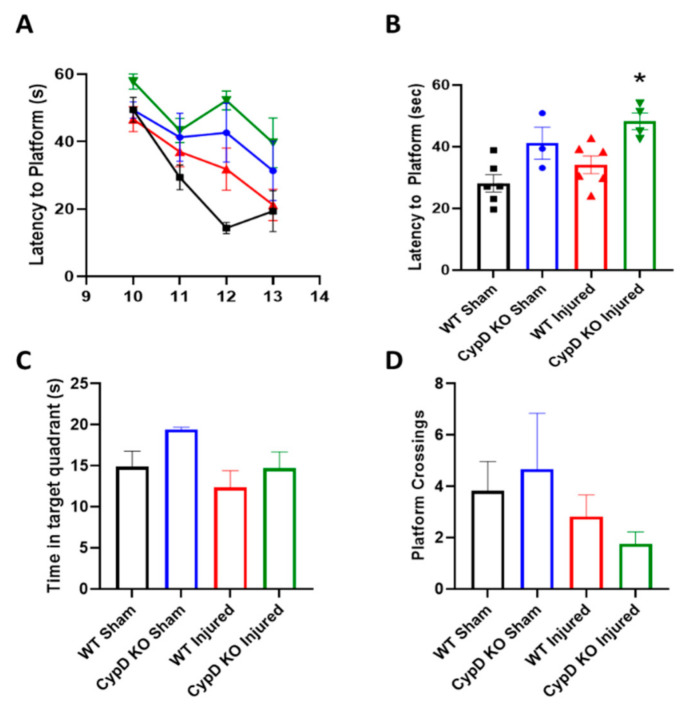
Cyclophilin D (CypD) has been shown to play a critical role in mitochondrial permeability transition pore (mPTP) opening and the subsequent cell death cascade. Studies consistently demonstrate that mitochondrial dysfunction, including mitochondrial calcium overload and mPTP opening, is essential to the pathobiology of cell death after a traumatic brain injury (TBI). CypD inhibitors, such as cyclosporin A (CsA) or NIM811, administered following TBI, are neuroprotective and quell neurological deficits. However, some pharmacological inhibitors of CypD have multiple biological targets and, as such, do not directly implicate a role for CypD in arbitrating cell death after TBI. Here, we reviewed the current understanding of the role CypD plays in TBI pathobiology. Further, we directly assessed the role of CypD in mediating cell death following TBI by utilizing mice lacking the CypD encoding gene . Following controlled cortical impact (CCI), the genetic knockout of CypD protected acute mitochondrial bioenergetics at 6 h post-injury and reduced subacute cortical tissue and hippocampal cell loss at 18 d post-injury. The administration of CsA following experimental TBI in -/- mice improved cortical tissue sparing, highlighting the multiple cellular targets of CsA in the mitigation of TBI pathology. The loss of CypD appeared to desensitize the mitochondrial response to calcium burden induced by TBI; this maintenance of mitochondrial function underlies the observed neuroprotective effect of the CypD knockout. These studies highlight the importance of maintaining mitochondrial homeostasis after injury and validate CypD as a therapeutic target for TBI. Further, these results solidify the beneficial effects of CsA treatment following TBI.
亲环蛋白 D(CypD)已被证明在线粒体通透性转换孔(mPTP)开放和随后的细胞死亡级联中发挥关键作用。研究一致表明,线粒体功能障碍,包括线粒体钙超载和 mPTP 开放,对于创伤性脑损伤(TBI)后细胞死亡的病理生物学至关重要。TBI 后给予环孢素 A(CsA)或 NIM811 等 CypD 抑制剂具有神经保护作用,并能减轻神经功能缺损。然而,一些 CypD 的药理学抑制剂具有多个生物学靶点,因此并不能直接表明 CypD 在调节 TBI 后细胞死亡中发挥作用。在这里,我们回顾了 CypD 在 TBI 病理生物学中作用的现有认识。此外,我们通过利用缺乏 CypD 编码基因的小鼠直接评估 CypD 在介导 TBI 后细胞死亡中的作用。在皮质控制冲击(CCI)后,CypD 的基因敲除在损伤后 6 小时保护急性线粒体生物能,并减少亚急性皮质组织和海马细胞丢失在损伤后 18 天。在 -/- 小鼠的实验性 TBI 后给予 CsA 可改善皮质组织的保留,突出了 CsA 在减轻 TBI 病理中的多种细胞靶点。CypD 的缺失似乎使线粒体对 TBI 引起的钙负荷的反应脱敏;这种对线粒体功能的维持是观察到的 CypD 敲除的神经保护作用的基础。这些研究强调了在损伤后维持线粒体动态平衡的重要性,并验证了 CypD 作为 TBI 的治疗靶点。此外,这些结果巩固了 TBI 后 CsA 治疗的有益效果。