Zhang Jianbo, Huang Yu-Ja, Yoon Jun Young, Kemmitt John, Wright Charles, Schneider Kirsten, Sphabmixay Pierre, Hernandez-Gordillo Victor, Holcomb Steven J, Bhushan Brij, Rohatgi Gar, Benton Kyle, Carpenter David, Kester Jemila C, Eng George, Breault David T, Yilmaz Omer, Taketani Mao, Voigt Christopher A, Carrier Rebecca L, Trumper David L, Griffith Linda G
Department of Biological Engineering.
Department of Mechanical Engineering, Massachusetts Institute of Technology, Cambridge, MA, USA.
Med. 2021 Jan 15;2(1):74-98.e9. doi: 10.1016/j.medj.2020.07.001. Epub 2020 Aug 6.
The gut microbiome plays an important role in human health and disease. Gnotobiotic animal and cell-based models provide some informative insights into mechanistic crosstalk. However, there is no existing system for a long-term co-culture of a human colonic mucosal barrier with super oxygen-sensitive commensal microbes, hindering the study of human-microbe interactions in a controlled manner.
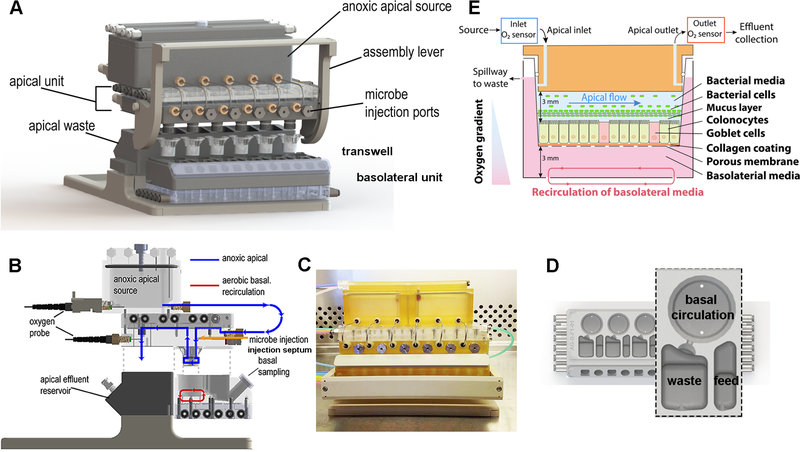
Here, we investigated the effects of an abundant super oxygen-sensitive commensal anaerobe, on a primary human mucosal barrier using a Gut-MIcrobiome (GuMI) physiome platform that we designed and fabricated.
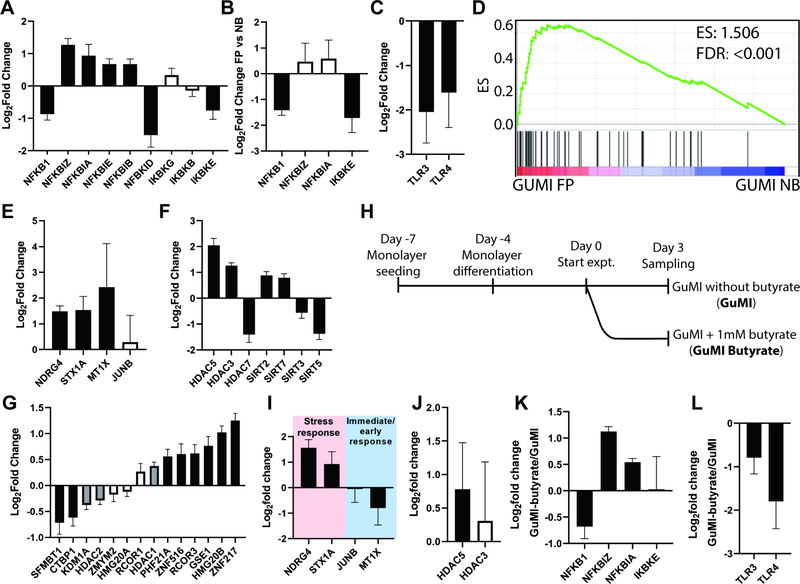
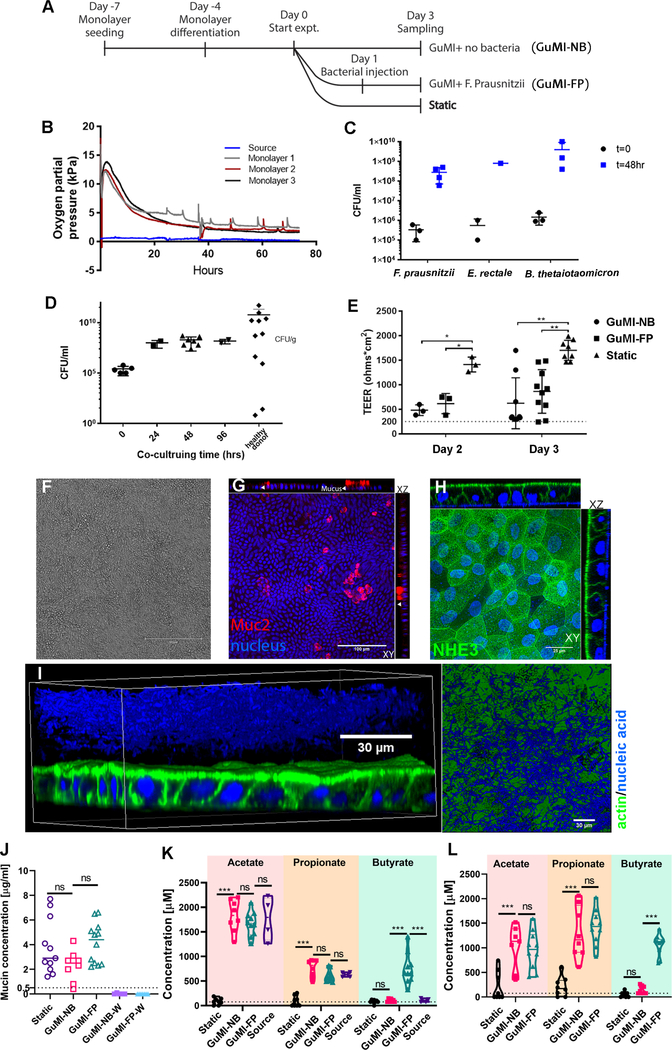
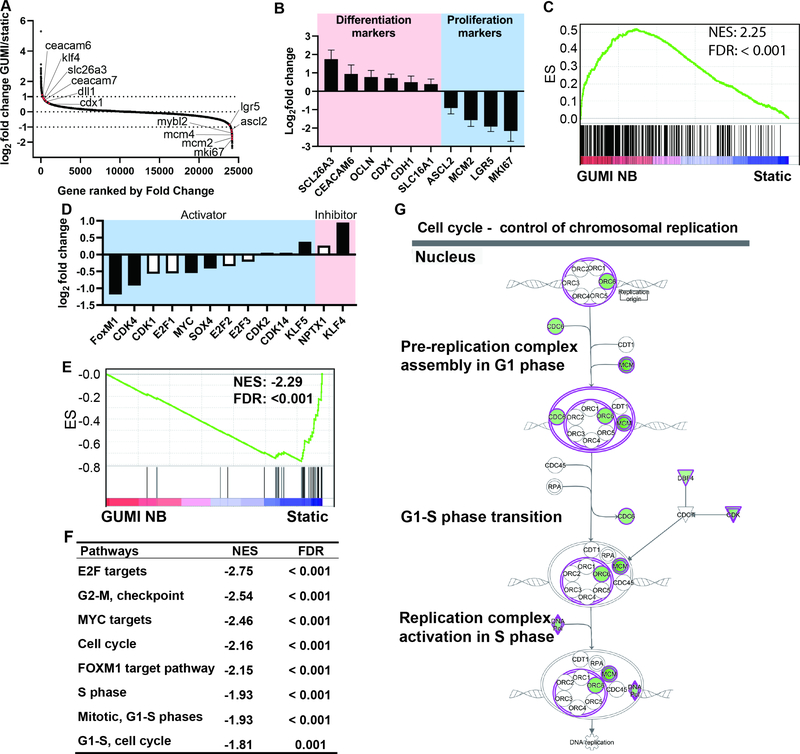
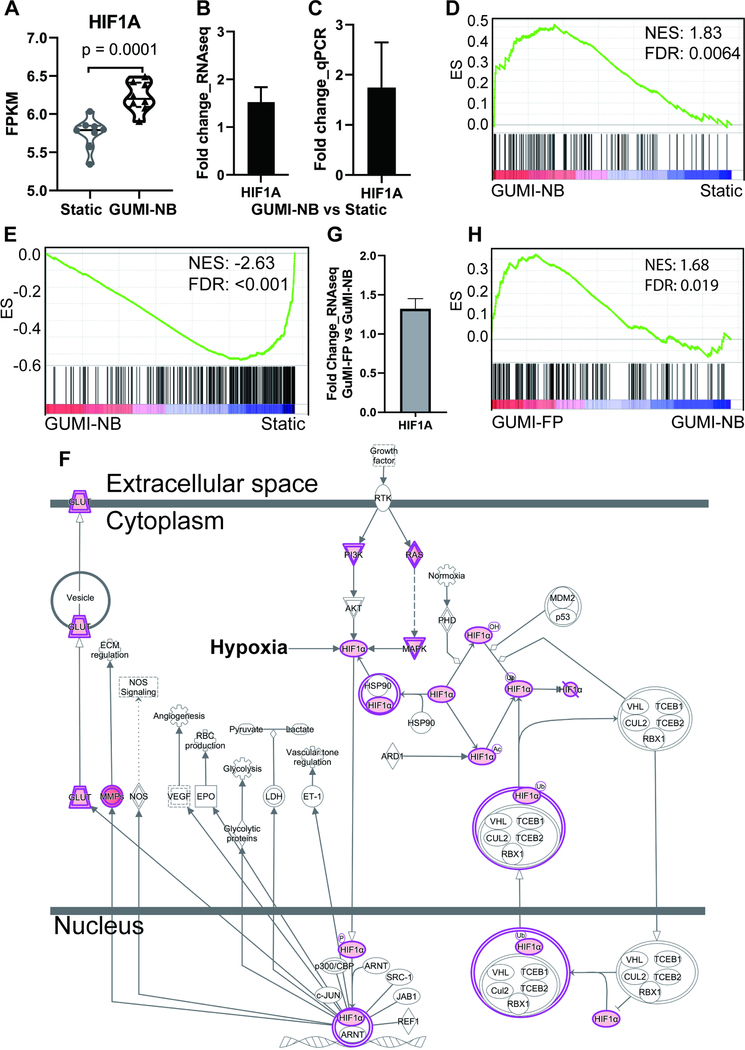
Long-term continuous co-culture of for two days with colon epithelia, enabled by continuous flow of completely anoxic apical media and aerobic basal media, resulted in a strictly anaerobic apical environment fostering growth of and butyrate production by , while maintaining a stable colon epithelial barrier. We identified elevated differentiation and hypoxia-responsive genes and pathways in the platform compared with conventional aerobic static culture of the colon epithelia, attributable to a combination of anaerobic environment and continuous medium replenishment. Furthermore, we demonstrated anti-inflammatory effects of through HDAC and the TLR-NFKB axis. Finally, we identified that butyrate largely contributes to the anti-inflammatory effects by downregulating TLR3 and TLR4.
Our results are consistent with some clinical observations regarding thus motivating further studies employing this platform with more complex engineered colon tissues for understanding the interaction between the human colonic mucosal barrier and microbiota, pathogens, or engineered bacteria.
肠道微生物群在人类健康与疾病中起着重要作用。悉生动物模型和基于细胞的模型为机制性串扰提供了一些有益的见解。然而,目前尚无用于将人类结肠黏膜屏障与超氧敏感共生微生物进行长期共培养的系统,这阻碍了以可控方式对人类-微生物相互作用的研究。
在此,我们使用我们设计和制造的肠道微生物组(GuMI)生理组平台,研究了一种丰富的超氧敏感共生厌氧菌对原代人类黏膜屏障的影响。
通过完全缺氧的顶端培养基和有氧基础培养基的连续流动,实现了与结肠上皮细胞连续共培养两天,形成了一个严格厌氧的顶端环境,促进了该菌的生长和丁酸盐的产生,同时维持了稳定的结肠上皮屏障。与结肠上皮细胞的传统需氧静态培养相比,我们在该平台中鉴定出分化和缺氧反应基因及通路升高,这归因于厌氧环境和培养基连续补充的综合作用。此外,我们通过组蛋白去乙酰化酶(HDAC)和Toll样受体(TLR)-核因子κB(NF-κB)轴证明了该菌的抗炎作用。最后,我们确定丁酸盐通过下调TLR3和TLR4在很大程度上促成了抗炎作用。
我们的结果与一些关于该菌的临床观察结果一致,从而促使进一步研究使用该平台以及更复杂的工程化结肠组织,以了解人类结肠黏膜屏障与微生物群、病原体或工程细菌之间的相互作用。