Koyama Shinsuke, Horie Taiki, Shinomoto Shigeru
The Institute of Statistical Mathematics, Tokyo, Japan.
Department of Physics, Kyoto University, Kyoto, Japan.
PLoS Comput Biol. 2021 Jan 29;17(1):e1008679. doi: 10.1371/journal.pcbi.1008679. eCollection 2021 Jan.
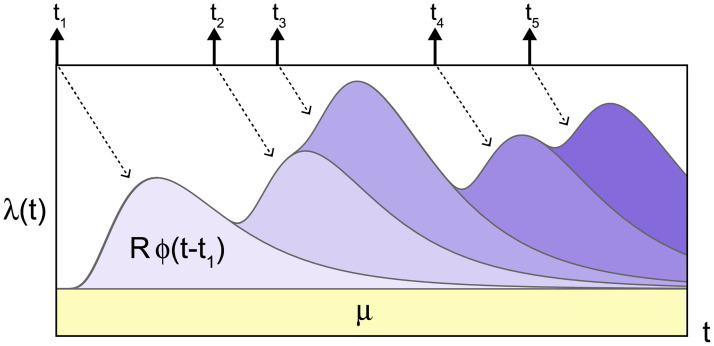
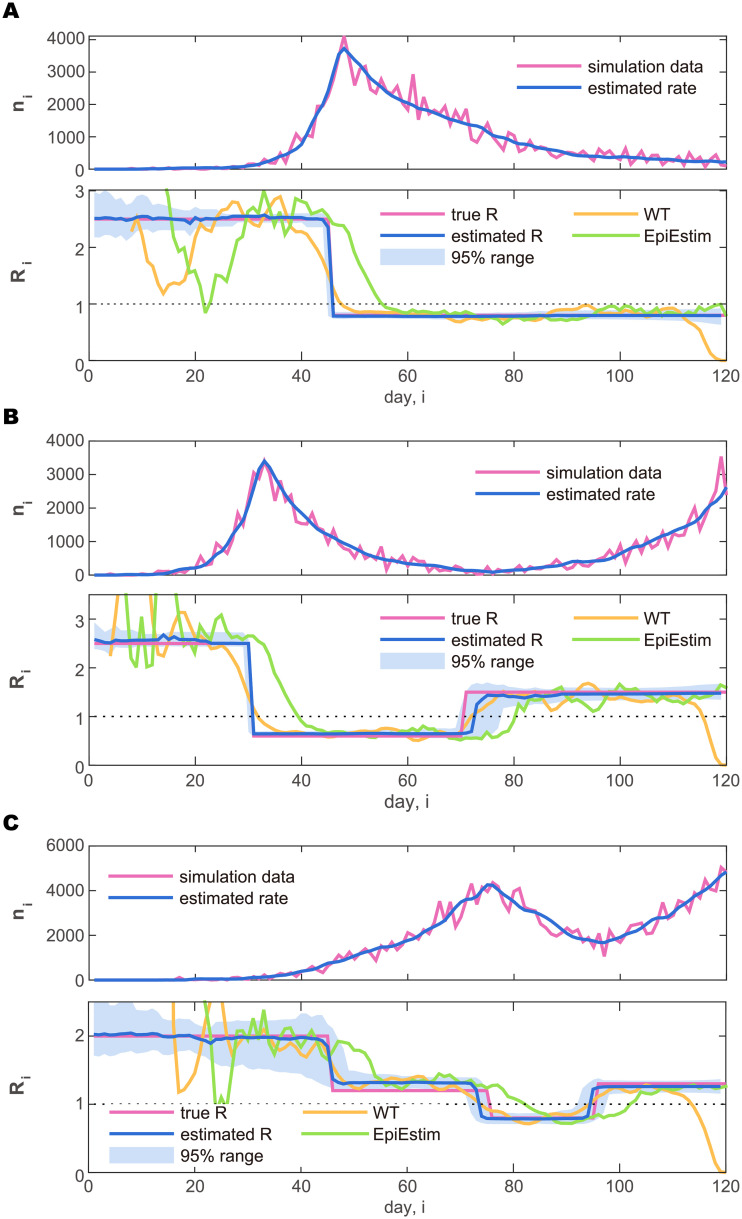
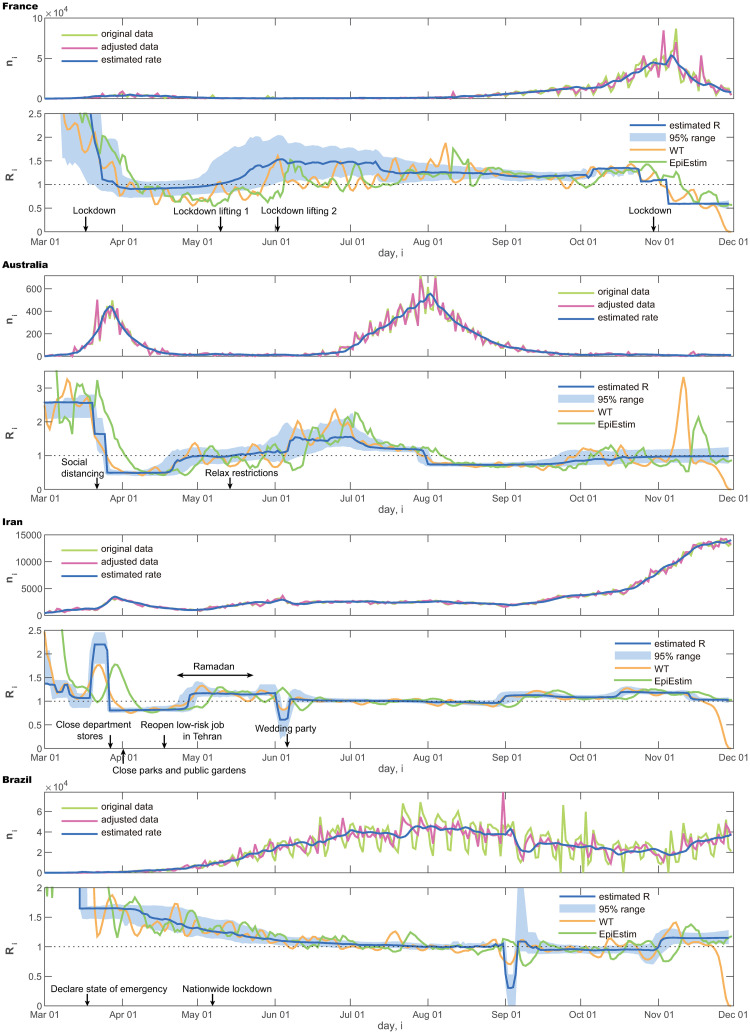
After slowing down the spread of the novel coronavirus COVID-19, many countries have started to relax their confinement measures in the face of critical damage to socioeconomic structures. At this stage, it is desirable to monitor the degree to which political measures or social affairs have exerted influence on the spread of disease. Though it is difficult to trace back individual transmission of infections whose incubation periods are long and highly variable, estimating the average spreading rate is possible if a proper mathematical model can be devised to analyze daily event-occurrences. To render an accurate assessment, we have devised a state-space method for fitting a discrete-time variant of the Hawkes process to a given dataset of daily confirmed cases. The proposed method detects changes occurring in each country and assesses the impact of social events in terms of the temporally varying reproduction number, which corresponds to the average number of cases directly caused by a single infected case. Moreover, the proposed method can be used to predict the possible consequences of alternative political measures. This information can serve as a reference for behavioral guidelines that should be adopted according to the varying risk of infection.
在减缓新型冠状病毒COVID-19的传播速度之后,面对社会经济结构遭受的严重破坏,许多国家已开始放宽其限制措施。在现阶段,监测政治措施或社会事务对疾病传播产生影响的程度是很有必要的。尽管很难追溯潜伏期长且变化很大的个体感染传播情况,但如果能设计出一个合适的数学模型来分析每日事件发生情况,就有可能估算出平均传播率。为了进行准确评估,我们设计了一种状态空间方法,将霍克斯过程的离散时间变体拟合到给定的每日确诊病例数据集。所提出的方法能检测每个国家发生的变化,并根据随时间变化的再生数评估社会事件的影响,该再生数对应于由单个感染病例直接导致的平均病例数。此外,所提出的方法可用于预测替代政治措施可能产生的后果。这些信息可作为应根据不同感染风险而采用的行为准则的参考。