Institute for Computer Graphics and Vision, Graz University of Technology, Inffeldgasse 16c/II, 8010, Graz, Austria.
Computer Algorithms for Medicine Laboratory, Graz, Austria.
Sci Data. 2021 Jan 29;8(1):36. doi: 10.1038/s41597-021-00806-0.
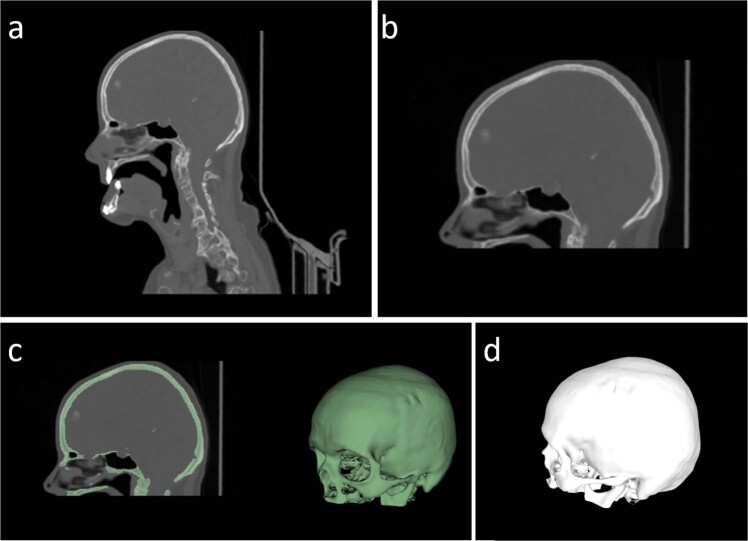
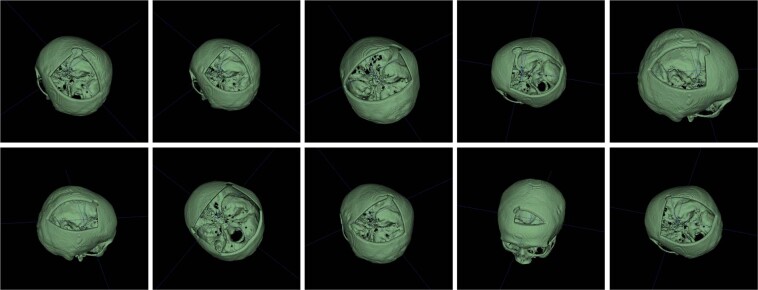
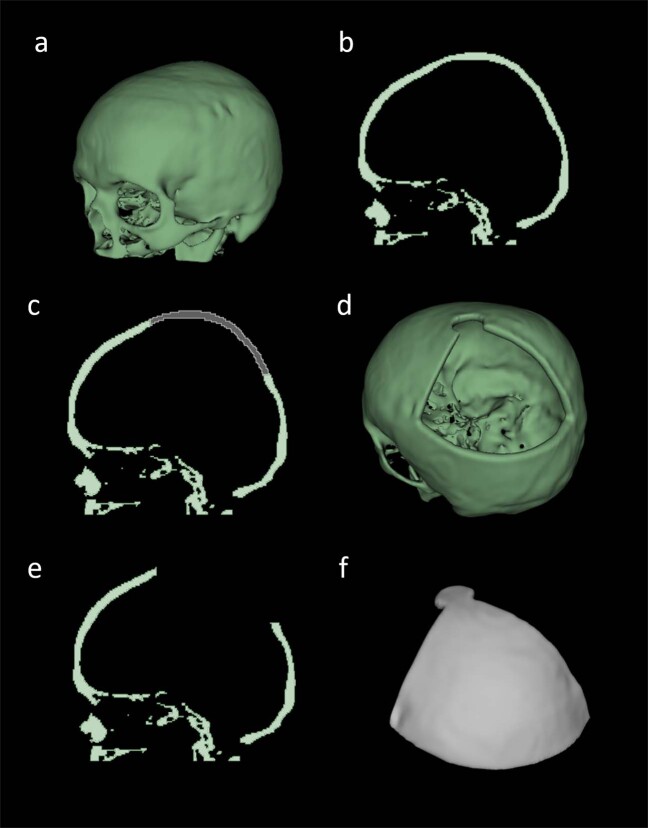
Patient-specific craniofacial implants are used to repair skull bone defects after trauma or surgery. Currently, cranial implants are designed and produced by third-party suppliers, which is usually time-consuming and expensive. Recent advances in additive manufacturing made the in-hospital or in-operation-room fabrication of personalized implants feasible. However, the implants are still manufactured by external companies. To facilitate an optimized workflow, fast and automatic implant manufacturing is highly desirable. Data-driven approaches, such as deep learning, show currently great potential towards automatic implant design. However, a considerable amount of data is needed to train such algorithms, which is, especially in the medical domain, often a bottleneck. Therefore, we present CT-imaging data of the craniofacial complex from 24 patients, in which we injected various artificial cranial defects, resulting in 240 data pairs and 240 corresponding implants. Based on this work, automatic implant design and manufacturing processes can be trained. Additionally, the data of this work build a solid base for researchers to work on automatic cranial implant designs.
用于修复创伤或手术后颅骨骨缺损的患者特定的颅面植入物。目前,颅骨植入物由第三方供应商设计和生产,这通常既耗时又昂贵。增材制造的最新进展使得在医院或手术室中制造个性化植入物成为可能。然而,这些植入物仍然是由外部公司制造的。为了促进优化的工作流程,非常需要快速和自动的植入物制造。数据驱动的方法,如深度学习,目前在自动植入物设计方面显示出巨大的潜力。然而,训练这些算法需要相当数量的数据,而这在医疗领域通常是一个瓶颈。因此,我们提供了 24 名患者的颅面复合体的 CT 成像数据,其中我们注入了各种人工颅骨缺陷,产生了 240 对数据和 240 个相应的植入物。在此基础上,可以培训自动植入物设计和制造工艺。此外,这项工作的数据为研究人员在自动颅面植入物设计方面的工作奠定了坚实的基础。