Shang Wen-Long, Chen Jinyu, Bi Huibo, Sui Yi, Chen Yanyan, Yu Haitao
Beijing Key Laboratory of Traffic Engineering, College of Metropolitan Transportation, Beijing University of Technology, Beijing 100124, China.
Centre for Spatial Information Science, The University of Tokyo, 5-1-5 Kashiwanoha, Kashiwa-shi, Chiba 277-8568, Japan.
Appl Energy. 2021 Mar 1;285:116429. doi: 10.1016/j.apenergy.2020.116429. Epub 2021 Jan 17.
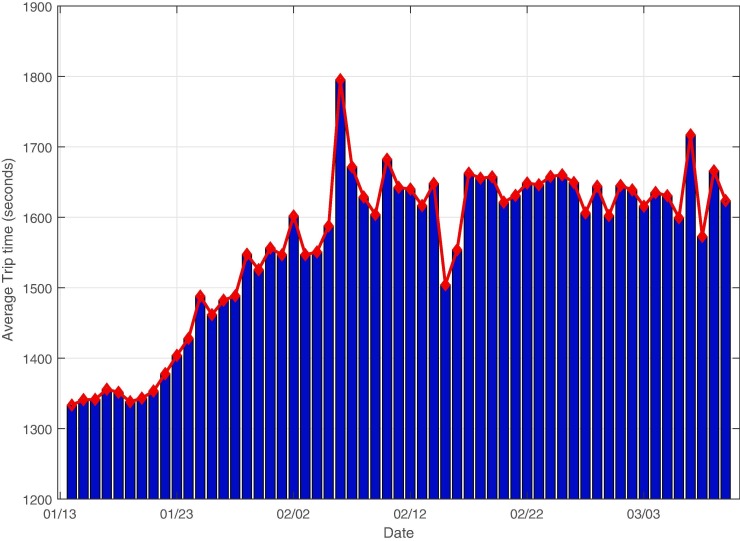
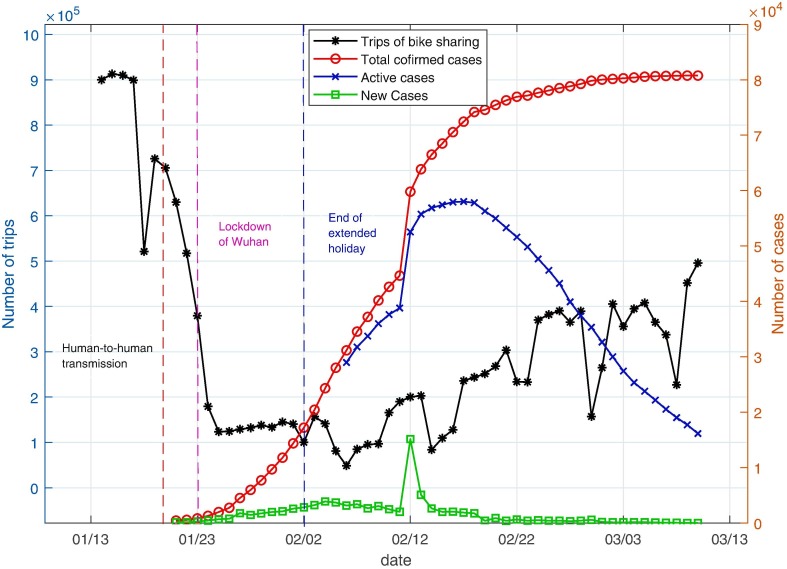
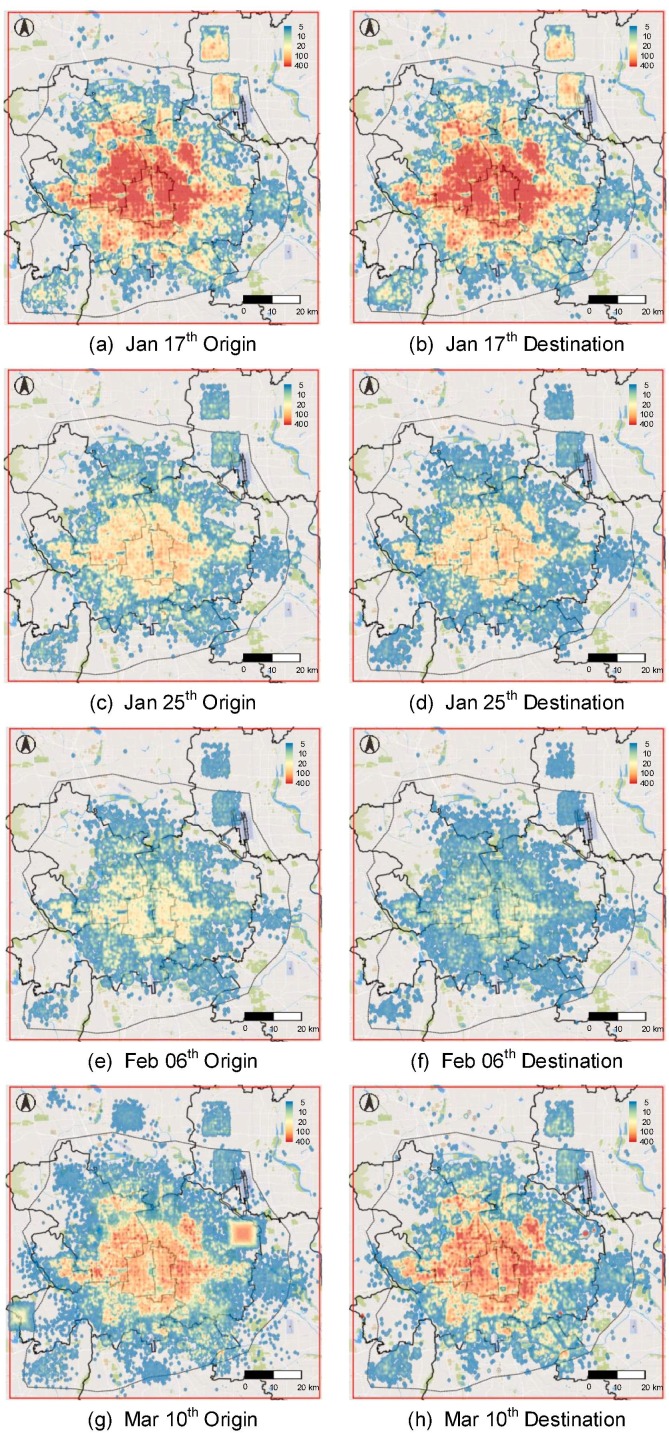
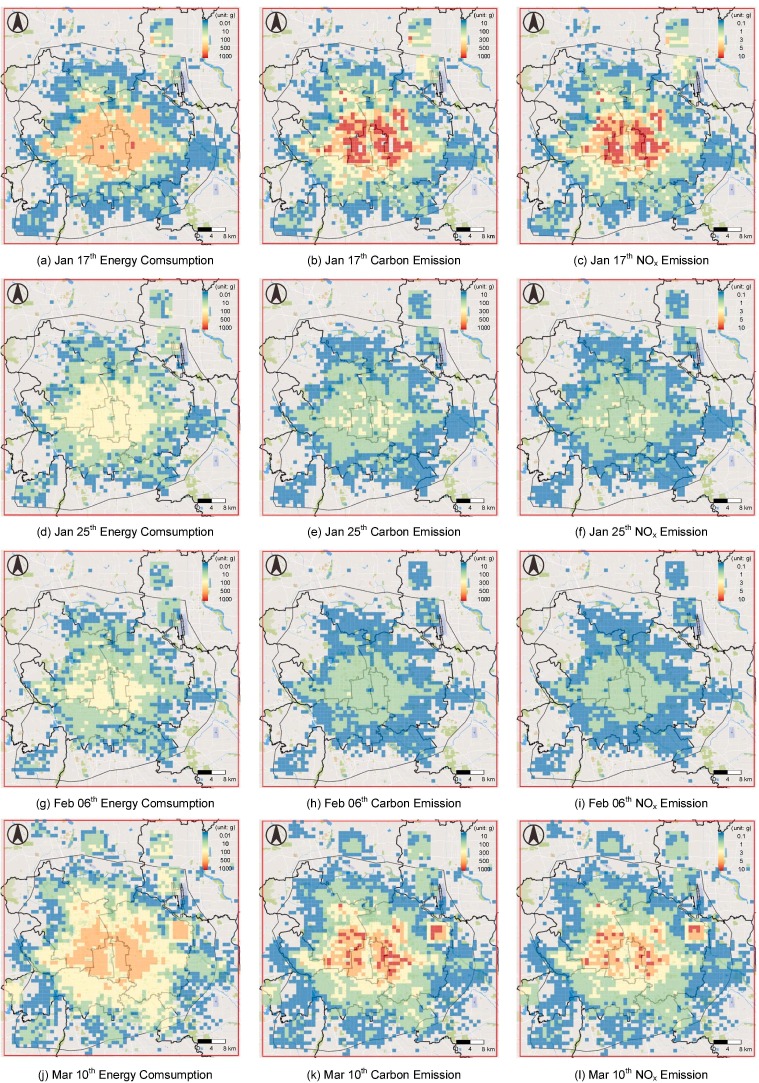
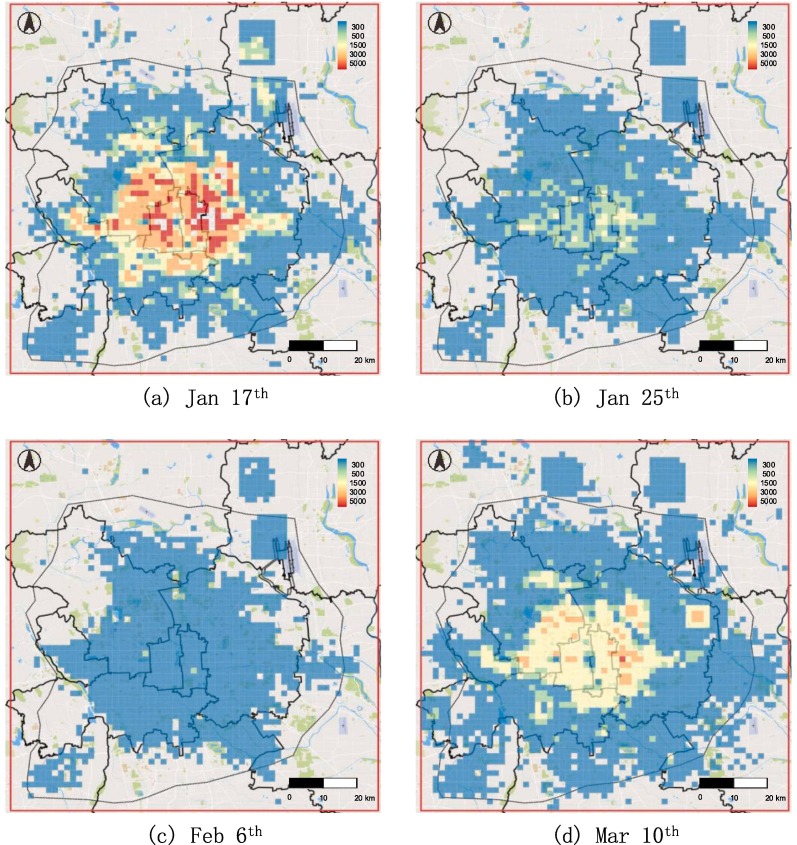
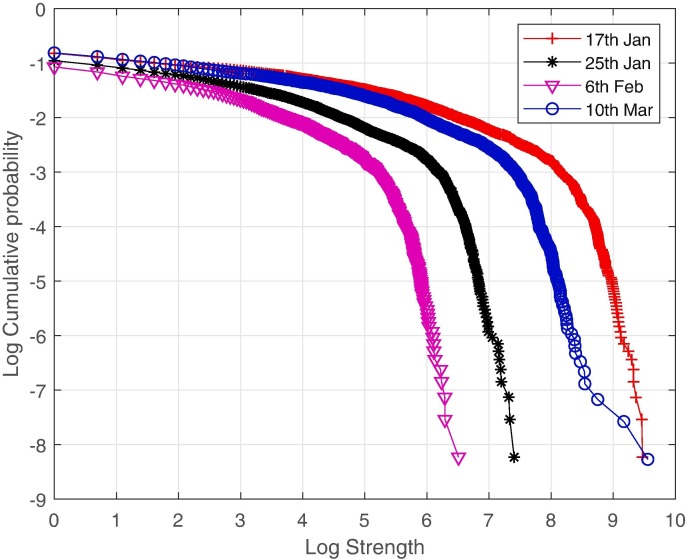
The COVID-19 pandemic spreads rapidly around the world, and has given rise to huge impacts on all aspects of human society. This study utilizes big data techniques to analyze the impacts of COVID-19 on the user behaviors and environmental benefits of bike sharing. In this study, a novel method is proposed to calculate the trip distances and trajectories via a python package OSMnx so as to accurately estimate the environmental benefits of bike sharing. In addition, we employ the topological indices arising from complex network theory to quantitatively analyze the transformation of user behavior pattern of bike sharing during the COVID-19 pandemic. The results show that this pandemic has impacted the user behaviors and environmental benefits of bike sharing in Beijing significantly. During the pandemic, the estimated reductions of energy consumption and emissions on 6 Feb decreased to approximately 1 in 17 of those on a normal day, and the environmental benefits at most recovered to 70% of those in normal days. The impacts of COVID-19 on the environmental benefits in different districts are different. Furthermore, the decline of average strength and strength distribution obeying exponential distribution but with different slope rates suggests that people are less likely to take bike sharing to the places where were popular before. The pandemic has also increased the average trip time of bike sharing. Our research may facilitate the understanding of the impacts of COVID-19 pandemic on our society and environment, and also provide clues to adapt to this unprecedented pandemic so as to respond to similar events in the future.
新冠疫情在全球迅速蔓延,对人类社会的各个方面都产生了巨大影响。本研究利用大数据技术分析新冠疫情对共享单车用户行为和环境效益的影响。在本研究中,提出了一种新颖的方法,通过Python包OSMnx来计算出行距离和轨迹,以便准确估计共享单车的环境效益。此外,我们运用复杂网络理论中的拓扑指标,定量分析新冠疫情期间共享单车用户行为模式的转变。结果表明,这场疫情对北京共享单车的用户行为和环境效益产生了显著影响。疫情期间,2月6日估计的能源消耗和排放量减少量降至正常日的约十七分之一,环境效益最多恢复到正常日的70%。新冠疫情对不同城区环境效益的影响有所不同。此外,平均强度的下降以及强度分布服从指数分布但斜率不同,这表明人们不太可能像以前那样骑行共享单车前往热门地点。疫情还增加了共享单车的平均出行时间。我们的研究可能有助于理解新冠疫情对我们社会和环境的影响,也为适应这一前所未有的疫情提供线索,以便未来应对类似事件。