Wang Zhenjiang, Guo Mingyi, Ai Xinbo, Cheng Jianbin, Huang Zaiwei, Li Xiaobin, Chen Yuping
Department of Gastroenterology, Zhuhai People's Hospital (Zhuhai Hospital Affiliated With Jinan University), Zhuhai, China.
Zhuhai Precision Medical Center, Zhuhai People's Hospital (Zhuhai Hospital Affiliated With Jinan University), Zhuhai, China.
Front Genet. 2021 Jan 14;11:602922. doi: 10.3389/fgene.2020.602922. eCollection 2020.
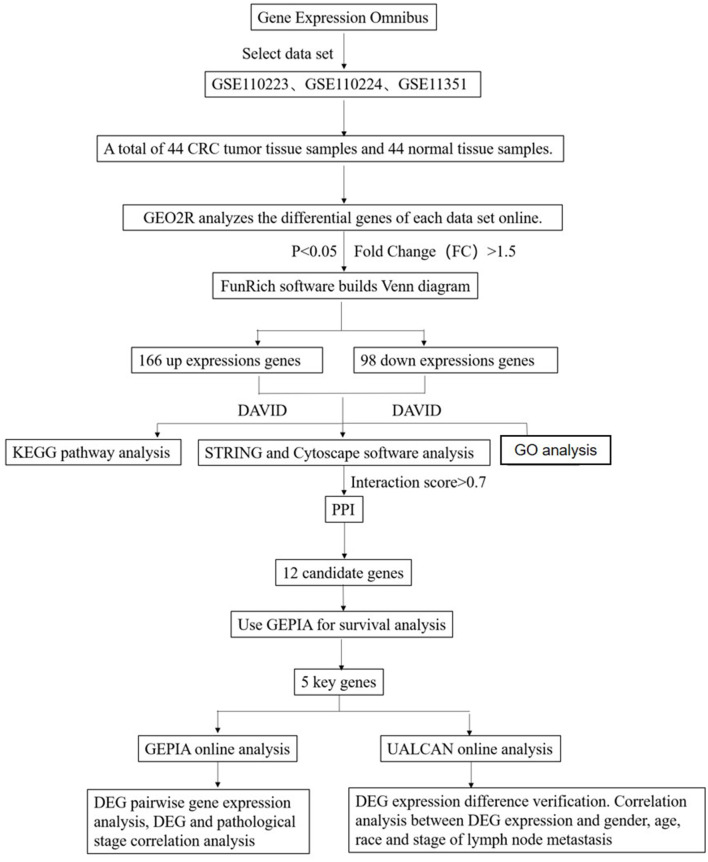
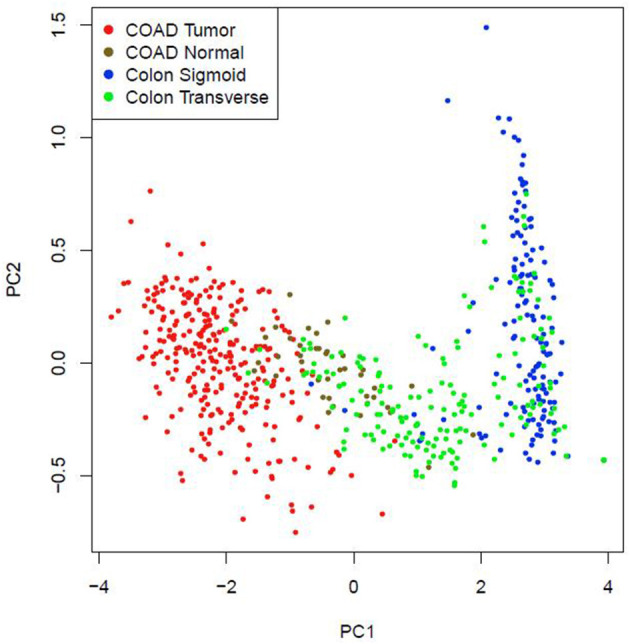
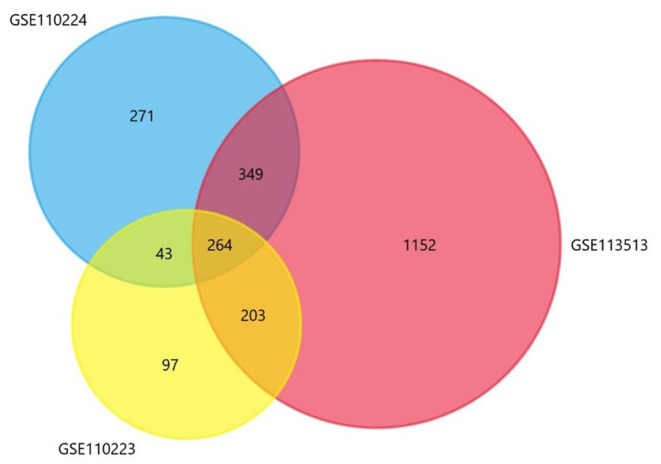
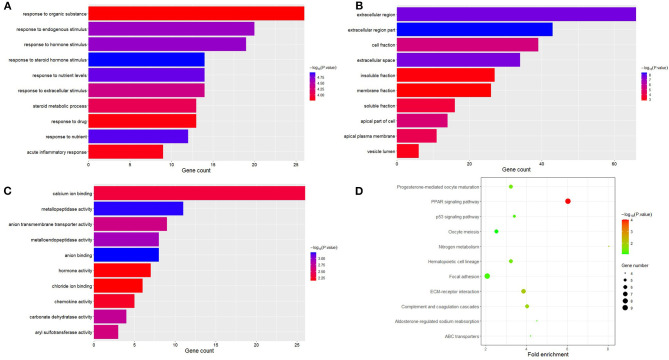
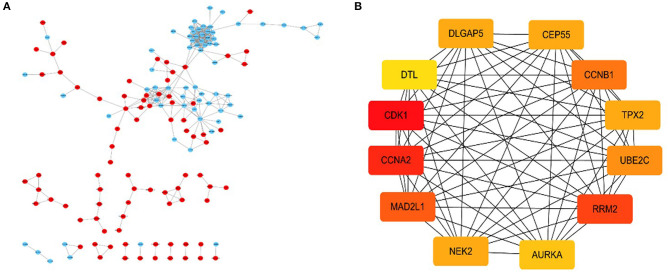
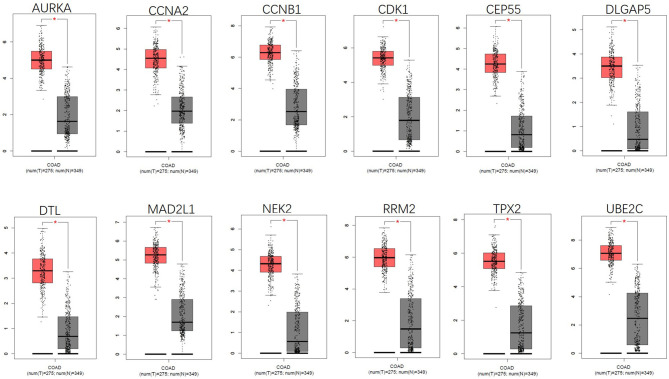
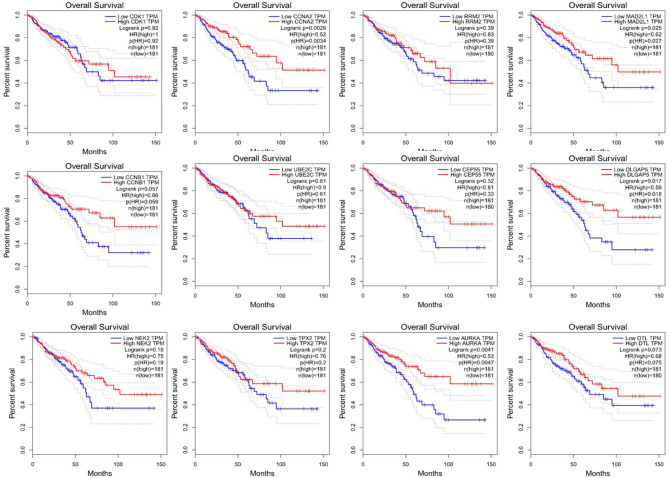
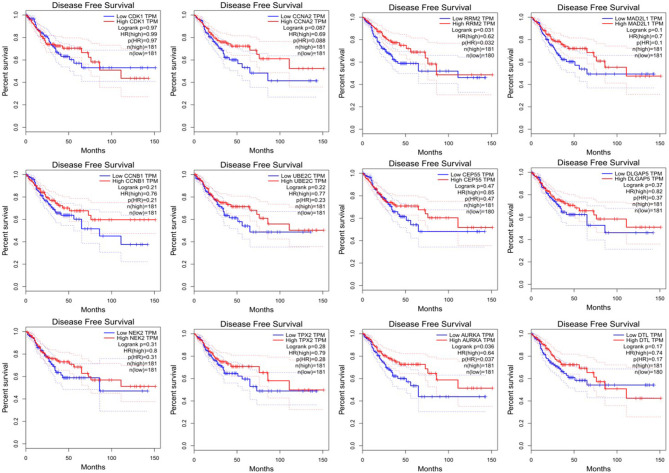
Colorectal cancer (CRC) is one of the most common neoplastic diseases worldwide. With a high recurrence rate among all cancers, treatment of CRC only improved a little over the last two decades. The mortality and morbidity rates can be significantly lessened by earlier diagnosis and prompt treatment. Available biomarkers are not sensitive enough for the diagnosis of CRC, whereas the standard diagnostic method, endoscopy, is an invasive test and expensive. Hence, seeking the diagnostic and prognostic biomarkers of CRC is urgent and challenging. With that order, we screened the overlapped differentially expressed genes (DEGs) of GEO (GSE110223, GSE110224, GSE113513) and TCGA datasets. Subsequent protein-protein interaction network analysis recognized the hub genes among these DEGs. Further functional analyses including Gene Ontology and KEGG pathway analysis and gene set enrichment analysis were processed to investigate the role of these genes and potential underlying mechanisms in CRC. Kaplan-Meier analysis and Cox hazard ratio analysis were carried out to clarify the diagnostic and prognostic role of these genes. In conclusion, our present study demonstrated that CCNA2, MAD2L1, DLGAP5, AURKA, and RRM2 are all potential diagnostic biomarkers for CRC and may also be potential treatment targets for clinical implication in the future.
结直肠癌(CRC)是全球最常见的肿瘤性疾病之一。在所有癌症中,CRC的复发率很高,在过去二十年中,CRC的治疗进展甚微。早期诊断和及时治疗可显著降低死亡率和发病率。现有的生物标志物对CRC诊断的敏感性不足,而标准诊断方法——内镜检查是一种侵入性检查且费用高昂。因此,寻找CRC的诊断和预后生物标志物既紧迫又具有挑战性。为此,我们筛选了GEO(GSE110223、GSE110224、GSE113513)和TCGA数据集的重叠差异表达基因(DEG)。随后的蛋白质-蛋白质相互作用网络分析确定了这些DEG中的核心基因。进一步进行了包括基因本体论和KEGG通路分析以及基因集富集分析在内的功能分析,以研究这些基因在CRC中的作用及潜在机制。进行了Kaplan-Meier分析和Cox风险比分析,以阐明这些基因的诊断和预后作用。总之,我们目前的研究表明,CCNA2、MAD2L1、DLGAP5、AURKA和RRM2均为CRC潜在的诊断生物标志物,未来也可能成为具有临床意义的潜在治疗靶点。