Noonan Sanjay, Zaveri Meena, Macaninch Elaine, Martyn Kathy
Brighton and Sussex Medical School, Brighton, UK.
Brighton, UK.
BMJ Nutr Prev Health. 2020 Jul 6;3(2):351-362. doi: 10.1136/bmjnph-2019-000053. eCollection 2020 Dec.
A bidirectional relationship exists between the brain and the gastrointestinal tract. Foods containing bacteria that positively influence the gastrointestinal microbiome are termed, probiotics; compounds that promote the flourishing of these bacteria are termed, prebiotics. Whether microbiome influencing therapies could treat psychiatric conditions, including depression and anxiety, is an area of interest. Presently, no established consensus for such treatment exists.
This systematic review analyses databases and grey literature sites to investigate pre and/or probiotics as treatments for depression and/or anxiety disorders. Articles included are from within 15 years. Pre-determined inclusion exclusion criteria were applied, and articles were appraised for their quality using a modified-CASP checklist. This review focuses specifically on quantitative measures from patients with clinical diagnoses of depression and/or anxiety disorders.
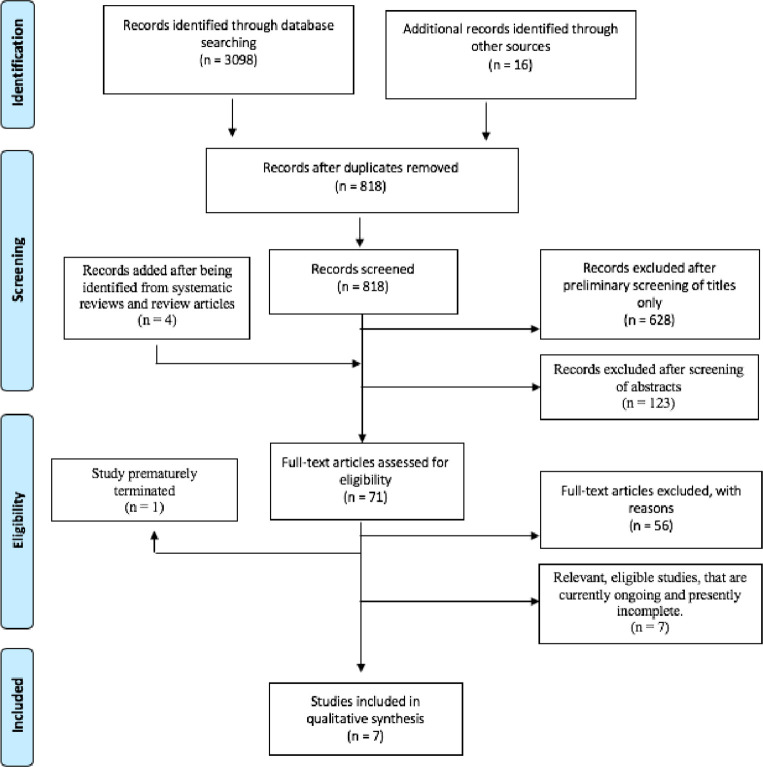
7 studies were identified. All demonstrated significant improvements in one or more of the outcomes measuring the of effect taking pre/probiotics compared with no treatment/placebo, or when compared to baseline measurements.
Our review suggests utilising pre/probiotic may be a potentially useful adjunctive treatment. Furthermore, patients with certain co-morbidities, such as IBS, might experience greater benefits from such treatments, given that pre/probiotic are useful treatments for other conditions that were not the primary focus of this discourse. Our results are limited by several factors: sample sizes (adequate, though not robust); short study durations, long-term effects and propensity for remission undetermined.
Our results affirm that pre/probiotic therapy warrants further investigation. Efforts should aim to elucidate whether the perceived efficacy of pre/probiotic therapy in depression and/or anxiety disorders can be replicated in larger test populations, and whether such effects are maintained through continued treatment, or post cessation. Interventions should also be investigated in isolation, not combination, to ascertain where the observed effects are attributable to. Efforts to produce mechanistic explanations for such effect should be a priority.
大脑与胃肠道之间存在双向关系。含有对胃肠道微生物群有积极影响的细菌的食物被称为益生菌;促进这些细菌繁殖的化合物被称为益生元。微生物群影响疗法是否可以治疗包括抑郁症和焦虑症在内的精神疾病是一个备受关注的领域。目前,对于这种治疗方法尚未达成既定共识。
本系统评价分析了数据库和灰色文献网站,以研究益生元和/或益生菌作为抑郁症和/或焦虑症治疗方法的情况。纳入的文章发表于15年内。应用预先确定的纳入排除标准,并使用改良的CASP清单对文章质量进行评估。本评价特别关注临床诊断为抑郁症和/或焦虑症患者的定量测量结果。
共识别出7项研究。所有研究均表明,与未治疗/安慰剂相比,或与基线测量相比,在一项或多项测量服用益生元/益生菌效果的指标上有显著改善。
我们的评价表明,使用益生元/益生菌可能是一种潜在有用的辅助治疗方法。此外,患有某些合并症(如肠易激综合征)的患者可能会从这种治疗中获得更大益处,因为益生元/益生菌对其他并非本论述主要关注的疾病是有效的治疗方法。我们的结果受到几个因素的限制:样本量(足够但不稳健);研究持续时间短,长期效果和缓解倾向未确定。
我们的结果证实,益生元/益生菌疗法值得进一步研究。应努力阐明益生元/益生菌疗法在抑郁症和/或焦虑症中所观察到的疗效是否能在更大的测试人群中得到复制,以及这种效果在持续治疗期间或停药后是否能维持。还应单独研究干预措施,而不是联合研究,以确定观察到的效果归因于何处。优先应为这种效果提供机制解释。