Mackie Sarah L, Brouwer Elisabeth, Conway Richard, van der Geest Kornelis S M, Mehta Puja, Mollan Susan P, Neill Lorna, Putman Michael, Robinson Philip C, Sattui Sebastian E
Leeds Institute of Rheumatic and Musculoskeletal Medicine, University of Leeds, Leeds, UK.
NIHR Leeds Biomedical Research Unit, Leeds Teaching Hospitals NHS Trust, Leeds, UK.
Lancet Rheumatol. 2021 Jan;3(1):e71-e82. doi: 10.1016/S2665-9913(20)30386-6. Epub 2020 Dec 8.
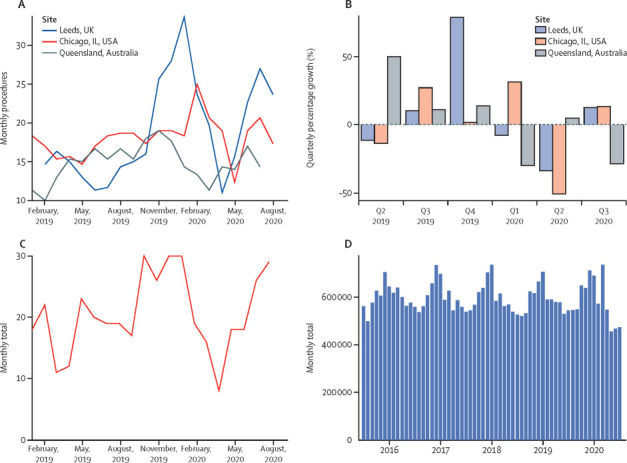
Giant cell arteritis, a common primary systemic vasculitis affecting older people, presents acutely as a medical emergency and requires rapid specialist assessment and treatment to prevent irreversible vision loss. Disruption of the health-care system caused by the COVID-19 pandemic exposed weak points in clinical pathways for diagnosis and treatment of giant cell arteritis, but has also permitted innovative solutions. The essential roles played by all professionals, including general practitioners and surgeons, in treating these patients have become evident. Patients must also be involved in the reshaping of clinical services. As an international group of authors involved in the care of patients with giant cell arteritis, we reflect in this Viewpoint on rapid service adaptations during the first peak of COVID-19, evaluate challenges, and consider implications for the future.
巨细胞动脉炎是一种常见的影响老年人的原发性系统性血管炎,急性发作时属于医疗急症,需要迅速进行专科评估和治疗以防止不可逆转的视力丧失。2019年冠状病毒病(COVID-19)大流行导致医疗保健系统中断,暴露了巨细胞动脉炎诊断和治疗临床路径中的薄弱环节,但也催生了创新解决方案。包括全科医生和外科医生在内的所有专业人员在治疗这些患者中所发挥的重要作用已变得显而易见。患者也必须参与临床服务的重塑。作为一个参与巨细胞动脉炎患者护理的国际作者团队,我们在这篇观点文章中反思了COVID-19首个高峰期间服务的快速调整,评估了挑战,并思考了对未来的影响。