Swingler Sam, Gupta Abhishek, Gibson Hazel, Kowalczuk Marek, Heaselgrave Wayne, Radecka Iza
Wolverhampton School of Sciences, Faculty of Science and Engineering, University of Wolverhampton, Wulfruna Street, Wolverhampton WV1 1LY, UK.
Research Institute in Healthcare Science, Faculty of Science and Engineering, University of Wolverhampton, Wulfruna Street, Wolverhampton WV1 1LY, UK.
Polymers (Basel). 2021 Jan 28;13(3):412. doi: 10.3390/polym13030412.
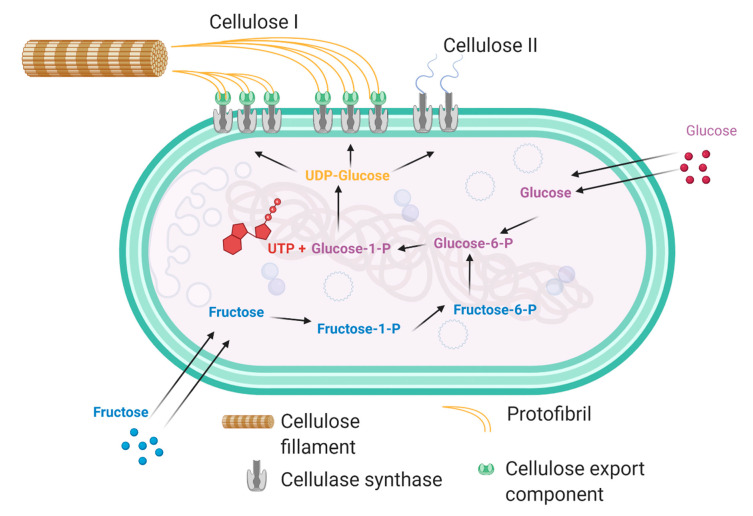
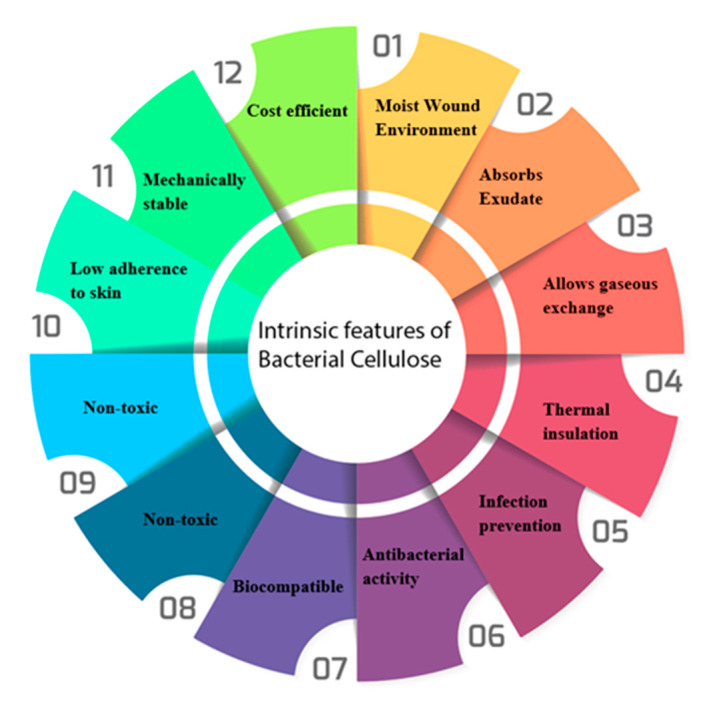
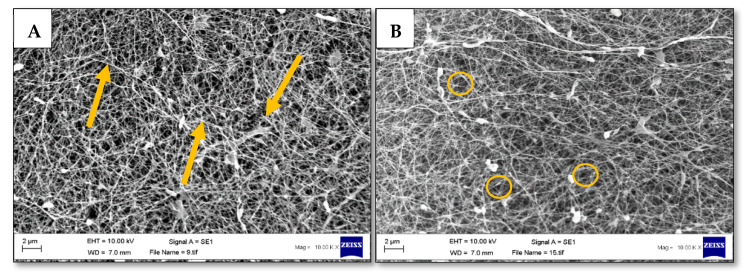
Bacterial cellulose (BC) is an extracellular polymer produced by which has been shown to possess a multitude of properties, which makes it innately useful as a next-generation biopolymer. The structure of BC is comprised of glucose monomer units polymerised by cellulose synthase in β-1-4 glucan chains which form uniaxially orientated BC fibril bundles which measure 3-8 nm in diameter. BC is chemically identical to vegetal cellulose. However, when BC is compared with other natural or synthetic analogues, it shows a much higher performance in biomedical applications, potable treatment, nano-filters and functional applications. The main reason for this superiority is due to the high level of chemical purity, nano-fibrillar matrix and crystallinity. Upon using BC as a carrier or scaffold with other materials, unique and novel characteristics can be observed, which are all relatable to the features of BC. These properties, which include high tensile strength, high water holding capabilities and microfibrillar matrices, coupled with the overall physicochemical assets of bacterial cellulose makes it an ideal candidate for further scientific research into biopolymer development. This review thoroughly explores several areas in which BC is being investigated, ranging from biomedical applications to electronic applications, with a focus on the use as a next-generation wound dressing. The purpose of this review is to consolidate and discuss the most recent advancements in the applications of bacterial cellulose, primarily in biomedicine, but also in biotechnology.
细菌纤维素(BC)是由其产生的一种细胞外聚合物,已被证明具有多种特性,这使其天生就可作为下一代生物聚合物发挥作用。BC的结构由葡萄糖单体单元组成,这些单元通过纤维素合酶在β-1-4葡聚糖链中聚合,形成直径为3-8纳米的单轴取向BC原纤维束。BC在化学上与植物纤维素相同。然而,当将BC与其他天然或合成类似物进行比较时,它在生物医学应用、饮用水处理、纳米过滤器和功能应用中表现出更高的性能。这种优越性的主要原因在于其高化学纯度、纳米纤维基质和结晶度。当将BC与其他材料用作载体或支架时,可以观察到独特的新颖特性,这些特性都与BC的特征相关。这些特性包括高拉伸强度、高保水能力和微纤维基质,再加上细菌纤维素的整体物理化学特性,使其成为生物聚合物开发进一步科学研究的理想候选者。本综述全面探讨了BC正在被研究的几个领域,从生物医学应用到电子应用,重点是用作下一代伤口敷料。本综述的目的是巩固和讨论细菌纤维素应用方面的最新进展,主要是在生物医学领域,但也包括生物技术领域。