Hodel Katharine Valéria Saraiva, Fonseca Larissa Moraes Dos Santos, Santos Isa Moreira da Silva, Cerqueira Jamile Costa, Santos-Júnior Raimundo Evangelista Dos, Nunes Silmar Baptista, Barbosa Josiane Dantas Viana, Machado Bruna Aparecida Souza
University Center SENAI CIMATEC, National Service of Industrial Learning, Laboratory of Pharmaceutical's Formulations, Health Institute of Technologies (ITS CIMATEC), Salvador 41650-010, Brazil.
University Center SENAI CIMATEC, National Service of Industrial Learning, Salvador 41650-010, Brazil.
Polymers (Basel). 2020 Jan 26;12(2):267. doi: 10.3390/polym12020267.
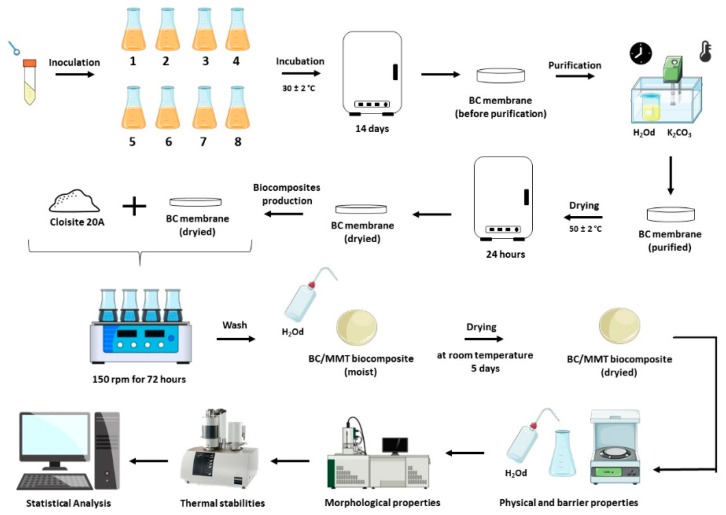
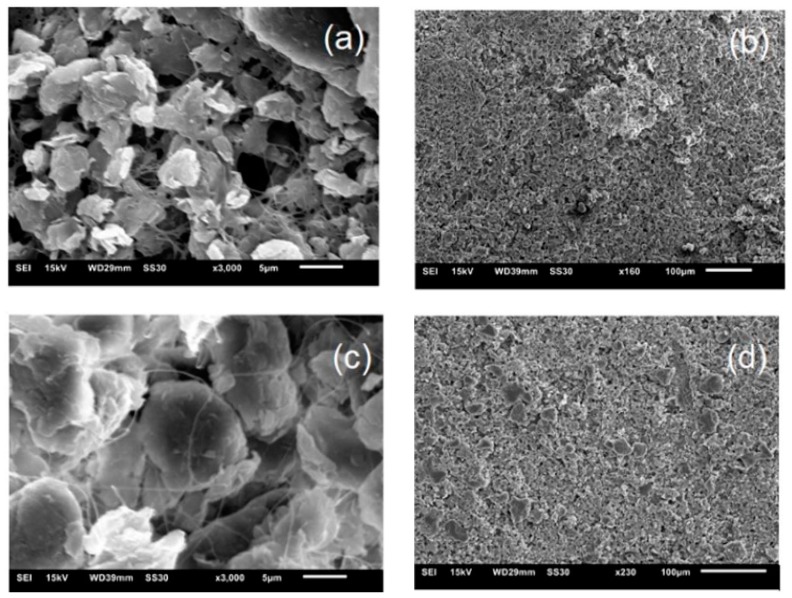
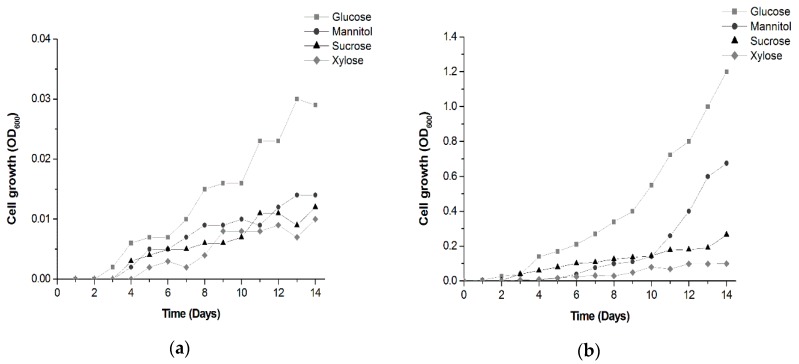
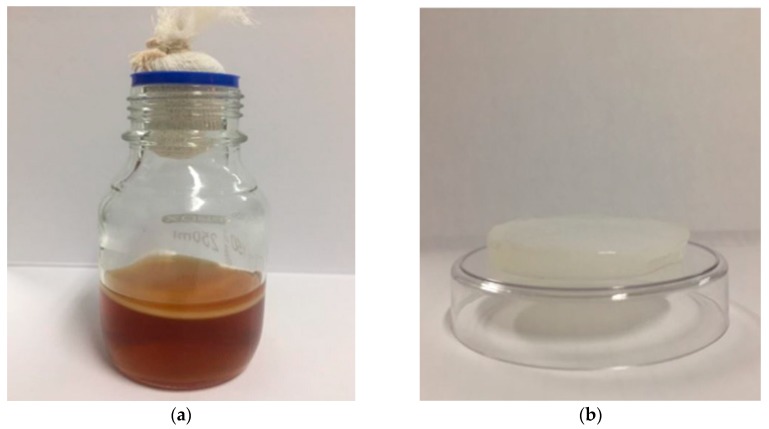
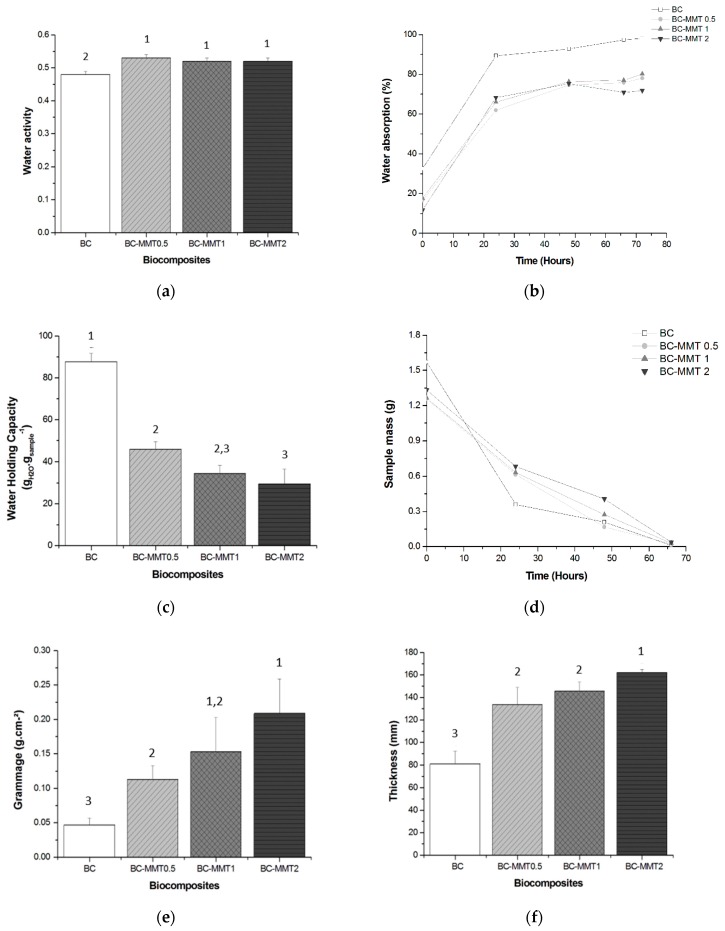
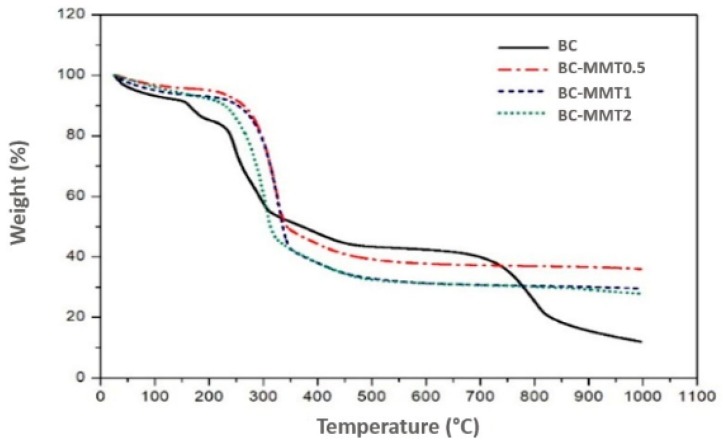
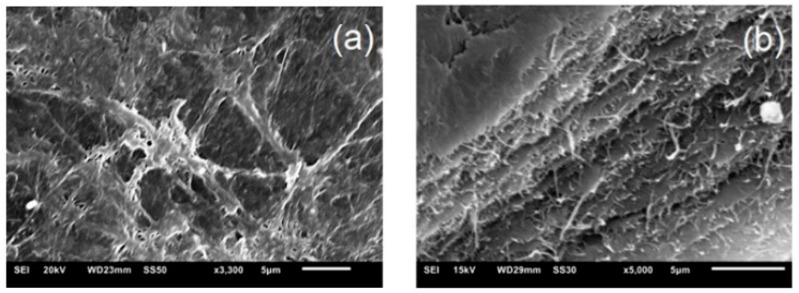
Bacterial cellulose (BC) has received considerable attention due to its unique properties, including an ultrafine network structure with high purity, mechanical strength, inherent biodegradability, biocompatibility, high water-holding capacity and high crystallinity. These properties allow BC to be used in biomedical and industrial applications, such as medical product. This research investigated the production of BC by ATCC 23769 using different carbon sources (glucose, mannitol, sucrose and xylose) at two different concentrations (25 and 50 g∙L). The BC produced was used to develop a biocomposite with montmorillonite (MMT), a clay mineral that possesses interesting characteristics for enhancing BC physical-chemical properties, at 0.5, 1, 2 and 3% concentrations. The resulting biocomposites were characterized in terms of their physical and barrier properties, morphologies, water-uptake capacities, and thermal stabilities. Our results show that bacteria presented higher BC yields in media with higher glucose concentrations (50 g∙L) after a 14-day incubation period. Additionally, the incorporation of MMT significantly improved the mechanical and thermal properties of the BC membranes. The degradation temperature of the composites was extended, and a decrease in the water holding capacity (WHC) and an improvement in the water release rate (WRR) were noted. Determining a cost-effective medium for the production of BC and the characterization of the produced composites are extremely important for the biomedical applications of BC, such as in wound dressing materials.
细菌纤维素(BC)因其独特的性能而备受关注,这些性能包括具有高纯度的超细网络结构、机械强度、固有的生物降解性、生物相容性、高持水能力和高结晶度。这些特性使BC可用于生物医学和工业应用,如医疗产品。本研究调查了ATCC 23769在两种不同浓度(25和50 g∙L)下使用不同碳源(葡萄糖、甘露醇、蔗糖和木糖)生产BC的情况。所生产的BC用于与蒙脱石(MMT)开发一种生物复合材料,蒙脱石是一种粘土矿物,具有增强BC物理化学性质的有趣特性,浓度分别为0.5%、1%、2%和3%。对所得生物复合材料的物理和阻隔性能、形态、吸水能力和热稳定性进行了表征。我们的结果表明,在14天的培养期后,细菌在葡萄糖浓度较高(50 g∙L)的培养基中产生的BC产量更高。此外,MMT的加入显著改善了BC膜的机械和热性能。复合材料的降解温度提高,持水能力(WHC)降低,水分释放速率(WRR)提高。确定一种经济高效的BC生产培养基以及对所生产复合材料进行表征对于BC在生物医学应用(如伤口敷料材料)中极为重要。