Centre National de Formation et de Recherche en Santé Rurale de Maferinyah, Forecariah, Guinea.
Université Koffi Annan de Guinée, Conakry, Guinée.
PLoS One. 2021 Feb 2;16(2):e0245751. doi: 10.1371/journal.pone.0245751. eCollection 2021.
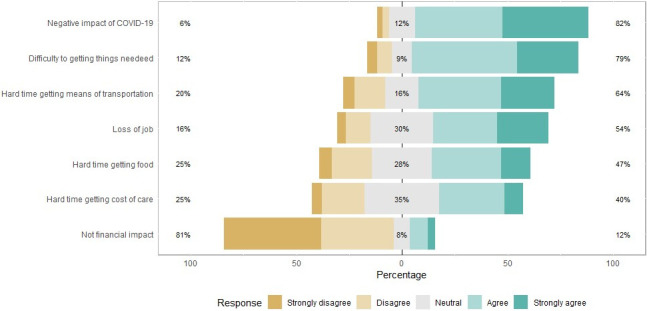
Guinea, like many other African countries, has been facing an unprecedented COVID-19 outbreak, since March 2020. In April 2020, Guinean National agency for health security recorded 1351 confirmed cases of COVID-19, including 313 recoveries and 07 deaths. To address this health crisis, some drastic measures were implemented to prevent the spread of COVID-19. Those measures might potentially cause some psychological problems among Guineans. Thus, we conducted this study to assess the psychosocial impacts of COVID-19 in the Guinean population. We carried out an online cross-sectional survey among internet users in Guinea. A free e-survey platform was used, and questionnaires were sent to internet users. The study ran from May 1 through May 10 2020. Participation in the study was voluntary. Data collection was based on sociodemographic information and self-reported questionnaires: Impact of Event Scale-Revised (IES-R) for stress evaluation, Penn state worry questionnaire (PSWQ), and an adapted Social Psychological Measurements of COVID-19. A total of 280 participants took part in the study; responses from 5 participants were deleted because of incompleteness. The average age of participants was 28.9 [95% CI: 28.1;29.6]. Most of participants were male 65.5% [95% CI: 59.5%;71.1%]. Unemployed participants stood for 48.7% [95% CI: 42.7%;54.8%]. IES-R scale for stress evaluation yielded the following findings: 19.6% (mild), 5.23% (moderate) and 9.15% (severe); 82.8% and 17.2% of participants had respectively reported low and moderate worry. No significant statistical association was found between sociodemographic variables and traumatic events (IES-R and PSWQ). However, 82% of our participants had to cope with the negative impacts of COVID-19. Although there were few cases of traumatic events, negative impacts of COVID-19 on study participants deserve to be underlined. So, further investigations are necessary to identify and disentangle specific psychosocial problems in different Guinean socio-cultural contexts.
几内亚与许多其他非洲国家一样,自 2020 年 3 月以来一直面临着前所未有的 COVID-19 疫情。2020 年 4 月,几内亚国家卫生安全机构记录了 1351 例 COVID-19 确诊病例,包括 313 例康复和 7 例死亡。为应对这一卫生危机,采取了一些严厉措施来防止 COVID-19 的传播。这些措施可能会给几内亚人带来一些心理问题。因此,我们进行了这项研究,以评估 COVID-19 对几内亚人口的社会心理影响。我们在几内亚的互联网用户中进行了在线横断面调查。使用了一个免费的电子调查平台,并向互联网用户发送了问卷。该研究于 2020 年 5 月 1 日至 5 月 10 日进行。参与研究是自愿的。数据收集基于社会人口学信息和自我报告的问卷:修订后的事件影响量表(IES-R)用于评估压力、宾夕法尼亚州担忧问卷(PSWQ)和适应 COVID-19 的社会心理测量。共有 280 名参与者参加了这项研究;由于不完整,有 5 名参与者的回复被删除。参与者的平均年龄为 28.9 [95%置信区间:28.1;29.6]。大多数参与者为男性,占 65.5% [95%置信区间:59.5%;71.1%]。失业者占 48.7% [95%置信区间:42.7%;54.8%]。用于评估压力的 IES-R 量表得出以下结果:19.6%(轻度)、5.23%(中度)和 9.15%(重度);82.8%和 17.2%的参与者分别报告了低度和中度担忧。社会人口学变量与创伤性事件(IES-R 和 PSWQ)之间没有发现显著的统计学关联。然而,我们的 82%的参与者不得不应对 COVID-19 的负面影响。尽管创伤性事件的案例很少,但 COVID-19 对研究参与者的负面影响值得强调。因此,有必要进行进一步的调查,以确定和理清不同几内亚社会文化背景下的具体社会心理问题。