Department of Hearing & Speech Sciences, Vanderbilt University Medical Center, Nashville, TN.
Department of Hearing & Speech Sciences, Vanderbilt University Medical Center, Nashville, TN.
Arch Phys Med Rehabil. 2021 Jun;102(6):1075-1083. doi: 10.1016/j.apmr.2021.01.064. Epub 2021 Jan 30.
To identify the consequences of the coronavirus 2019 (COVID-19) pandemic for individuals with traumatic brain injury (TBI), with particular attention to unique effects for individuals with chronic disability.
Individuals with and without a history of TBI completed a web-based survey.
Participants were recruited from the Vanderbilt Brain Injury Patient Registry in Nashville, TN, and completed the survey from their homes between May and June 2020, during social distancing related to the COVID-19 pandemic.
Participants (N=47) in the chronic phase of moderate-severe TBI (>6mo postinjury) and 51 noninjured comparison (NC) peers completed the survey.
Not applicable.
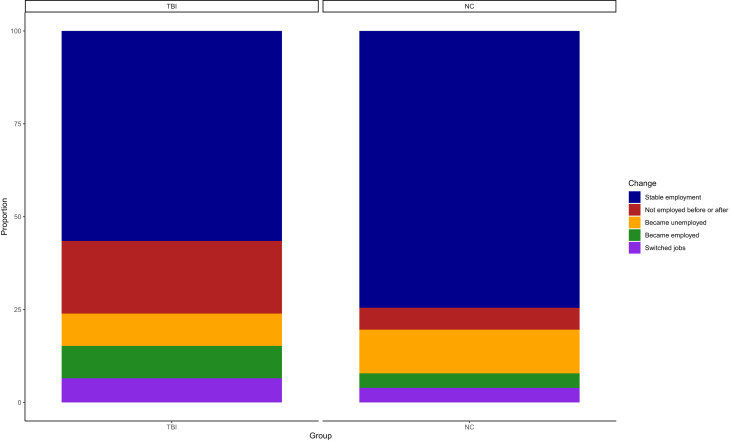
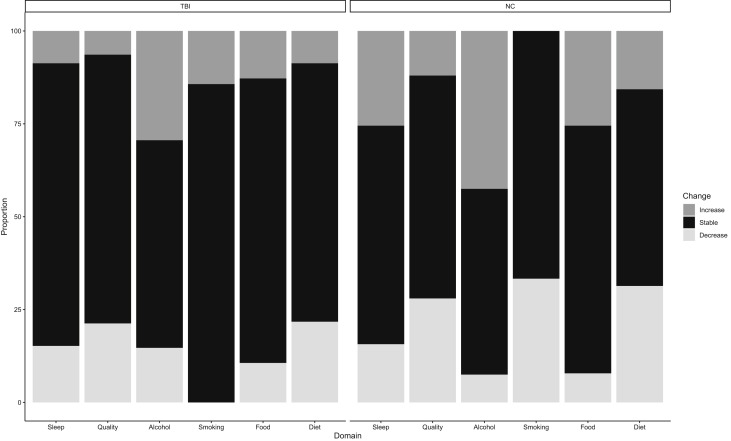
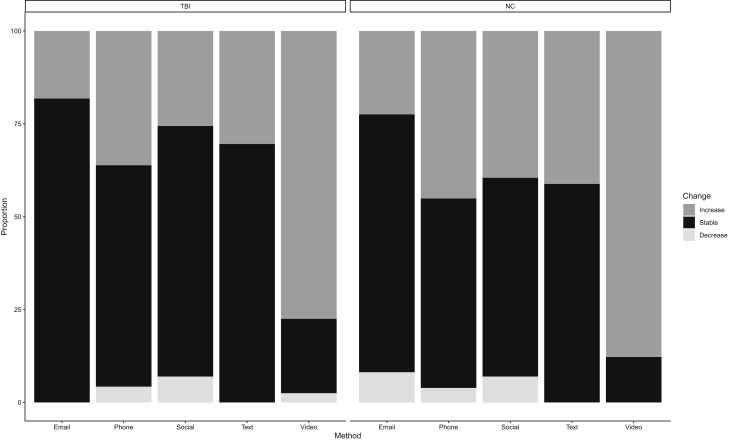
Participants, or respondents, answered a mix of multiple choice and free text questions about how the COVID-19 pandemic has affected their work, education, medical care, social communication, sources of information and decision making, and mental and physical well-being. Individuals with TBI also answered questions about how TBI has affected their experiences of the pandemic.
As a group, respondents with TBI reported less pandemic-related behavior change (eg, daily habits, virtual social visits, and masking) than NC peers. Both NCs and respondents with TBI identified health care providers as trusted sources of public health information. One-third of individuals with TBI indicated that brain injury has made coping with the pandemic more difficult, and respondents identified mental health challenges and social isolation as key barriers.
These results suggest that health care providers should look for ways to provide tailored education and reduce social isolation for individuals with disability during the ongoing COVID-19 pandemic. We discuss several direct suggestions from participant responses.
确定 2019 年冠状病毒病(COVID-19)大流行对创伤性脑损伤(TBI)患者的后果,特别关注慢性残疾患者的独特影响。
有和没有 TBI 病史的个体完成了一项基于网络的调查。
参与者是从田纳西州纳什维尔的范德比尔特脑损伤患者登记处招募的,他们在 2020 年 5 月至 6 月期间在 COVID-19 大流行期间进行社交隔离时在家中完成了调查。
47 名处于中重度 TBI 慢性期(>6 个月)的参与者和 51 名未受伤的对照组(NC)同伴完成了调查。
不适用。
参与者或受访者回答了一系列多项选择和自由文本问题,内容涉及 COVID-19 大流行如何影响他们的工作、教育、医疗保健、社会交往、信息和决策来源以及身心健康。TBI 患者还回答了有关 TBI 如何影响他们对大流行的体验的问题。
作为一个群体,TBI 患者报告的与大流行相关的行为变化(例如,日常习惯、虚拟社交访问和戴口罩)比 NC 同龄人少。NC 患者和 TBI 患者都将医疗保健提供者视为公共卫生信息的可信来源。三分之一的 TBI 患者表示脑损伤使应对大流行更加困难,患者认为心理健康挑战和社会孤立是主要障碍。
这些结果表明,医疗保健提供者应在持续的 COVID-19 大流行期间寻找为残疾个体提供量身定制的教育和减少社交隔离的方法。我们讨论了参与者反应中的几个直接建议。