Li Kwan-Pok, Wong Cheuk-Hon, Cheng Chun-Chiu, Cheng Sau-Shan, Li Man-Wah, Mansveld Sandra, Bergsma Alex, Huang Tengfang, van Eijk Michiel J T, Lam Hon-Ming
School of Life Sciences and Center for Soybean Research of the State Laboratory of Agrobiotechnology The Chinese University of Hong Kong Shatin Hong Kong SAR.
Keygene NV Wageningen The Netherlands.
Plant Direct. 2021 Jan 25;5(1):e00298. doi: 10.1002/pld3.298. eCollection 2021 Jan.
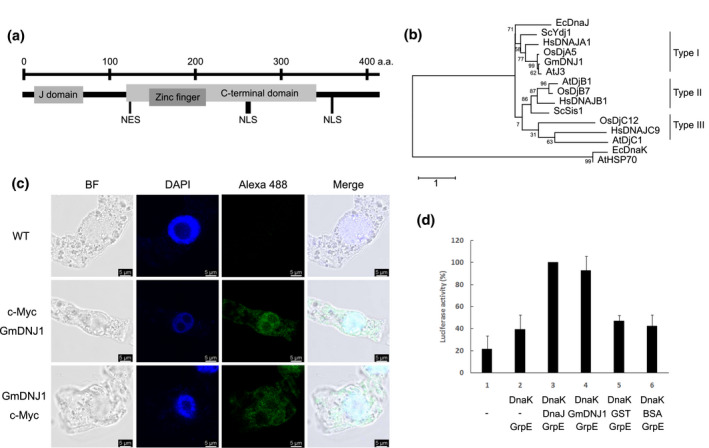
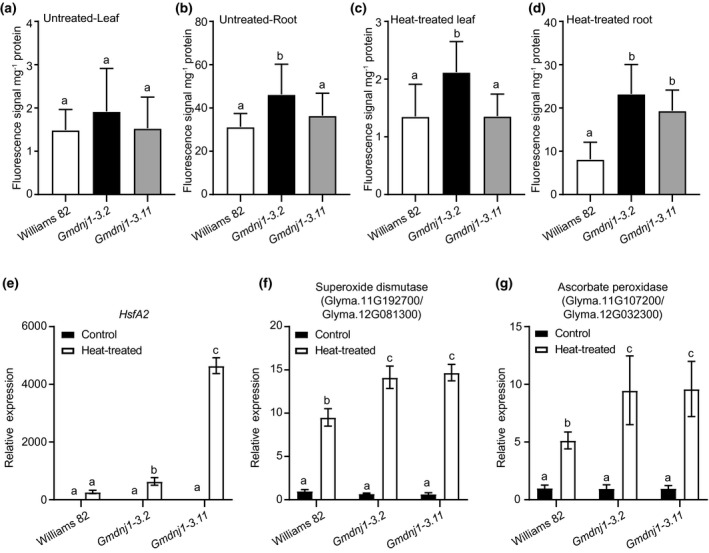
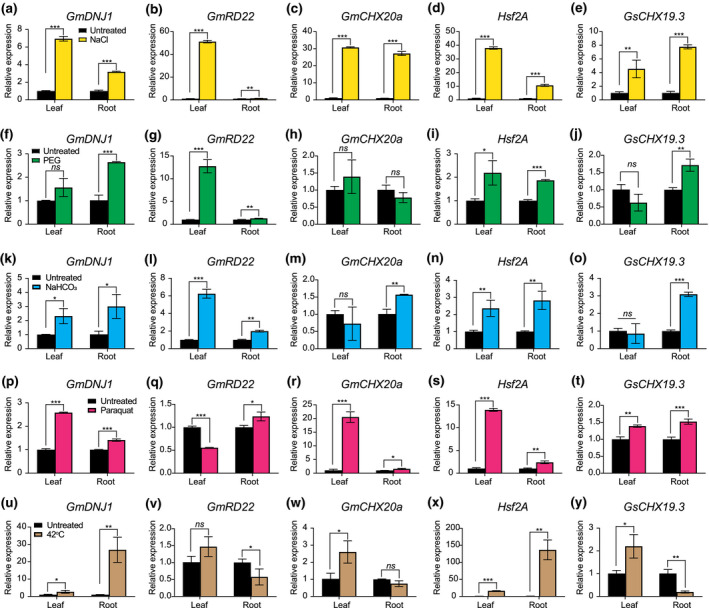
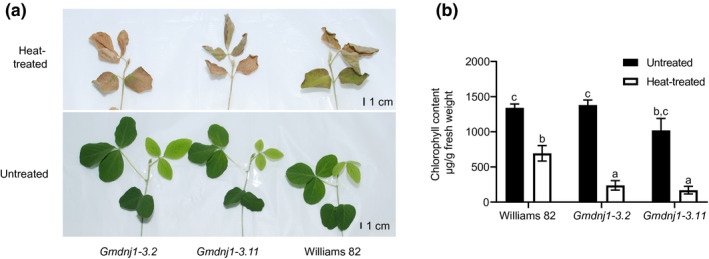
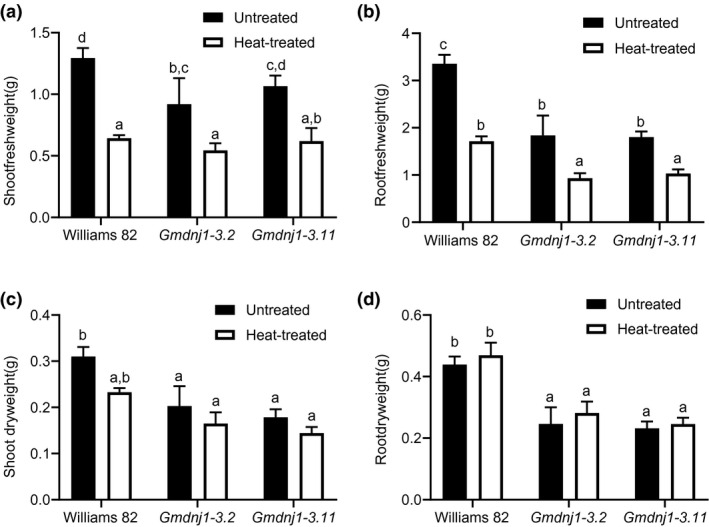
Global warming poses severe threats to agricultural production, including soybean. One of the major mechanisms for organisms to combat heat stress is through heat shock proteins (HSPs) that stabilize protein structures at above-optimum temperatures, by assisting in the folding of nascent, misfolded, or unfolded proteins. The HSP40 subgroups, or the J-domain proteins, functions as co-chaperones. They capture proteins that require folding or refolding and pass them on to HSP70 for processing. In this study, we have identified a type-I HSP40 gene in soybean, , with high basal expression under normal growth conditions and also highly inducible under abiotic stresses, especially heat. -knockout mutants had diminished growth in normal conditions, and when under heat stress, exhibited more severe browning, reduced chlorophyll contents, higher reactive oxygen species (ROS) contents, and higher induction of heat stress-responsive transcription factors and ROS-scavenging enzyme-encoding genes. Under both normal and heat-stress conditions, the mutant lines accumulated more aggregated proteins involved in protein catabolism, sugar metabolism, and membrane transportation, in both roots and leaves. In summary, GmDNJ1 plays crucial roles in the overall plant growth and heat tolerance in soybean, probably through the surveillance of misfolded proteins for refolding to maintain the full capacity of cellular functions.
全球变暖对包括大豆在内的农业生产构成严重威胁。生物体对抗热应激的主要机制之一是通过热休克蛋白(HSPs),这些蛋白在高于最适温度时稳定蛋白质结构,通过协助新生的、错误折叠的或未折叠的蛋白质折叠来实现。HSP40亚组,即J结构域蛋白,作为共伴侣发挥作用。它们捕获需要折叠或重新折叠的蛋白质,并将其传递给HSP70进行处理。在本研究中,我们在大豆中鉴定出一个I型HSP40基因, ,在正常生长条件下具有高基础表达,在非生物胁迫尤其是热胁迫下也具有高度诱导性。 -敲除突变体在正常条件下生长减弱,在热胁迫下表现出更严重的褐变、叶绿素含量降低、活性氧(ROS)含量升高以及热胁迫响应转录因子和ROS清除酶编码基因的更高诱导。在正常和热胁迫条件下,突变系在根和叶中积累了更多参与蛋白质分解代谢、糖代谢和膜运输的聚集蛋白。总之,GmDNJ1可能通过监测错误折叠的蛋白质进行重新折叠以维持细胞功能的全部能力,在大豆的整体植物生长和耐热性中发挥关键作用。