Department of Biomedical Engineering, Duke University, Durham, NC, United States.
Department of Medicine, University of California, San Francisco, San Francisco, CA, United States.
JMIR Mhealth Uhealth. 2021 Feb 3;9(2):e24570. doi: 10.2196/24570.
The field of digital medicine has seen rapid growth over the past decade. With this unfettered growth, challenges surrounding interoperability have emerged as a critical barrier to translating digital medicine into practice. In order to understand how to mitigate challenges in digital medicine research and practice, this community must understand the landscape of digital medicine professionals, which digital medicine tools are being used and how, and user perspectives on current challenges in the field of digital medicine.
The primary objective of this study is to provide information to the digital medicine community that is working to establish frameworks and best practices for interoperability in digital medicine. We sought to learn about the background of digital medicine professionals and determine which sensors and file types are being used most commonly in digital medicine research. We also sought to understand perspectives on digital medicine interoperability.
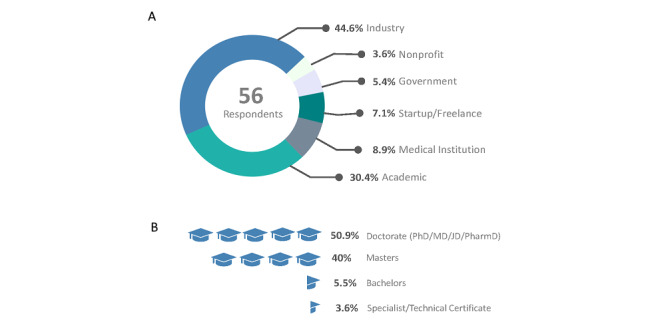
We used a web-based survey to query a total of 56 digital medicine professionals from May 1, 2020, to July 10, 2020, on their educational and work experience, the sensors, file types, and toolkits they use professionally, and their perspectives on interoperability in digital medicine.
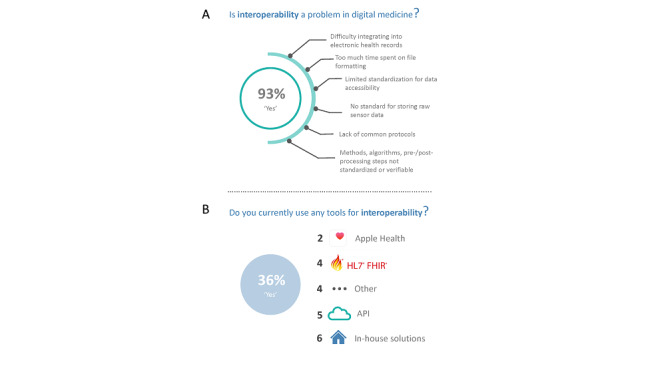
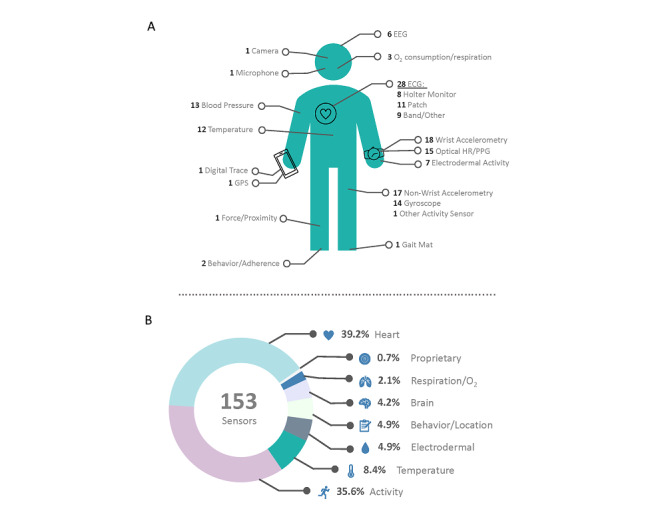
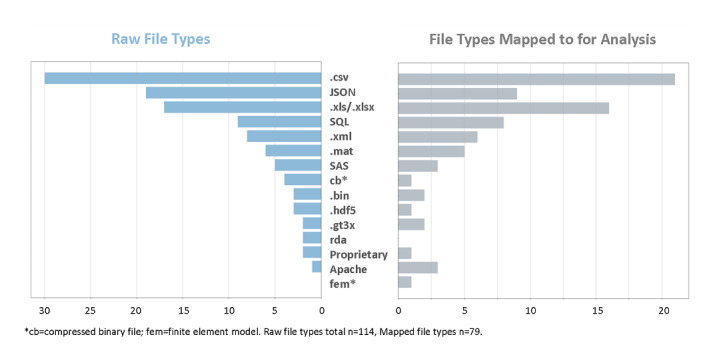
We determined that the digital medicine community comes from diverse educational backgrounds and uses a variety of sensors and file types. Sensors measuring physical activity and the cardiovascular system are the most frequently used, and smartphones continue to be the dominant source of digital health information collection in the digital medicine community. We show that there is not a general consensus on file types in digital medicine, and data are currently handled in multiple ways. There is consensus that interoperability is a critical impediment in digital medicine, with 93% (52) of survey respondents in agreement. However, only 36% (20) of respondents currently use tools for interoperability in digital medicine. We identified three key interoperability needs to be met: integration with electronic health records, implementation of standard data schemas, and standard and verifiable methods for digital medicine research. We show that digital medicine professionals are eager to adopt new tools to solve interoperability problems, and we suggest tools to support digital medicine interoperability.
Understanding the digital medicine community, the sensors and file types they use, and their perspectives on interoperability will enable the development and implementation of solutions that fill critical interoperability gaps in digital medicine. The challenges to interoperability outlined by this study will drive the next steps in creating an interoperable digital medicine community. Establishing best practices to address these challenges and employing platforms for digital medicine interoperability will be essential to furthering the field of digital medicine.
在过去的十年中,数字医学领域发展迅速。随着这种不受限制的增长,互操作性方面的挑战已经成为将数字医学转化为实践的一个关键障碍。为了了解如何减轻数字医学研究和实践中的挑战,这个社区必须了解数字医学专业人员的情况,了解正在使用哪些数字医学工具以及如何使用这些工具,以及用户对数字医学领域当前挑战的看法。
本研究的主要目的是向致力于为数字医学中的互操作性建立框架和最佳实践的数字医学社区提供信息。我们试图了解数字医学专业人员的背景,并确定数字医学研究中最常使用的传感器和文件类型。我们还试图了解数字医学互操作性的观点。
我们使用基于网络的调查,从 2020 年 5 月 1 日至 7 月 10 日,向 56 名数字医学专业人员询问了他们的教育和工作经验、他们专业使用的传感器、文件类型和工具包,以及他们对数字医学互操作性的看法。
我们确定数字医学社区来自不同的教育背景,使用各种传感器和文件类型。测量身体活动和心血管系统的传感器是最常用的,智能手机继续成为数字医学社区中数字健康信息收集的主要来源。我们表明,数字医学中没有关于文件类型的普遍共识,并且数据目前以多种方式处理。有 93%(52 人)的调查受访者一致认为互操作性是数字医学中的一个关键障碍。然而,只有 36%(20 人)的受访者目前在数字医学中使用互操作性工具。我们确定了需要满足的三个关键互操作性需求:与电子健康记录的集成、实施标准数据模式,以及数字医学研究的标准和可验证方法。我们表明,数字医学专业人员渴望采用新工具来解决互操作性问题,并提出了支持数字医学互操作性的工具。
了解数字医学社区、他们使用的传感器和文件类型以及他们对互操作性的看法,将能够开发和实施解决方案,以填补数字医学中关键的互操作性空白。本研究概述的互操作性挑战将推动创建一个互操作的数字医学社区的下一步行动。建立解决这些挑战的最佳实践并采用数字医学互操作性平台对于推进数字医学领域至关重要。