Division of Environmental Health Science and Practice, National Center for Environmental Health, CDC.
MMWR Morb Mortal Wkly Rep. 2021 Feb 5;70(5):155-161. doi: 10.15585/mmwr.mm7005a2.
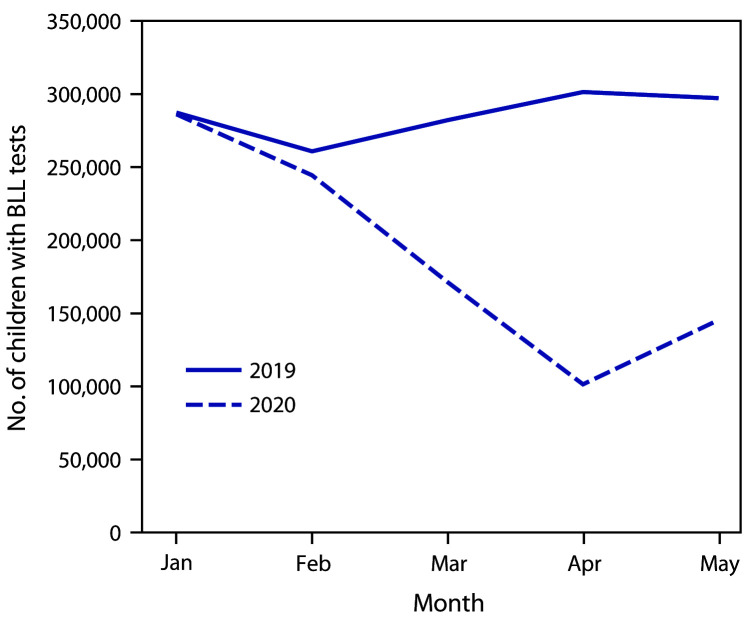
Exposure to lead, a toxic metal, can result in severe effects in children, including decreased ability to learn, permanent neurologic damage, organ failure, and death. CDC and other health care organizations recommend routine blood lead level (BLL) testing among children as part of well-child examinations to facilitate prompt identification of elevated BLL, eliminate source exposure, and provide medical and other services (1). To describe BLL testing trends among young children during the coronavirus disease 2019 (COVID-19) pandemic, CDC analyzed data reported from 34 state and local health departments about BLL testing among children aged <6 years conducted during January-May 2019 and January-May 2020. Compared with testing in 2019, testing during January-May 2020 decreased by 34%, with 480,172 fewer children tested. An estimated 9,603 children with elevated BLL were missed because of decreased BLL testing. Despite geographic variability, all health departments reported fewer children tested for BLL after the national COVID-19 emergency declaration (March-May 2020). In addition, health departments reported difficulty conducting medical follow-up and environmental investigations for children with elevated BLLs because of staffing shortages and constraints on home visits associated with the pandemic. Providers and public health agencies need to take action to ensure that children who missed their scheduled blood lead screening test, or who required follow-up on an earlier high BLL, be tested as soon as possible and receive appropriate care.
接触铅等有毒金属会对儿童造成严重影响,包括学习能力下降、永久性神经损伤、器官衰竭和死亡。疾病预防控制中心和其他医疗保健组织建议对儿童进行常规血铅水平(BLL)检测,作为常规儿童健康检查的一部分,以便及时发现血铅水平升高,消除接触源,并提供医疗和其他服务(1)。为了描述 2019 年冠状病毒病(COVID-19)大流行期间幼儿血铅水平检测趋势,疾病预防控制中心分析了 34 个州和地方卫生部门报告的关于 2019 年 1 月至 5 月和 2020 年 1 月至 5 月期间对<6 岁儿童进行的血铅水平检测数据。与 2019 年相比,2020 年 1 月至 5 月的检测量减少了 34%,检测的儿童减少了 480,172 人。由于血铅水平检测减少,估计有 9,603 名血铅水平升高的儿童被漏检。尽管存在地域差异,但在全国 COVID-19 紧急状态宣布后(2020 年 3 月至 5 月),所有卫生部门报告的血铅水平检测儿童人数都有所减少。此外,卫生部门报告说,由于疫情期间人员短缺以及对家访的限制,难以对血铅水平升高的儿童进行医疗随访和环境调查。提供者和公共卫生机构需要采取行动,确保错过预定血铅筛查检测的儿童,或需要对先前高血铅水平进行随访的儿童尽快进行检测,并提供适当的护理。