Institute of Integrative Biology, ETH Zürich, Zürich, Switzerland.
Institute of Social and Preventive Medicine, University of Bern, Bern, Switzerland.
Elife. 2021 Feb 5;10:e63704. doi: 10.7554/eLife.63704.
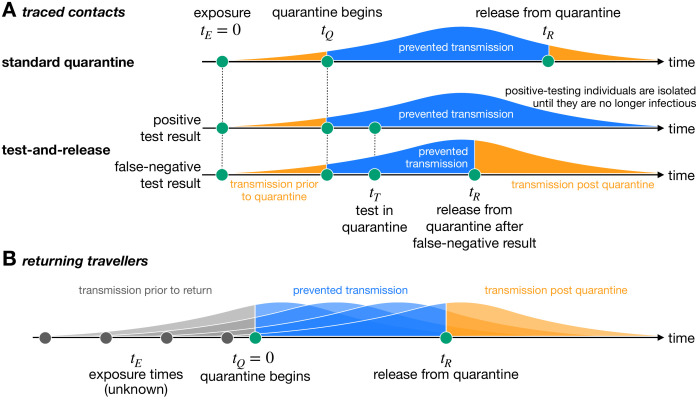
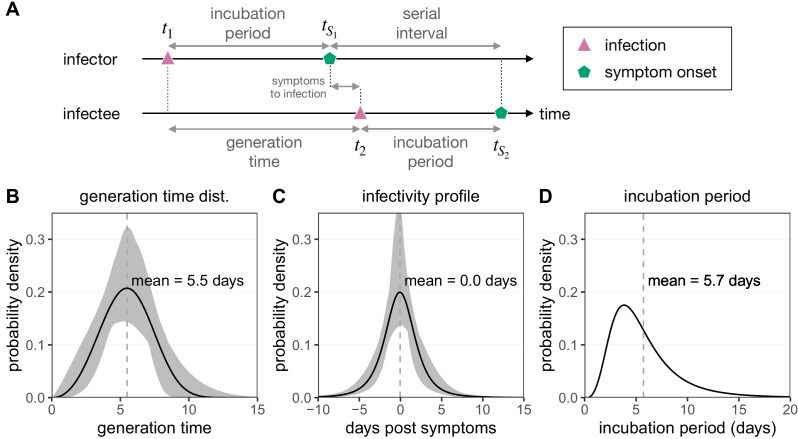
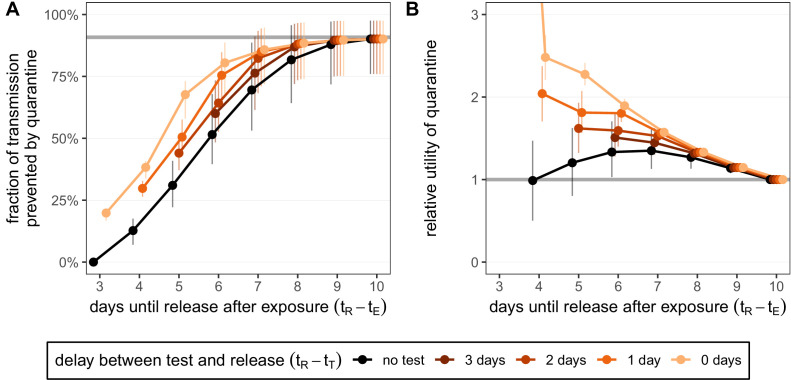
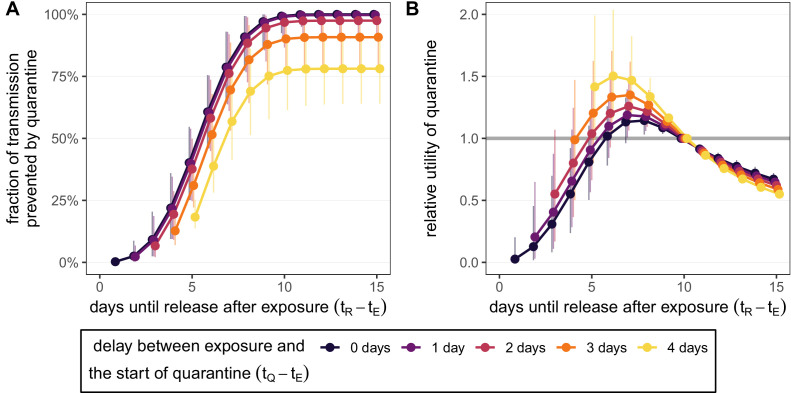
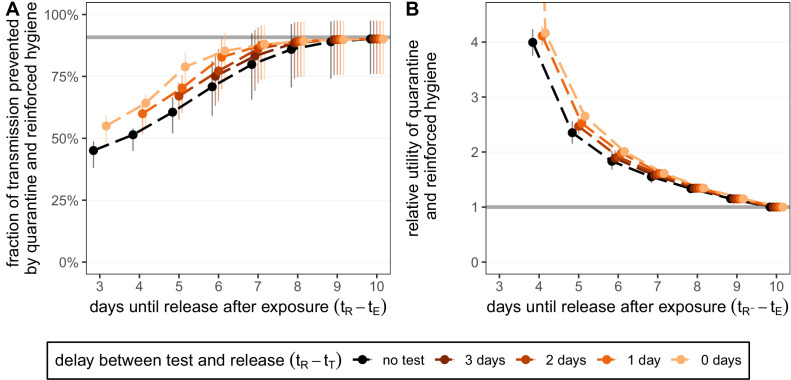
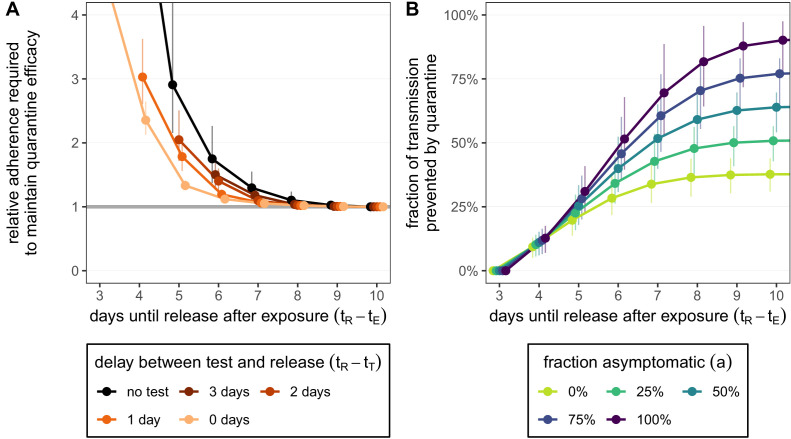
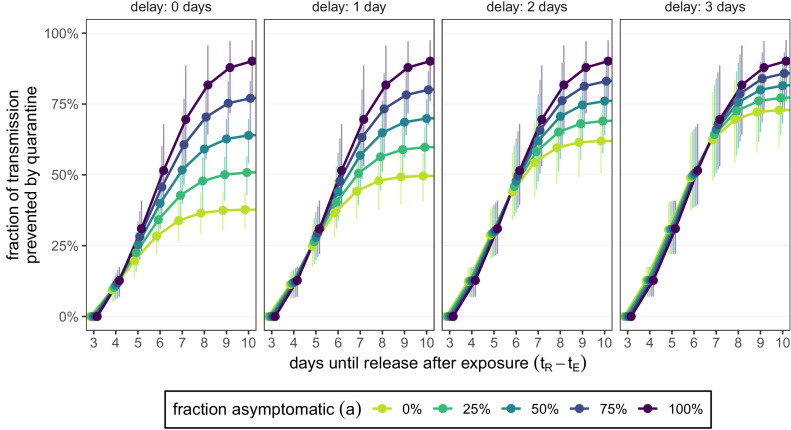
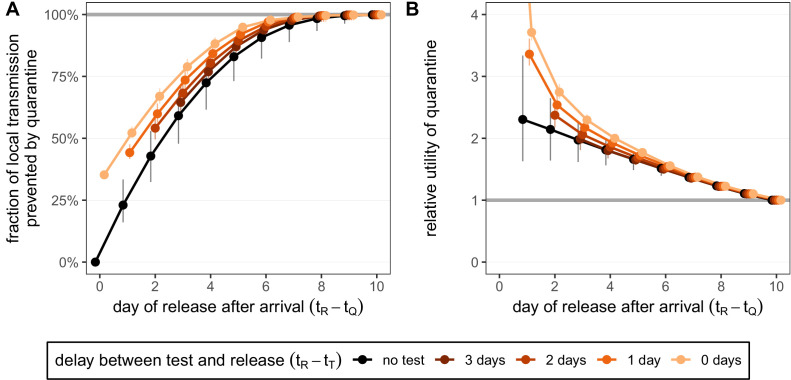
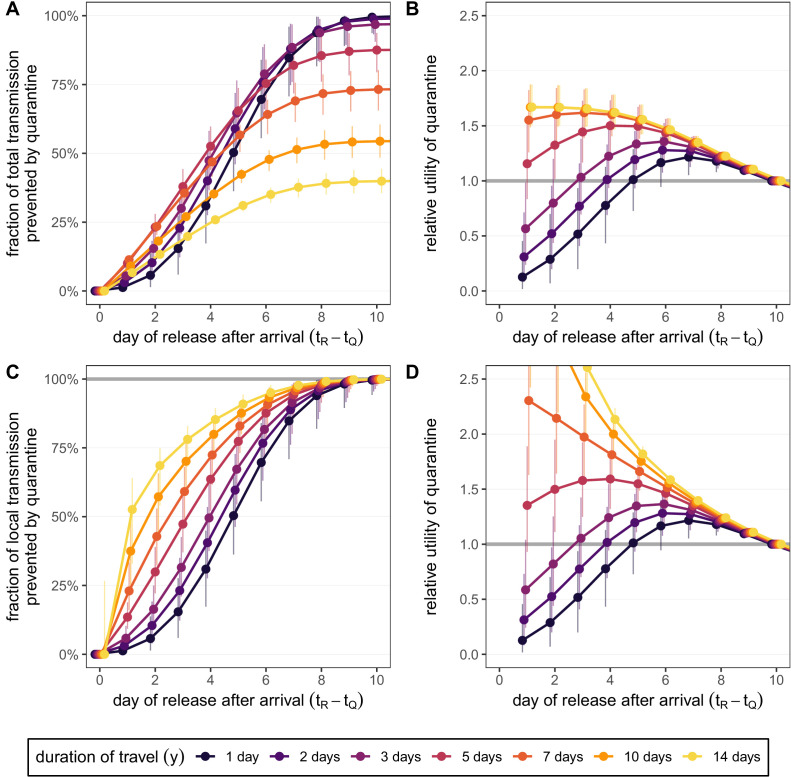
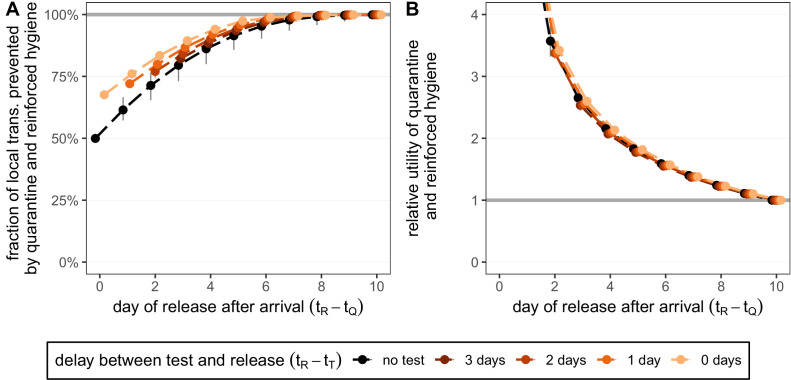
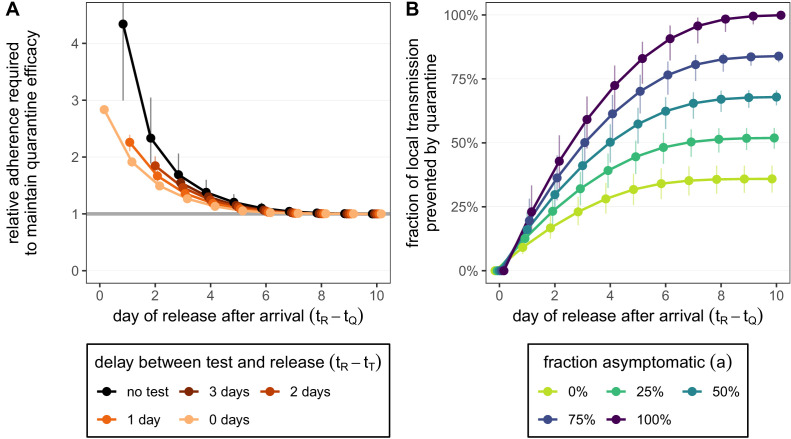
The large number of individuals placed into quarantine because of possible severe acute respiratory syndrome coronavirus 2 (SARS CoV-2) exposure has high societal and economic costs. There is ongoing debate about the appropriate duration of quarantine, particularly since the fraction of individuals who eventually test positive is perceived as being low. We use empirically determined distributions of incubation period, infectivity, and generation time to quantify how the duration of quarantine affects onward transmission from traced contacts of confirmed SARS-CoV-2 cases and from returning travellers. We also consider the roles of testing followed by release if negative (test-and-release), reinforced hygiene, adherence, and symptoms in calculating quarantine efficacy. We show that there are quarantine strategies based on a test-and-release protocol that, from an epidemiological viewpoint, perform almost as well as a 10-day quarantine, but with fewer person-days spent in quarantine. The findings apply to both travellers and contacts, but the specifics depend on the context.
由于可能接触到严重急性呼吸综合征冠状病毒 2(SARS-CoV-2),大量人员被隔离,这给社会和经济带来了巨大的成本。关于隔离的适当持续时间一直存在争议,特别是因为最终检测呈阳性的人数比例被认为较低。我们使用经验确定的潜伏期、传染性和世代时间分布来量化隔离时间的长短如何影响已确诊 SARS-CoV-2 病例的追踪接触者和返回旅行者的传播。我们还考虑了检测后如果呈阴性则释放(检测后放行)、强化卫生、遵守和症状在计算隔离效果中的作用。我们表明,存在基于检测后放行协议的隔离策略,从流行病学角度来看,这些策略的效果几乎与 10 天的隔离一样好,但隔离天数更少。这些发现适用于旅行者和接触者,但具体情况取决于具体情况。