Martin Paula I, Chao Linda, Krengel Maxine H, Ho Michael D, Yee Megan, Lew Robert, Knight Jeffrey, Hamblin Michael R, Naeser Margaret A
VA Boston Healthcare System, Boston, MA, United States.
Department of Neurology, School of Medicine, Boston University, Boston, MA, United States.
Front Neurol. 2021 Jan 21;11:574386. doi: 10.3389/fneur.2020.574386. eCollection 2020.
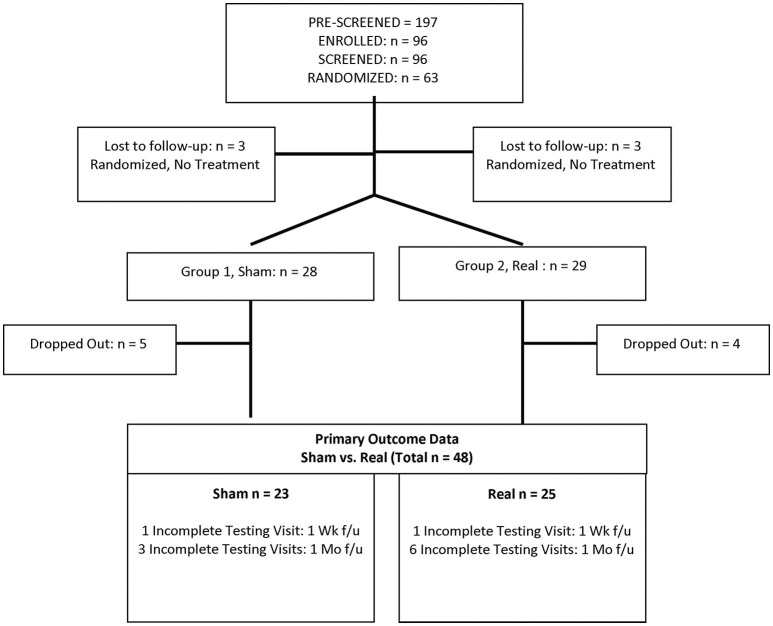
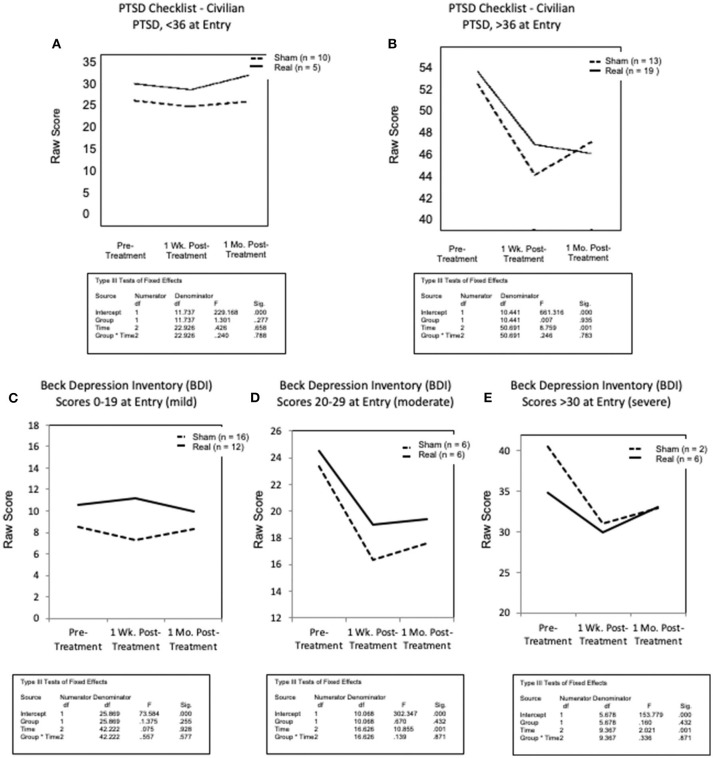
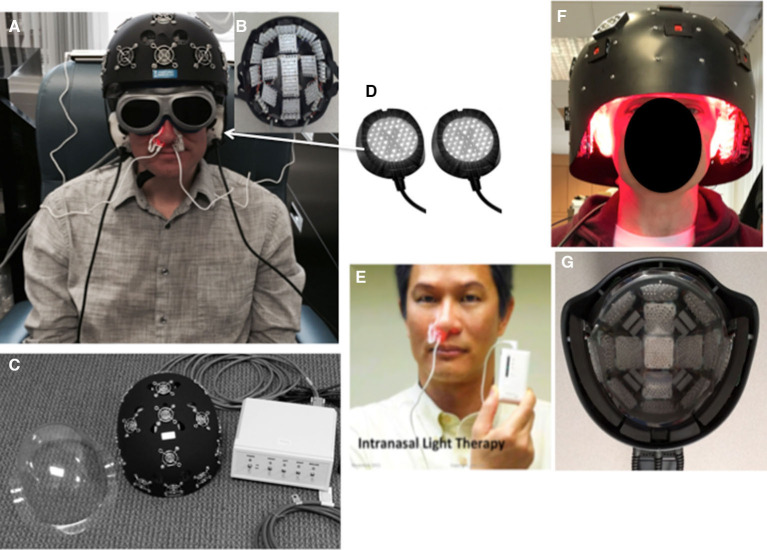
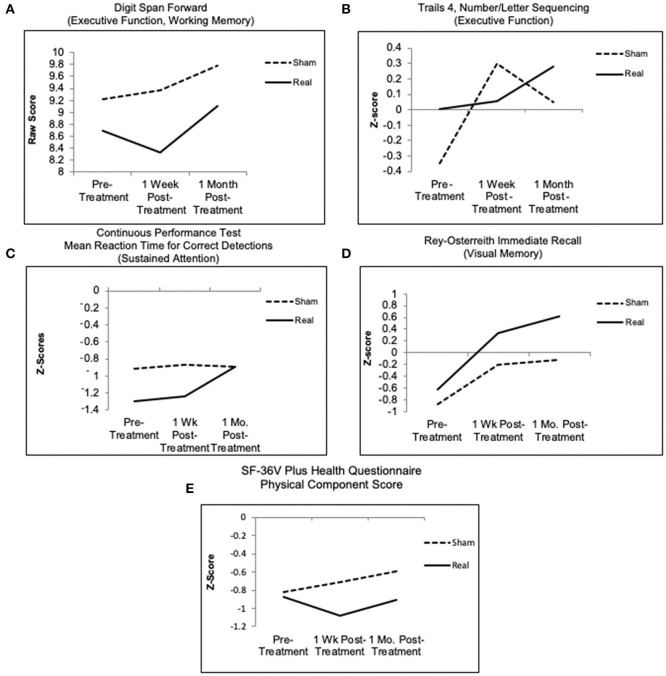
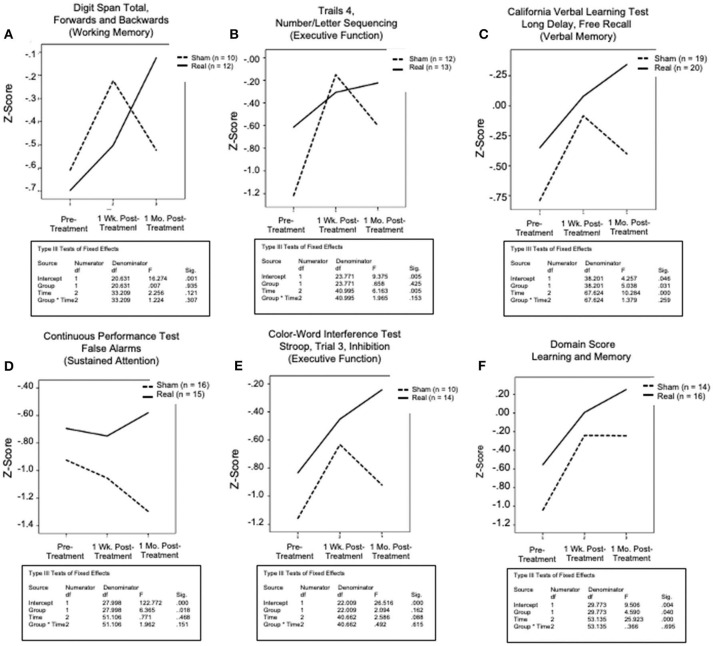
Approximately 25-30% of veterans deployed to Kuwait, 1990-91, report persistent multi-symptom Gulf War Illness (GWI) likely from neurotoxicant exposures. Photobiomodulation (PBM) in red/near-infrared (NIR) wavelengths is a safe, non-invasive modality shown to help repair hypoxic/stressed cells. Red/NIR wavelengths are absorbed by cytochrome C oxidase in mitochondria, releasing nitric oxide (increasing local vasodilation), and increasing adenosine tri-phosphate production. We investigated whether PBM applied transcranially could improve cognition, and health symptoms in GWI. Forty-eight (40 M) participants completed this blinded, randomized, sham-controlled trial using Sham or Real, red/NIR light-emitting diodes (LED) applied transcranially. Fifteen, half-hour transcranial LED (tLED) treatments were twice a week (7.5 weeks, in-office). Goggles worn by participant and assistant maintained blinding for visible red. Pre-/Post- testing was at Entry, 1 week and 1 month post- 15th treatment. Primary outcome measures were neuropsychological (NP) tests; secondary outcomes, Psychosocial Questionnaires, including PTSD. Primary Analyses (all participants), showed improvement for Real vs. Sham, for Digit Span Forwards ( < 0.01); and a trend for Trails 4, Number/Letter Sequencing ( < 0.10). For secondary outcomes, Real group reported more improvement on the SF-36V Plus, Physical Component Score ( < 0.08). Secondary Analyses included only subjects scoring below norm (50%ile) at Entry, on specific NP test/s. Real and Sham improved at 1 week after 15th treatment; however, at 1 month, only those receiving Real improved further: Digit Span Total, Forwards and Backwards; Trails 4, Number/Letter Sequencing; California Verbal Learning Test-II, long delay free recall; Continuous Performance Test-II, False Alarm Rate; and Color-Word Interference, Stroop, Trial 3, Inhibition; Sham group worsened, toward Entry values. Only those with more post-traumatic stress disorder (PTSD) symptomatology at Entry, receiving Real, continued to have additional PTSD reduction at 1 month; Sham regressed. This study was underpowered ( = 48), with large heterogeneity at Entry. This likely contributed to significance or trend to significance, for only two of the NP tests (Digit Span Forwards; Trails 4, Number/Letter Sequencing) and only one general health measure, the SF-36V Plus, Physical Component Score. More subjects receiving Real, self-reported increased concentration, relaxation and sleep. Controlled studies with newer, transcranial LED home treatment devices are warranted; this is expected to increase enrollment. www.ClinicalTrials.gov, identifier: NCT01782378.
1990年至1991年被部署到科威特的退伍军人中,约25% - 30%报告患有持续性多症状海湾战争疾病(GWI),可能是由于接触神经毒物所致。红/近红外(NIR)波长的光生物调节(PBM)是一种安全、非侵入性的方法,已被证明有助于修复缺氧/应激细胞。红/NIR波长被线粒体中的细胞色素C氧化酶吸收,释放一氧化氮(增加局部血管舒张),并增加三磷酸腺苷的产生。我们研究了经颅应用PBM是否能改善GWI患者的认知和健康症状。48名(40名男性)参与者完成了这项双盲、随机、假对照试验,使用经颅应用的假或真的红/NIR发光二极管(LED)。15次,每次半小时的经颅LED(tLED)治疗,每周两次(共7.5周,在诊所进行)。参与者和助手佩戴的护目镜保持对可见红光的盲态。治疗前/后测试在入组时、第15次治疗后1周和1个月进行。主要结局指标是神经心理学(NP)测试;次要结局是心理社会问卷,包括创伤后应激障碍(PTSD)问卷。主要分析(所有参与者)显示,与假治疗相比,真治疗组在顺背数字广度测试中有所改善(<0.01);在连线测验4数字/字母序列测试中有改善趋势(<0.10)。对于次要结局,真治疗组在SF - 36V Plus身体成分评分上报告有更多改善(<0.08)。次要分析仅包括在入组时特定NP测试得分低于正常水平(第50百分位数)的受试者。真治疗组和假治疗组在第15次治疗后1周均有改善;然而,在1个月时,只有接受真治疗的受试者进一步改善:总数字广度、顺背和倒背;连线测验4数字/字母序列;加利福尼亚言语学习测验 - II长时延迟自由回忆;连续操作测验 - II虚报率;以及色词干扰测验(Stroop测验)第3次试验抑制;假治疗组则向入组时的值恶化。只有那些在入组时创伤后应激障碍(PTSD)症状更严重且接受真治疗的受试者,在1个月时PTSD症状继续进一步减轻;假治疗组则出现倒退。本研究样本量不足(n = 48),入组时存在较大异质性。这可能是导致只有两项NP测试(顺背数字广度;连线测验4数字/字母序列)和一项一般健康指标SF - 36V Plus身体成分评分出现显著或显著趋势的原因。更多接受真治疗的受试者自我报告注意力、放松程度和睡眠有所改善。有必要开展使用更新的经颅LED家庭治疗设备的对照研究;预计这将增加入组人数。ClinicalTrials.gov网站,标识符:NCT01782378。