Dmochowski Grzegorz M, Shereen Ahmed Duke, Berisha Destiny, Dmochowski Jacek P
Princess Margaret Cancer Centre, Toronto, ON M5G 1L7, Canada.
Advanced Science Research Center, Graduate Center of the City University of New York, New York, NY 10031, USA.
Cereb Cortex Commun. 2020 Mar 19;1(1):tgaa004. doi: 10.1093/texcom/tgaa004. eCollection 2020.
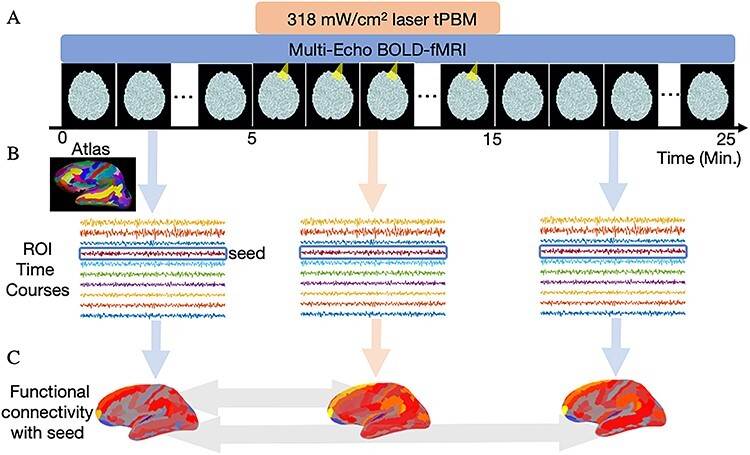
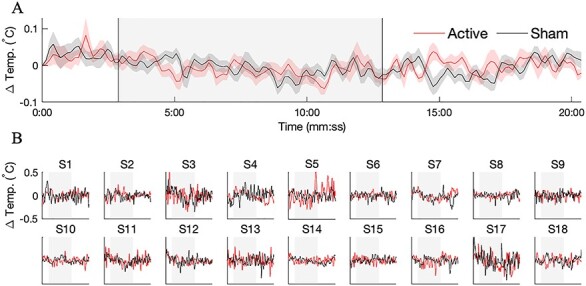
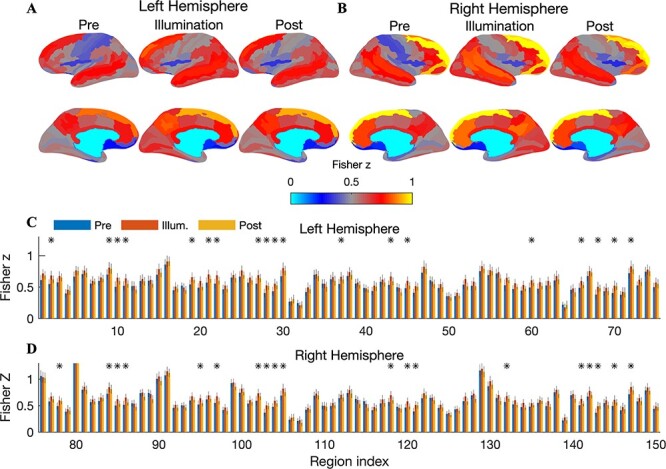
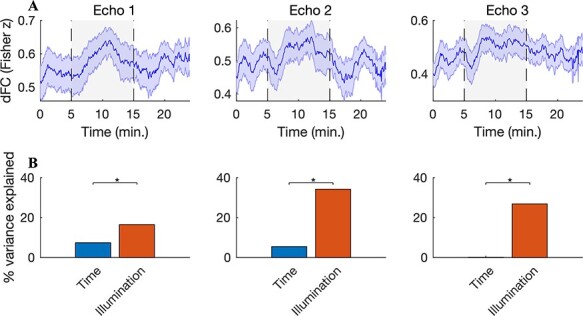
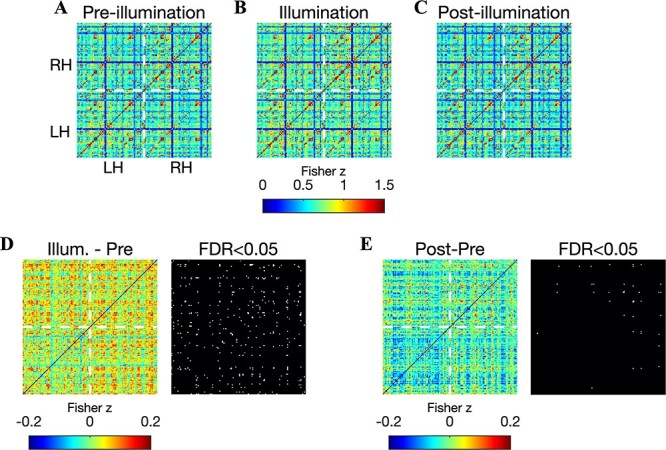
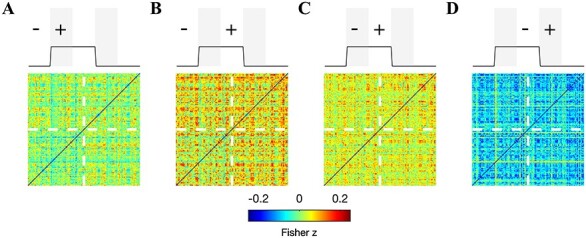
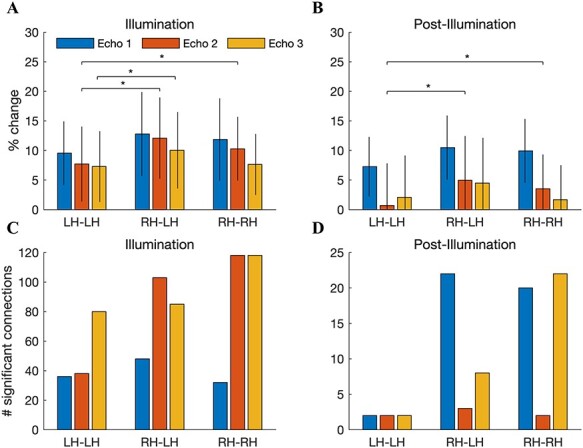
Although techniques for noninvasive brain stimulation are under intense investigation, an approach that has received limited attention is transcranial photobiomodulation (tPBM), the delivery of near-infrared light to the brain with a laser or light-emitting diode directed at the scalp. Here we employed functional magnetic resonance imaging to measure the blood-oxygenation-level-dependent signal in = 20 healthy human participants while concurrently stimulating their right frontal pole with a near-infrared laser. Functional connectivity with the illuminated region increased by up to 15% during stimulation, with a quarter of all connections experiencing a significant increase. The time course of connectivity exhibited a sharp rise approximately 1 min after illumination onset. Brain-wide connectivity increases were also observed, with connections involving the stimulated hemisphere showing a significantly larger increase than those in the contralateral hemisphere. We subsequently employed magnetic resonance thermometry to measure brain temperature during tPBM (separate cohort, = 20) and found no significant temperature differences between active and sham stimulation. Our findings suggest that near-infrared light synchronizes brain activity with a nonthermal mechanism, underscoring the promise of tPBM as a new technique for stimulating brain function.
尽管非侵入性脑刺激技术正在受到深入研究,但经颅光生物调节(tPBM)这一方法却受到了有限的关注,它是通过将激光或发光二极管对准头皮,向大脑传递近红外光。在此,我们利用功能磁共振成像来测量20名健康人类参与者的血氧水平依赖信号,同时用近红外激光刺激他们的右额极。在刺激过程中,与受照区域的功能连接增加了高达15%,所有连接中有四分之一经历了显著增加。连接的时间进程在光照开始后约1分钟出现急剧上升。还观察到全脑连接性增加,涉及受刺激半球的连接显示出比同侧半球的连接显著更大的增加。我们随后采用磁共振测温法在tPBM期间测量脑温(另一组,n = 20),发现在主动刺激和假刺激之间没有显著的温度差异。我们的研究结果表明,近红外光通过一种非热机制使脑活动同步,突出了tPBM作为一种刺激脑功能的新技术的前景。