The PhD Program for Translational Medicine, College for Medical Science and Technology, Taipei Medical University, 250 Wusing Street, Taipei 110, Taiwan.
International Ph.D. Program for Translational Science, College of Medical Science and Technology, Taipei Medical University, 250 Wusing Street, Taipei 110, Taiwan.
Int J Mol Sci. 2021 Feb 5;22(4):1626. doi: 10.3390/ijms22041626.
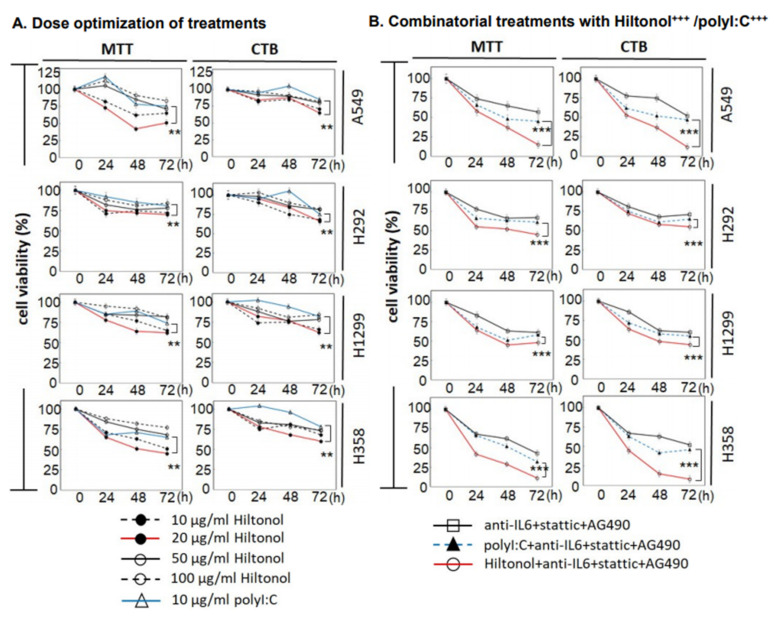
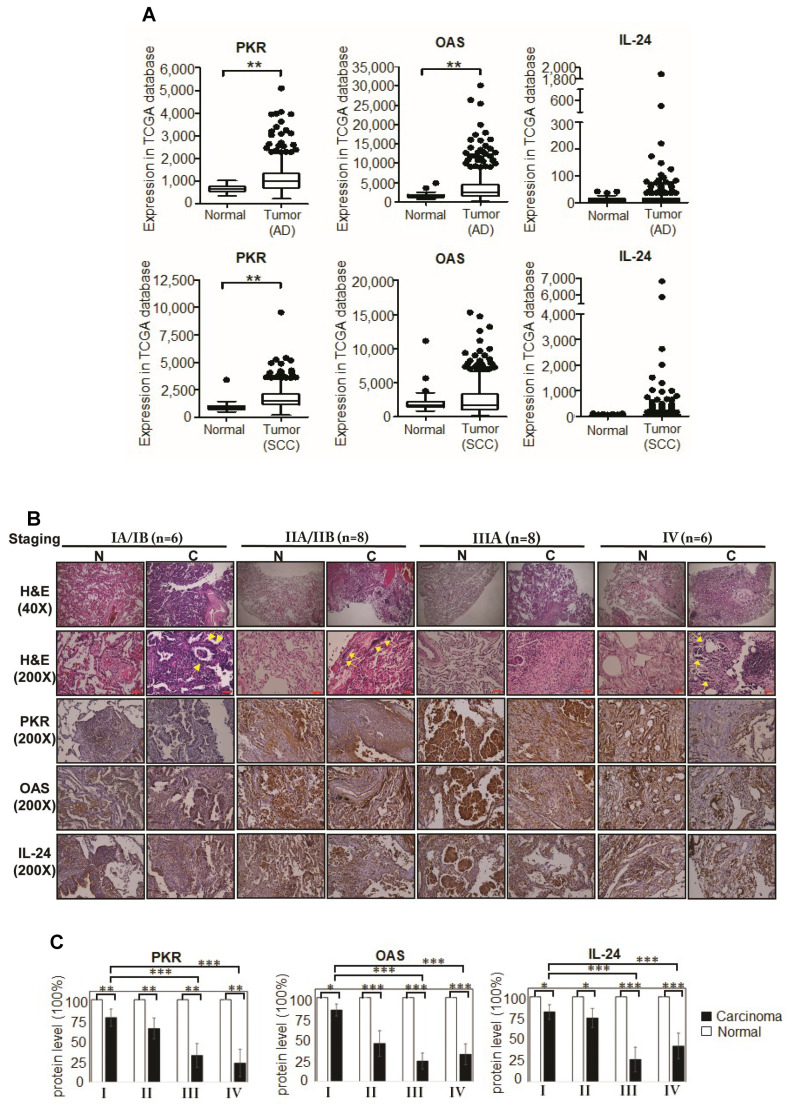
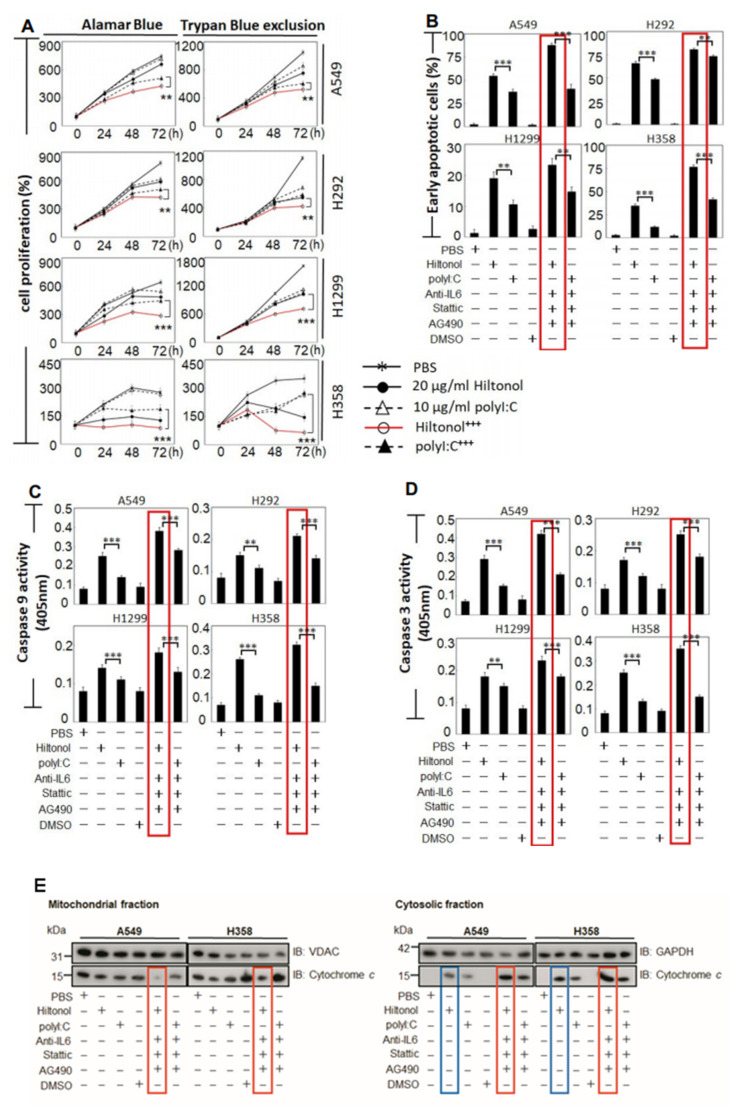
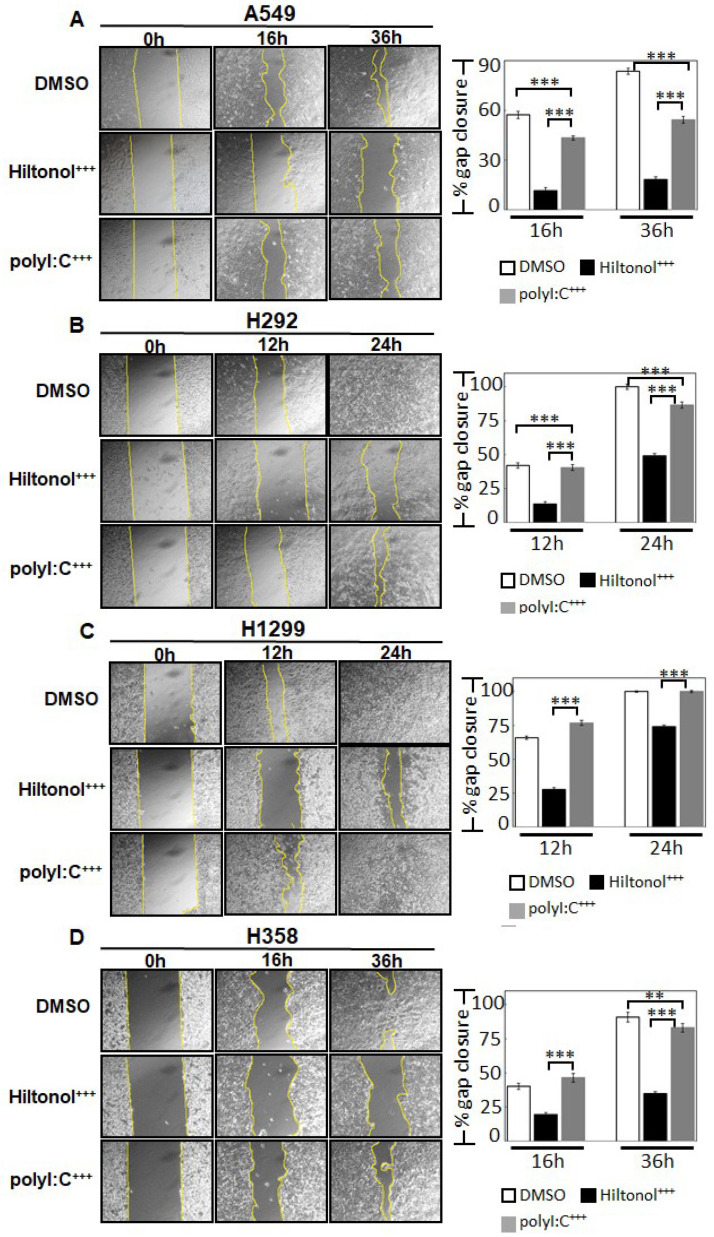
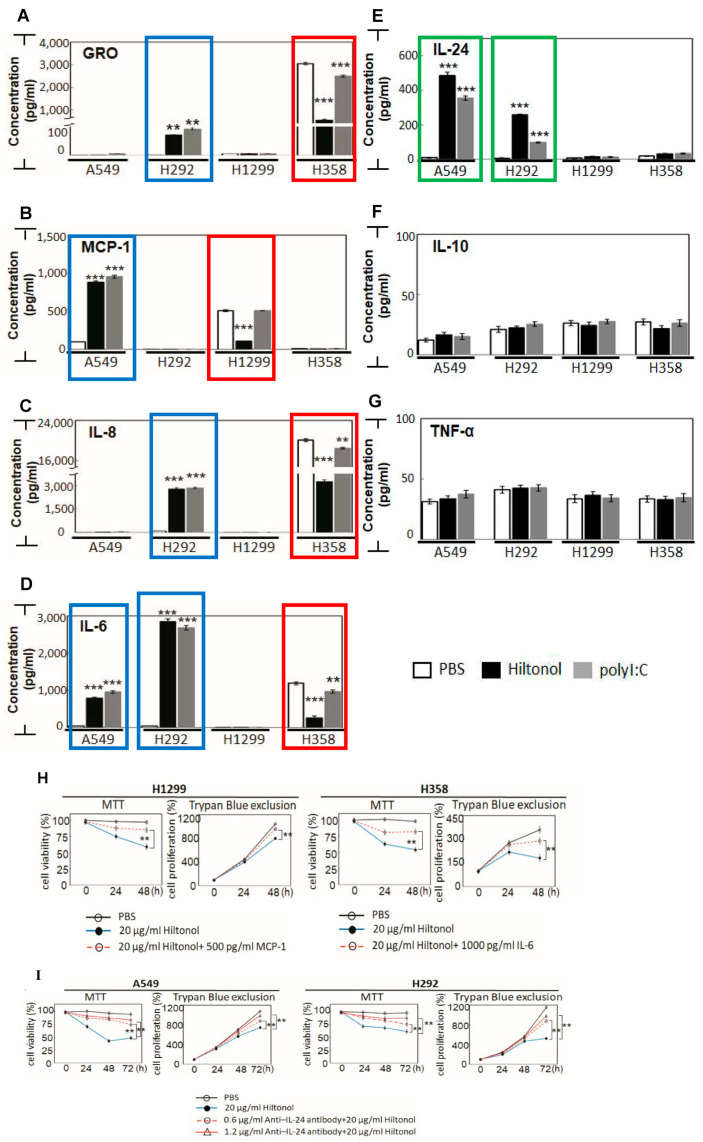
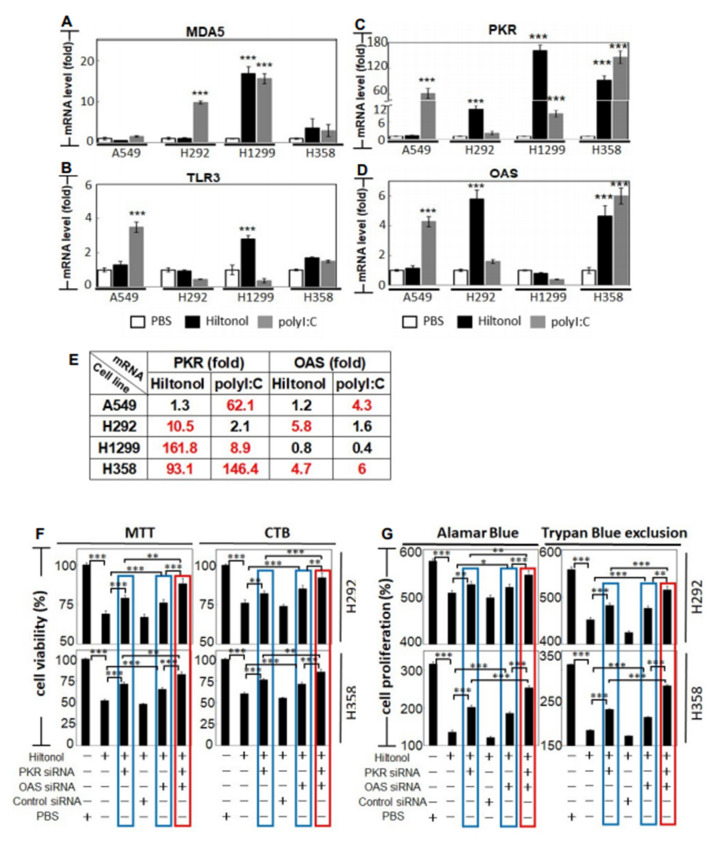
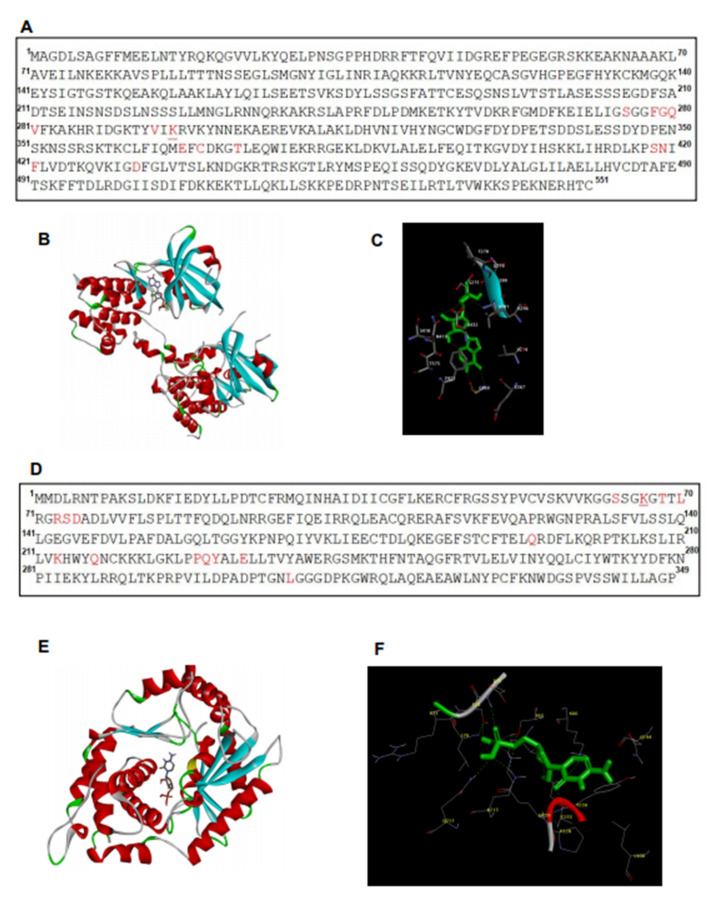
NSCLC (non-small cell lung cancer) is a leading cause of cancer-related deaths worldwide. Clinical trials showed that Hiltonol, a stable dsRNA representing an advanced form of polyI:C (polyinosinic-polycytidilic acid), is an adjuvant cancer-immunomodulator. However, its mechanisms of action and effect on lung cancer have not been explored pre-clinically. Here, we examined, for the first time, how a novel Hiltonol cocktail kills NSCLC cells. By retrospective analysis of NSCLC patient tissues obtained from the tumor biobank; pre-clinical studies with Hiltonol alone or Hiltonol cocktail [Hiltonol+anti-IL6+AG490 (JAK2 inhibitor)+Stattic (STAT3 inhibitor)]; cytokine analysis; gene knockdown and gain/loss-of-function studies, we uncovered the mechanisms of action of Hiltonol. We demonstrated that Hiltonol kills the cancer cells and suppresses the metastatic potential of NSCLC through: (i) upregulation of pro-apoptotic Caspase-9 and Caspase-3, (ii) induction of cytosolic cytochrome , (iii) modulation of pro-inflammatory cytokines (GRO, MCP-1, IL-8, and IL-6) and anticancer IL-24 in NSCLC subtypes, and (iv) upregulation of tumor suppressors, PKR (protein kinase R) and OAS (2'5' oligoadenylate synthetase). In silico analysis showed that Lys296 of PKR and Lys66 of OAS interact with Hiltonol. These Lys residues are purportedly involved in the catalytic/signaling activity of the tumor suppressors. Furthermore, knockdown of PKR/OAS abrogated the anticancer action of Hiltonol, provoking survival of cancer cells. Ex vivo analysis of NSCLC patient tissues corroborated that loss of PKR and OAS is associated with cancer advancement. Altogether, our findings unraveled the significance of studying tumor biobank tissues, which suggests PKR and OAS as precision oncological suppressor candidates to be targeted by this novel Hiltonol cocktail which represents a prospective drug for development into a potent and tailored therapy for NSCLC subtypes.
非小细胞肺癌(NSCLC)是全球癌症相关死亡的主要原因。临床试验表明,Hiltonol 是一种稳定的双链 RNA,代表了多聚肌苷酸-多聚胞苷酸(polyI:C)的高级形式,是一种佐剂癌症免疫调节剂。然而,其作用机制及其对肺癌的影响尚未在临床前进行探索。在这里,我们首次研究了新型 Hiltonol 鸡尾酒如何杀死 NSCLC 细胞。通过对肿瘤生物库中获得的 NSCLC 患者组织进行回顾性分析;单独使用 Hiltonol 或 Hiltonol 鸡尾酒[Hiltonol+抗-IL6+AG490(JAK2 抑制剂)+Stattic(STAT3 抑制剂)]进行临床前研究;细胞因子分析;基因敲低和获得/缺失功能研究,我们揭示了 Hiltonol 的作用机制。我们证明 Hiltonol 通过以下方式杀死癌细胞并抑制 NSCLC 的转移潜力:(i)上调促凋亡 Caspase-9 和 Caspase-3,(ii)诱导细胞质细胞色素,(iii)调节 NSCLC 亚型中的促炎细胞因子(GRO、MCP-1、IL-8 和 IL-6)和抗癌 IL-24,以及(iv)上调肿瘤抑制因子 PKR(蛋白激酶 R)和 OAS(2'5'寡聚腺苷酸合成酶)。计算机分析表明,PKR 的 Lys296 和 OAS 的 Lys66 与 Hiltonol 相互作用。据称,这些 Lys 残基参与肿瘤抑制因子的催化/信号活性。此外,PKR/OAS 的敲低会破坏 Hiltonol 的抗癌作用,引发癌细胞的存活。对 NSCLC 患者组织的离体分析证实,PKR 和 OAS 的缺失与癌症进展有关。总的来说,我们的研究结果揭示了研究肿瘤生物库组织的重要性,这表明 PKR 和 OAS 是作为精确肿瘤抑制因子候选物,通过这种新型 Hiltonol 鸡尾酒靶向,这种鸡尾酒代表了开发成针对 NSCLC 亚型的有效和量身定制的治疗方法的潜在药物。