Tokyo Metropolitan Institute of Gerontology, Tokyo 173-0015, Japan.
Gerodontology, Department of Oral Health Science, Faculty of Dental Medicine, Hokkaido University, Hokkaido 060-8586, Japan.
Int J Environ Res Public Health. 2021 Jan 29;18(3):1216. doi: 10.3390/ijerph18031216.
This study aimed to determine the relationship between objective chewing ability and the nutritional status of Japanese community-dwelling elders.
A cross-sectional study.
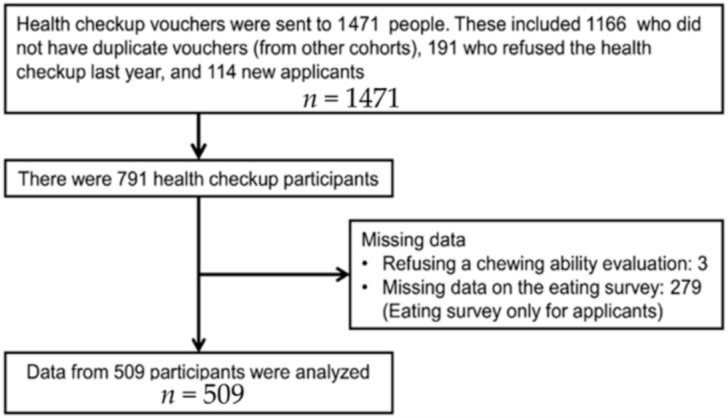
A total of 509 community-dwelling elders living in the Tokyo metropolitan area participated in a comprehensive survey conducted in October 2013.
The basic characteristics were sex, age, and body mass index. Undernutrition was examined through serum albumin levels. Chewing ability was examined through color-changeable xylitol gum by evaluating the color changes in chewing gum. Nutritional intake was examined using the semi-quantitative food frequency questionnaire.
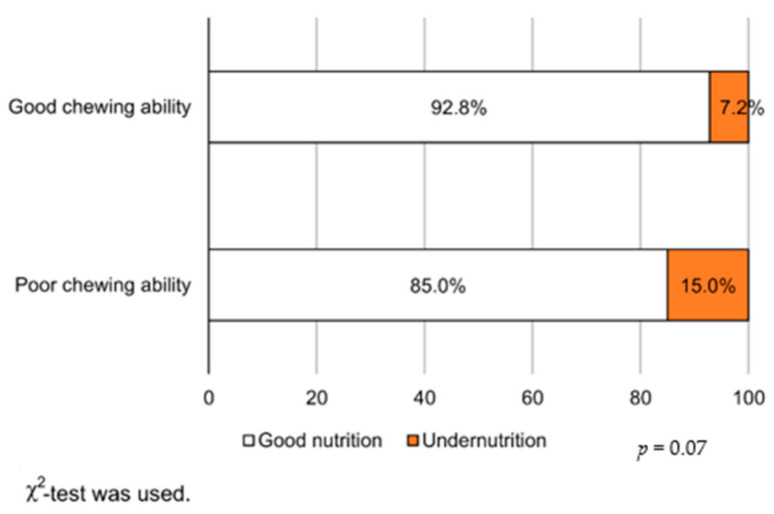
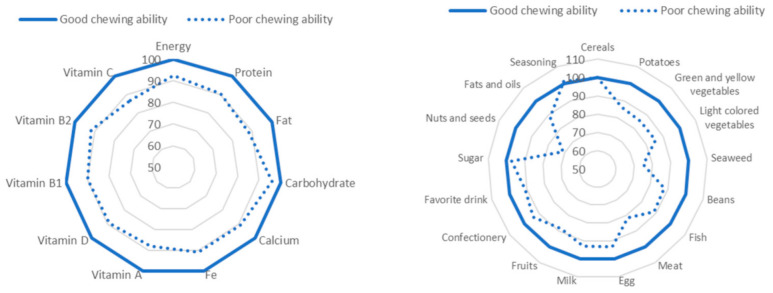
In the poor chewing ability group, all nutrient intake levels were significantly low, except for carbohydrates, and intake levels for all food groups were significantly low, except for cereals, confectionery, sugars, seasonings, and spices. Additionally, after adjusting for covariates for sex, age, Tokyo Metropolitan Institute of Gerontology-Index of Competence (TMIG-IC) score, Mini-Mental State Examination (MMSE) score, body mass index (BMI), stroke, number of functional teeth, energy intake, and protein intake, chewing ability was found to be significantly associated with undernutrition.
We concluded that chewing ability was closely associated with nutrient and different food groups' intake, as well as undernutrition, among Japanese community-dwelling elders. Thus, to ensure comprehensive nutritional management, nutritionists and dentists should collaborate when treating the same patients.
本研究旨在确定日本社区居住老年人客观咀嚼能力与营养状况之间的关系。
横断面研究。
2013 年 10 月,共 509 名居住在东京大都市区的社区老年人参与了一项全面调查。
基本特征包括性别、年龄和体重指数。通过血清白蛋白水平检查营养不良。通过咀嚼变色木糖醇口香糖评估口香糖的颜色变化来检查咀嚼能力。通过半定量食物频率问卷检查营养摄入。
在咀嚼能力差的组中,除碳水化合物外,所有营养素的摄入水平均显著较低,除谷物、糖果、糖、调味料和香料外,所有食物组的摄入水平均显著较低。此外,在校正性别、年龄、东京都老人综合研究所(TMIG-IC)评分、简易精神状态检查(MMSE)评分、体重指数(BMI)、中风、功能牙数、能量摄入和蛋白质摄入等协变量后,咀嚼能力与营养不良显著相关。
我们得出结论,咀嚼能力与日本社区居住老年人的营养和不同食物组的摄入以及营养不良密切相关。因此,为了确保全面的营养管理,营养师和牙医在治疗同一患者时应合作。