Department of Restorative Dentistry, Faculty of Dentistry, Atatürk University, Erzurum, Turkey.
Department of Restorative Dentistry, Faculty of Dentistry, Atatürk University, Erzurum, Turkey.
Int Dent J. 2021 Aug;71(4):343-351. doi: 10.1016/j.identj.2020.12.008. Epub 2021 Feb 12.
Composite resins are the most preferred filling material because of their excellent aesthetic qualities. However, a filling material should also be biocompatible as well as aesthetic. The aim of this study was to determine the serum and saliva bisphenol-A (BPA) levels and to examine the effects of serum BPA on reproductive hormone levels after healthy men were treated with composite fillings.
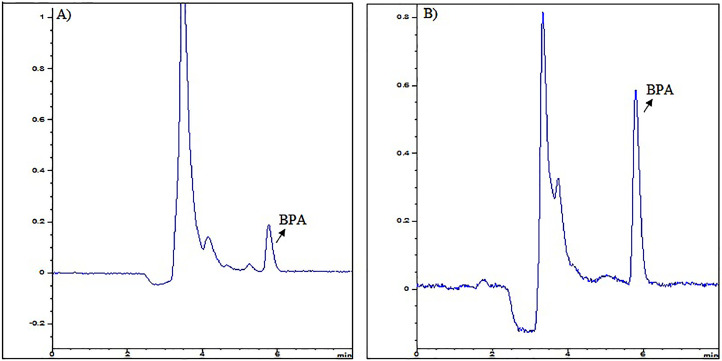
Eighteen healthy males each received 2 composite restorations. Saliva and blood samples of subjects were collected before resin application and 1 day and 1, 3, and 5 weeks after the resin was applied. BPA amounts in samples were detected using high-performance liquid chromatography (HPLC). Serum gonadotropins, testosterone, sex hormone binding globulin, free androgen index, and oestrogen levels were measured with radioimmunological assay kits. Statistical analysis of data was made using Friedman, Wilcoxon signed ranks and Mann-Whitney U tests (α = 0.05).
The amount of BPA released from composite resins over time was not significantly elevated in either saliva or serum (P > 0.5). In addition, serum BPA levels were significantly higher than saliva BPA levels for both composites (P < .05), but saliva and serum BPA levels were not statistically different when comparing the 2 composites (P > .05).
BPA from composite resins used in this study did not significantly alter serum hormone levels.
由于具有出色的美学品质,复合树脂是最受欢迎的填充材料。但是,填充材料也应该具有生物相容性和美学性。本研究的目的是确定血清和唾液中双酚 A(BPA)的水平,并研究健康男性接受复合填充后血清 BPA 对生殖激素水平的影响。
18 名健康男性每人接受 2 次复合修复。在树脂应用前、应用后 1 天、1 周、3 周和 5 周收集受试者的唾液和血液样本。使用高效液相色谱法(HPLC)检测样本中的 BPA 含量。使用放射免疫分析试剂盒测量血清促性腺激素、睾酮、性激素结合球蛋白、游离雄激素指数和雌激素水平。使用 Friedman、Wilcoxon 符号秩和检验和 Mann-Whitney U 检验(α=0.05)对数据进行统计分析。
复合树脂随时间释放的 BPA 量在唾液或血清中均未显著升高(P>0.5)。此外,两种复合材料的血清 BPA 水平均明显高于唾液 BPA 水平(P<0.05),但比较两种复合材料时,唾液和血清 BPA 水平无统计学差异(P>0.05)。
本研究中使用的复合树脂中的 BPA 并未显著改变血清激素水平。