Jensen Paul D, Orfila Caroline
School of Food Science and Nutrition, University of Leeds, Woodhouse Lane, Leeds, LS2 9JT UK.
Food Secur. 2021;13(3):551-570. doi: 10.1007/s12571-021-01142-2. Epub 2021 Feb 8.
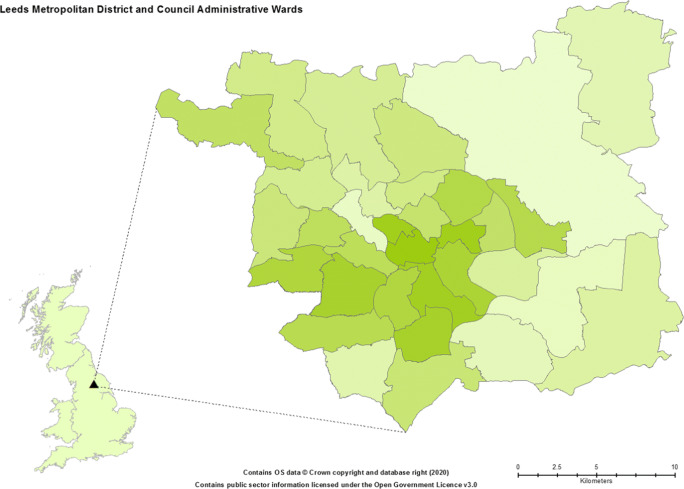
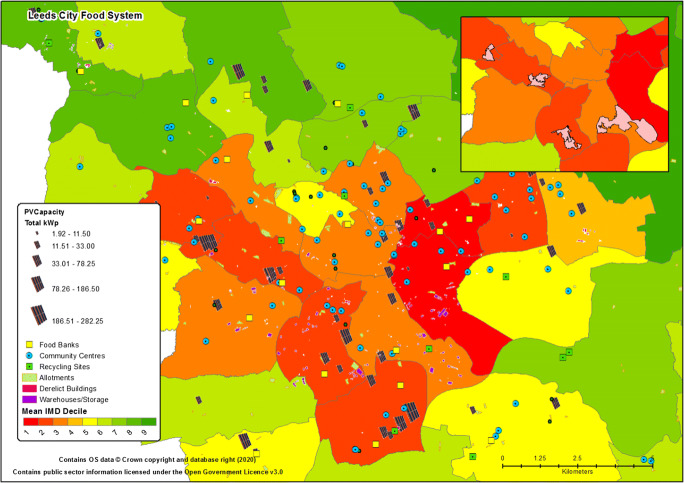
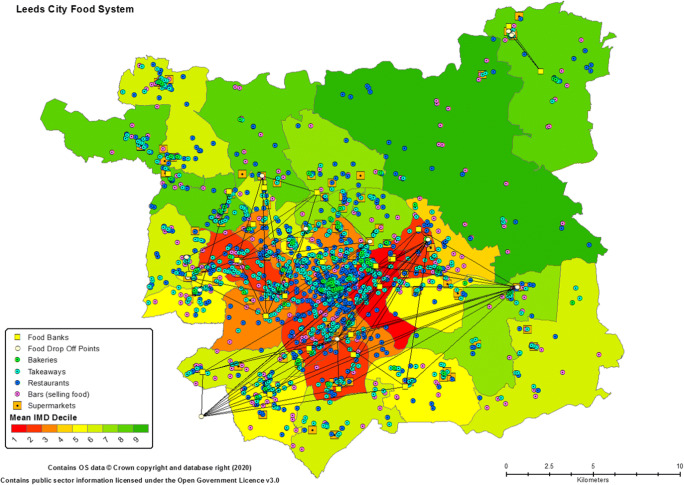
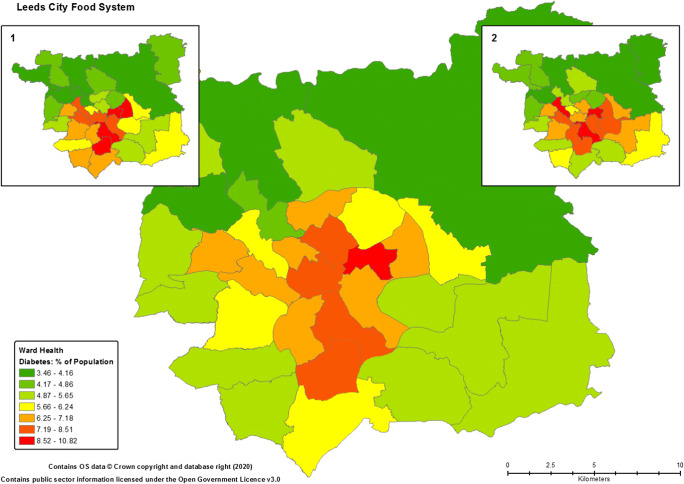
Urban food systems are complex and increasingly recognised as not being sustainable, equitable or resilient. Though globalisation and lengthening of agrifood supply chains has brought many benefits, such as year-long availability of fresh produce and modernisation opportunities for some developing regions, they have increased reliance on food imports and reduced the food and nutrition resilience of many cities. This premise has been widely witnessed following recent financial, climatic and pandemic driven disruptions to food supplies. A greater understanding is thus needed of the lived reality of a modern city's ability to sustainably and equitably feed itself in a crisis situation or otherwise. In a changing world, such knowledge is valuable on a variety of strategic planning levels. Employing publically available data, the scale of food security and resilience, and options for their improvement, are holistically assessed through a case study spatial analysis of the urban food system of the city of Leeds in the United Kingdom. The case study found that the Leeds city region is home to a significant and diverse food production and provision system, but it is not food secure in terms of providing sufficient energy or macronutrients, or functioning in an equitable manner for all of its residents. Options for improving the performance of the system, including urban farming and industrial symbiosis, were found to be nuanced and would only be effective alongside a range of complimentary interventions as well as high levels of investment, multi-sector cooperation and strong governance. Though food system evolution and development are grounded in local context, the methods, general findings and circular economy focussed recommendations emanating from the case study, are widely applicable.
The online version contains supplementary material available at 10.1007/s12571-021-01142-2.
城市食品系统复杂,且越来越被认为缺乏可持续性、公平性和韧性。尽管全球化和农业食品供应链的延长带来了诸多益处,比如新鲜农产品全年供应以及一些发展中地区的现代化机遇,但它们增加了对食品进口的依赖,并降低了许多城市的食品和营养韧性。近期金融、气候和疫情引发的食品供应中断,充分证明了这一点。因此,我们需要更深入地了解现代城市在危机情况下或其他情况下可持续、公平地自给自足的实际情况。在不断变化的世界中,这些知识在各种战略规划层面都很有价值。利用公开可用的数据,通过对英国利兹市城市食品系统的案例研究空间分析,全面评估了食品安全和韧性的规模及其改善选项。案例研究发现,利兹市地区拥有庞大且多样的食品生产和供应系统,但在提供足够能量或常量营养素方面,以及在为所有居民公平运作方面,它并不具备食品安全保障。研究发现,改善该系统性能的选项,包括城市农业和产业共生,较为微妙,只有在一系列补充干预措施以及大量投资、多部门合作和强有力的治理的配合下才会有效。尽管食品系统的演变和发展基于当地情况,但该案例研究得出的方法、总体发现以及以循环经济为重点的建议具有广泛适用性。
在线版本包含可在10.1007/s12571-021-01142-2获取的补充材料。