Department Applied Science, Alard College of Engineering and Management, Marunji, Pune 411057, India.
Photonics Nanomaterial Lab, Laser Materials Processing Division, Raja Ramanna Centre for Advanced Technology, Indore 452 013, India; Homi Bhabha National Institute, Training School Complex, Anushaktinagar, Mumbai 400094, India.
Infect Genet Evol. 2021 Aug;92:104834. doi: 10.1016/j.meegid.2021.104834. Epub 2021 Mar 31.
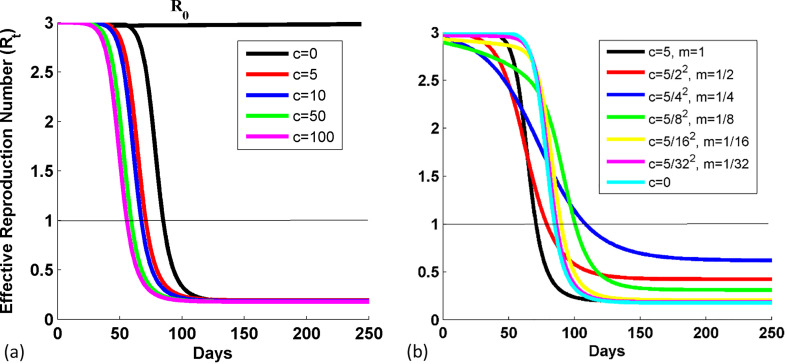
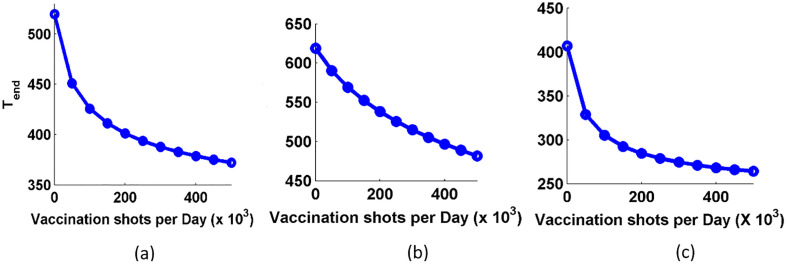
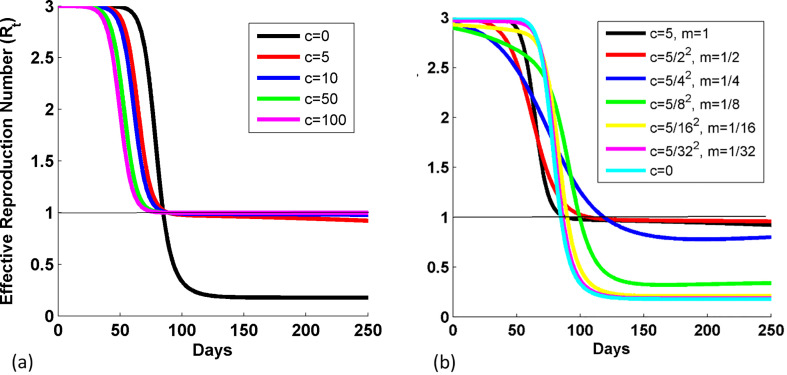
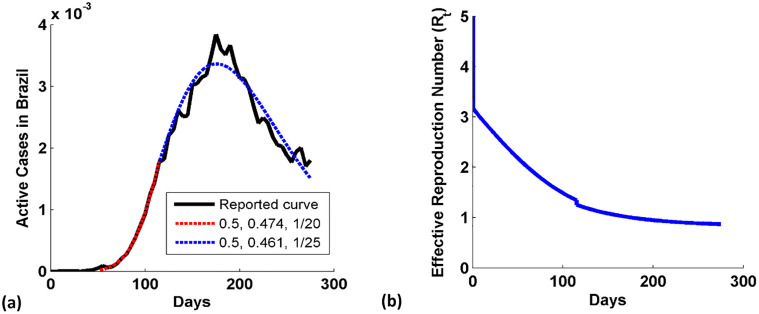
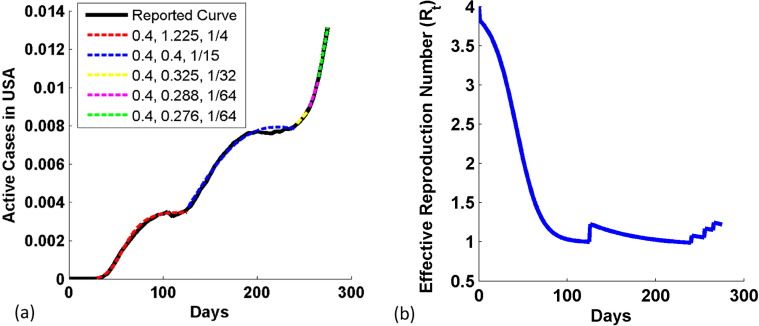
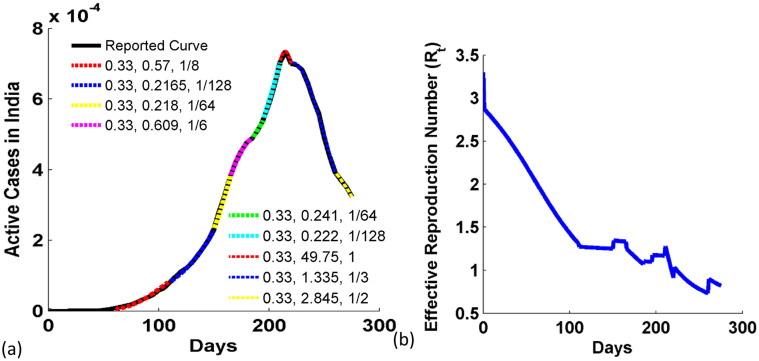
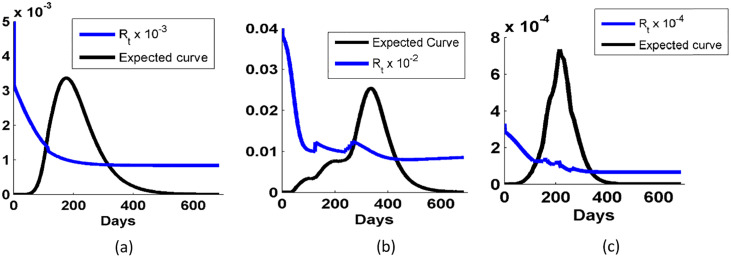
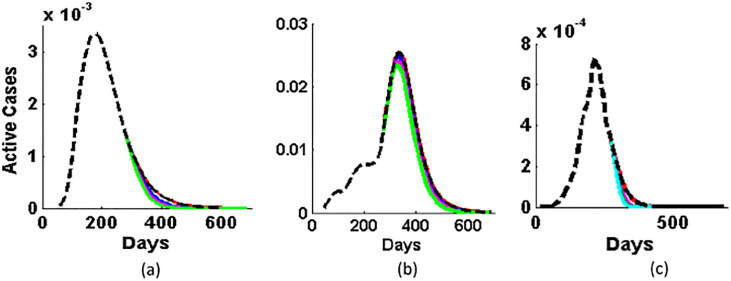
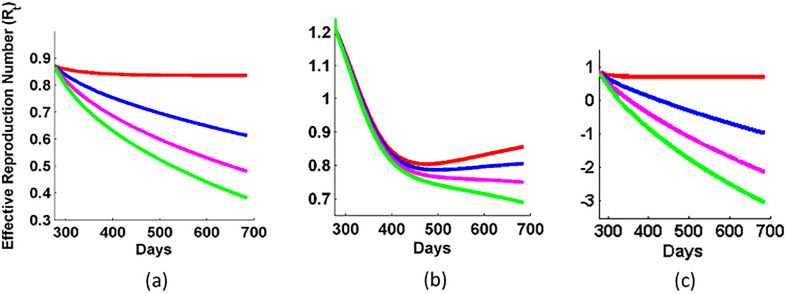
The most important question and concern in these circumstances of COVID-19 epidemic outspread is when will the pandemic end? Vaccination is the only solution to restore life to normalcy in the fastest and safest possible manner. Therefore, we have carried out a predictive analysis for realistic timescale estimates for overcoming the epidemic considering vaccination rate effect on the dynamics of COVID-19 control. In particular we discuss the worst affected large countries like India, Brazil and USA for estimating effect of vaccination rate in expediting the end of the COVID-19 epidemic. We analytically simulated the dynamic evolution of active cases of these countries in the last nine months using the modified SIR model and then included the effect of vaccination to forecast the proliferation dynamics. We hence obtained the transmission parameters, the variation in the reproduction numbers and the impact of the different values of the vaccination shots in the expected curves of active cases in the coming times to predicted the timescales of the end of the epidemic.
在 COVID-19 疫情蔓延的情况下,最重要的问题和关注点是疫情何时会结束?接种疫苗是恢复正常生活最快、最安全的唯一方法。因此,我们考虑了疫苗接种率对 COVID-19 控制动态的影响,针对现实时间尺度估计进行了预测分析,以克服这一疫情。特别是,我们讨论了印度、巴西和美国等受影响最严重的大国,以评估疫苗接种率对加速 COVID-19 疫情结束的影响。我们使用修正后的 SIR 模型对过去九个月这些国家的活跃病例的动态演变进行了分析模拟,然后加入疫苗接种的效果,以预测未来的活跃病例的扩散动态。因此,我们获得了传播参数、繁殖数的变化以及在预期的活跃病例曲线中不同疫苗接种剂量的影响,以预测疫情结束的时间尺度。