College of Health Solutions, Arizona State University, Phoenix, Arizona, USA.
Center for Health Promotion and Disease Prevention, Arizona State University, Phoenix, Arizona, USA.
Obes Rev. 2021 May;22(5):e13175. doi: 10.1111/obr.13175. Epub 2021 Feb 15.
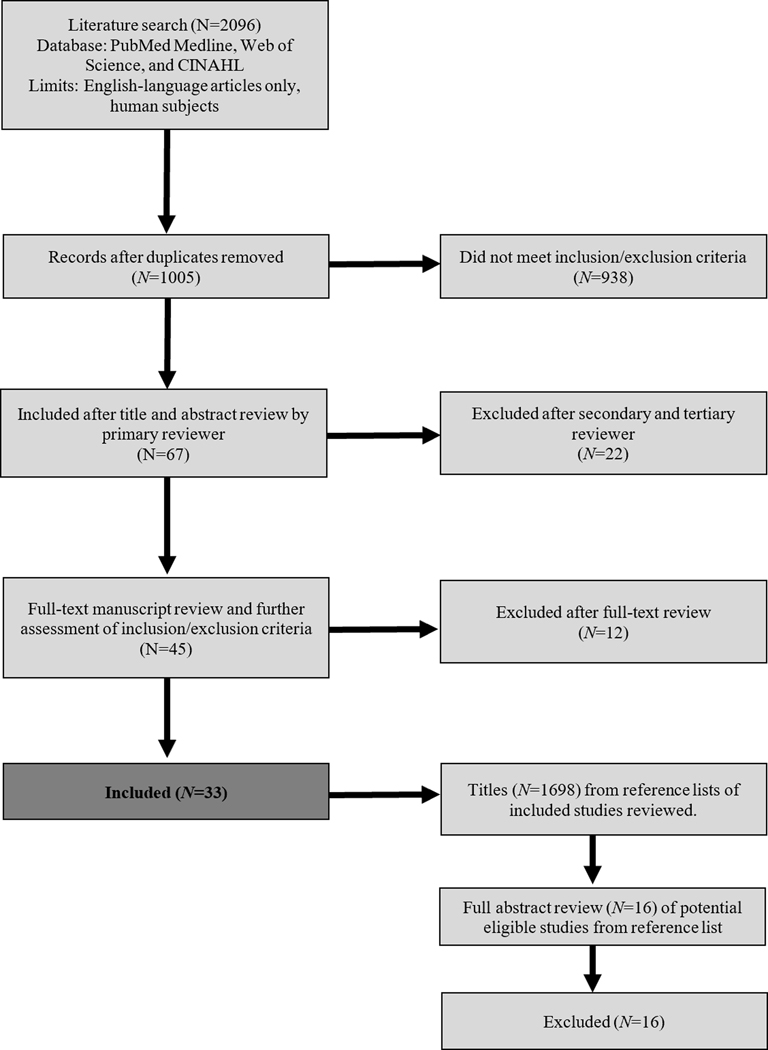
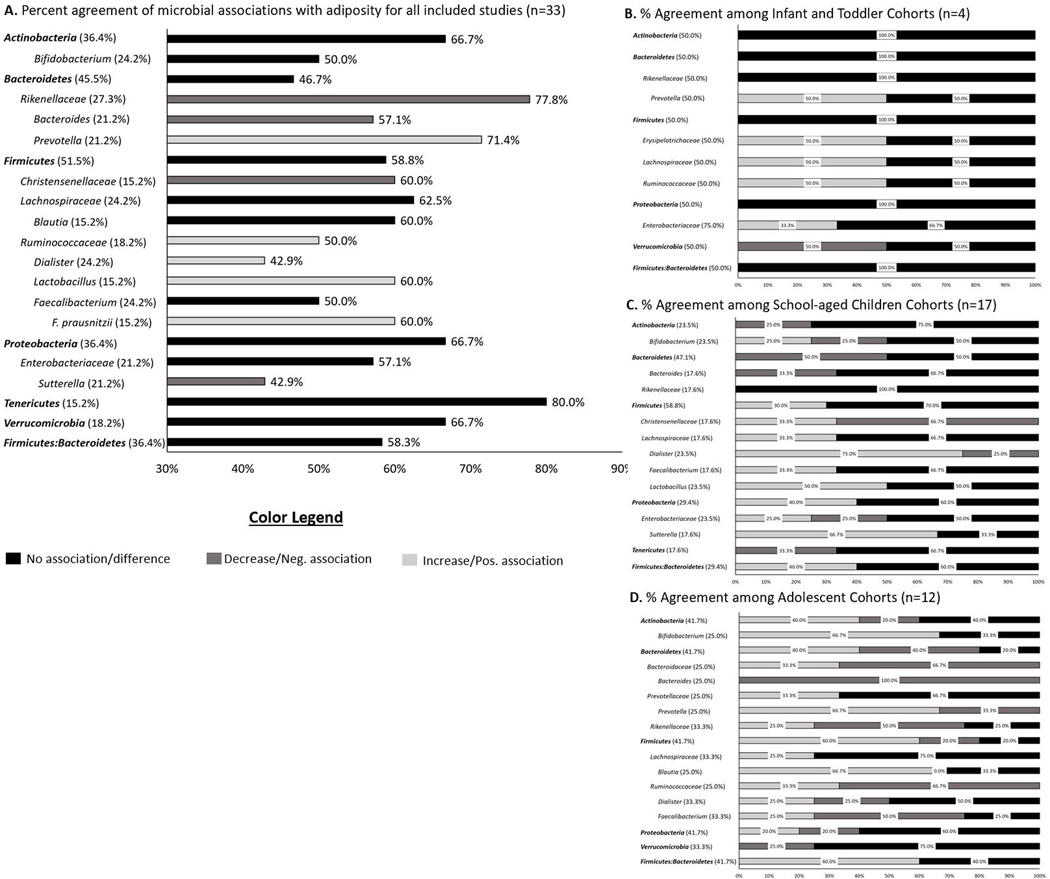
Early life gut microbiota are affected by several factors that make identification of microbial-adiposity relationships challenging. This review evaluates studies that have investigated the gut microbiota composition associated with adiposity in infants, children, and adolescents and provides evidence-based nutrition recommendations that address microbiota-adiposity links. Electronic databases were systematically searched through January 2020. Eligible studies were published in English and analyzed gut microbiota and adiposity among individuals aged birth to 18 years. Abstracts and full-text articles were reviewed by three independent reviewers. Of 45 full-text articles reviewed, 33 were included. No difference in abundance was found for Bacteroidetes (n = 7/15 articles), Firmicutes (n = 10/17), Actinobacteria (n = 8/12), Proteobacteria (n = 8/12), Tenericutes (n = 4/5), and Verrucomicrobia (n = 4/6) with adiposity. Lower abundance of Christensenellaceae (n = 3/5) and Rikenellaceae (n = 6/8) but higher abundance of F. prausnitzii (n = 3/5) and Prevotella (n = 5/7) were associated with adiposity. A lack of consensus exists for gut microbial composition associations with adiposity. A healthy gut microbiota is associated with a diet rich in fruits and vegetables with moderate consumption of animal fat and protein. Future research should use more robust sequencing technologies to identify all bacterial taxa associated with adiposity and evaluate how diet effects these adiposity-associated microbes.
早期的肠道微生物群受到多种因素的影响,这些因素使得确定微生物与肥胖之间的关系具有挑战性。本综述评估了研究婴儿、儿童和青少年肠道微生物群组成与肥胖之间关系的研究,并提供了基于证据的营养建议,以解决微生物群与肥胖之间的联系。通过 2020 年 1 月的系统搜索电子数据库。符合条件的研究发表于英文,并对年龄在出生至 18 岁的个体的肠道微生物群和肥胖进行了分析。摘要和全文由三名独立评审员进行了审查。在审查的 45 篇全文文章中,有 33 篇被纳入。Bacteroidetes(n = 7/15)、Firmicutes(n = 10/17)、Actinobacteria(n = 8/12)、Proteobacteria(n = 8/12)、Tenericutes(n = 4/5)和 Verrucomicrobia(n = 4/6)与肥胖之间的丰度没有差异。Christensenellaceae(n = 3/5)和 Rikenellaceae(n = 6/8)的丰度较低,但 F. prausnitzii(n = 3/5)和 Prevotella(n = 5/7)的丰度较高与肥胖有关。肠道微生物组成与肥胖的相关性尚未达成共识。健康的肠道微生物群与富含水果和蔬菜的饮食有关,适量摄入动物脂肪和蛋白质。未来的研究应使用更强大的测序技术来识别与肥胖相关的所有细菌分类群,并评估饮食如何影响这些与肥胖相关的微生物。