Centre for Cancer Cell and Molecular Biology, Barts Cancer Institute, Queen Mary University of London, Charterhouse Square, London EC1M 6BQ, UK.
Structure and Membrane Compartments, Institute Curie, Paris Sciences & Lettres Research University, Centre for National de la Recherche Scientifique, UMR144, Paris, France.
Curr Biol. 2021 Apr 12;31(7):1403-1416.e7. doi: 10.1016/j.cub.2021.01.028. Epub 2021 Feb 15.
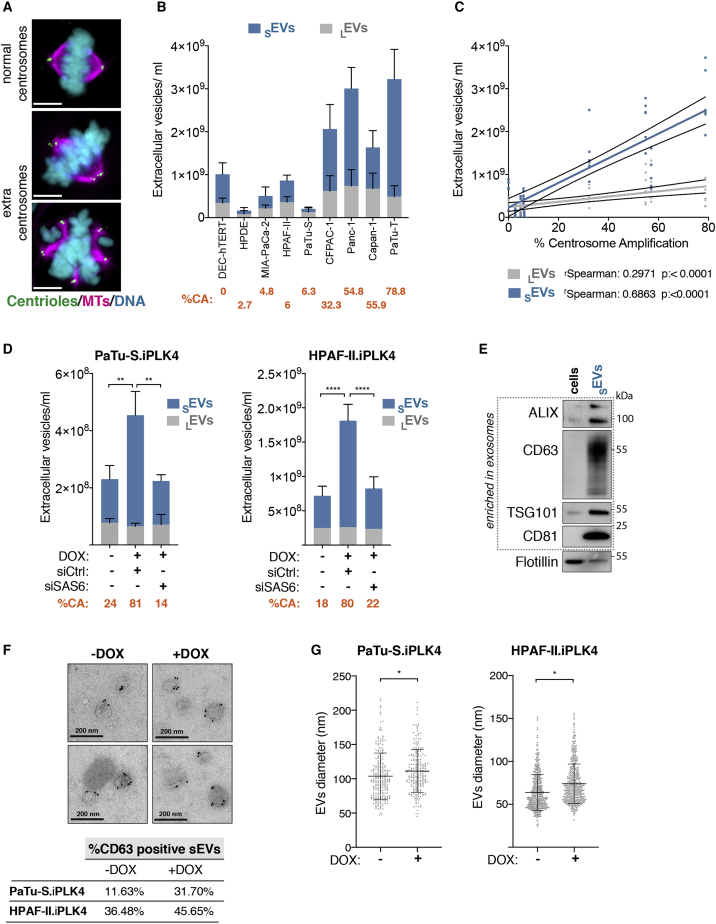
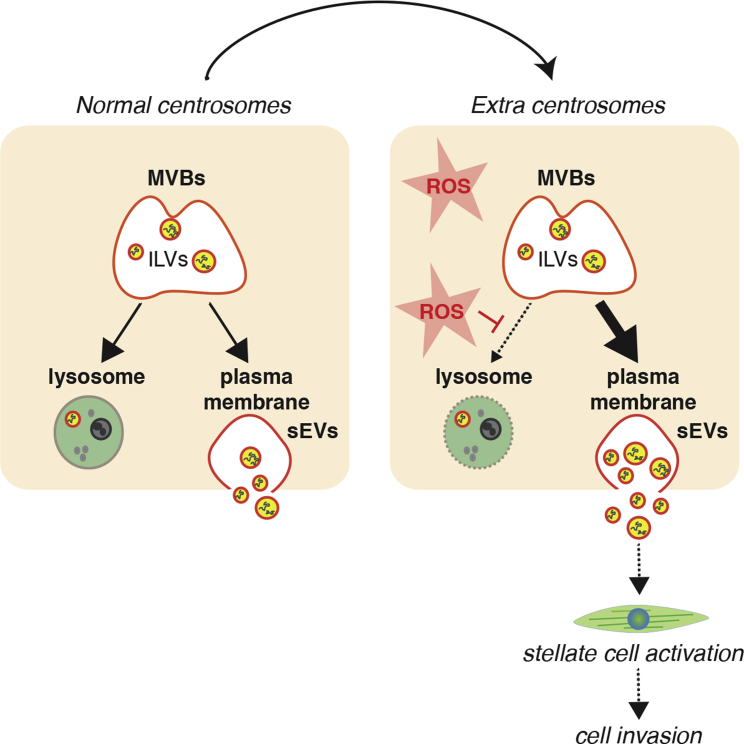
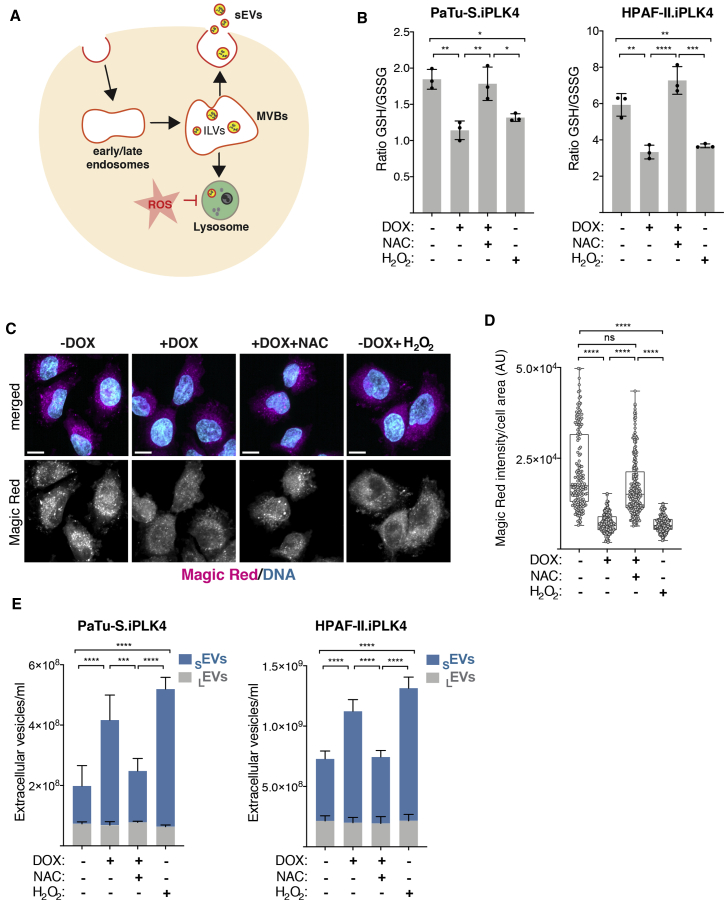
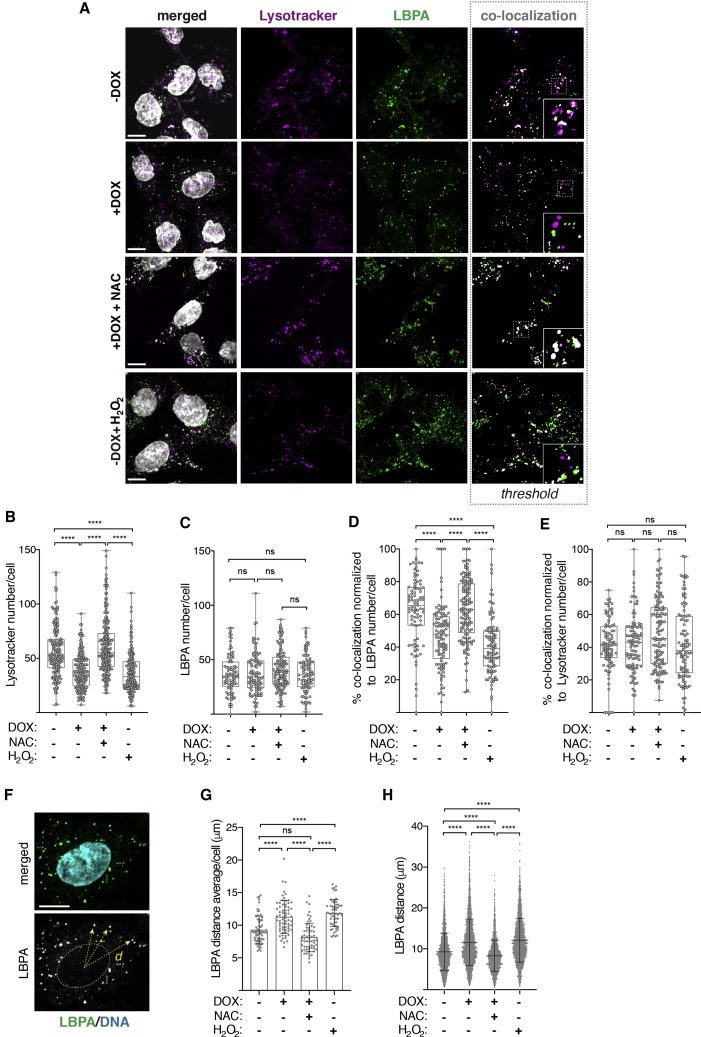
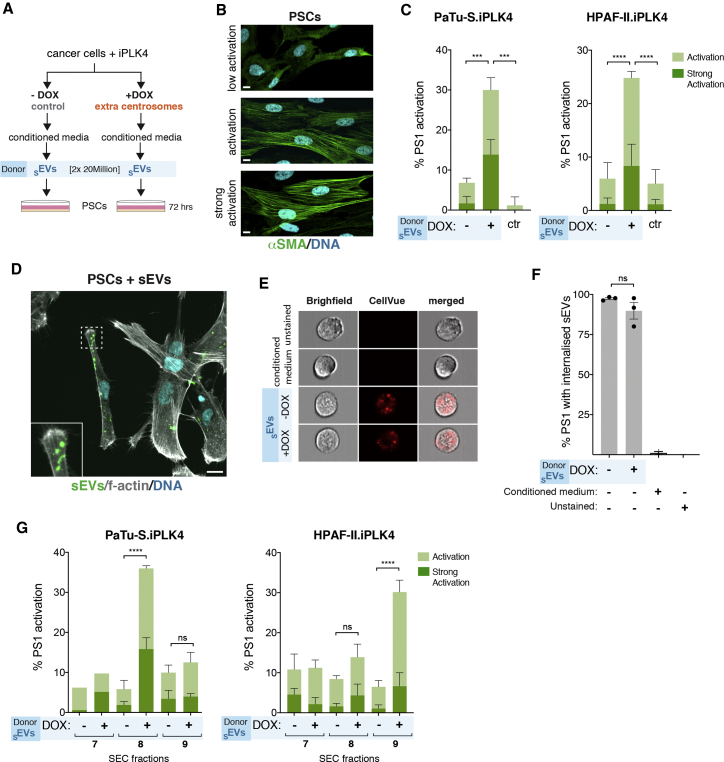
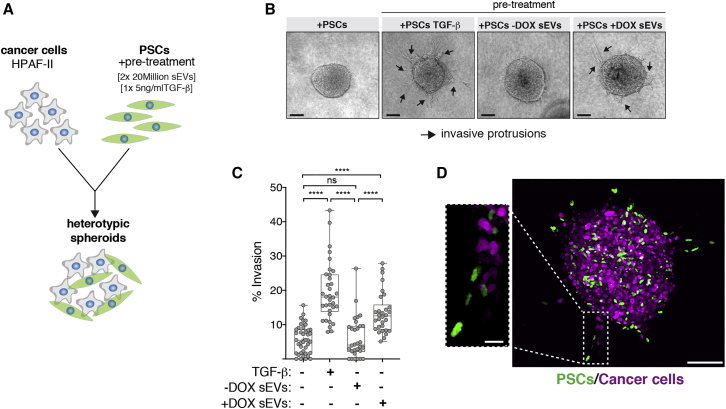
Bidirectional communication between cells and their surrounding environment is critical in both normal and pathological settings. Extracellular vesicles (EVs), which facilitate the horizontal transfer of molecules between cells, are recognized as an important constituent of cell-cell communication. In cancer, alterations in EV secretion contribute to the growth and metastasis of tumor cells. However, the mechanisms underlying these changes remain largely unknown. Here, we show that centrosome amplification is associated with and sufficient to promote small extracellular vesicle (EV) secretion in pancreatic cancer cells. This is a direct result of lysosomal dysfunction, caused by increased reactive oxygen species (ROS) downstream of extra centrosomes. We propose that defects in lysosome function could promote multivesicular body fusion with the plasma membrane, thereby enhancing EV secretion. Furthermore, we find that EVs secreted in response to amplified centrosomes are functionally distinct and activate pancreatic stellate cells (PSCs). These activated PSCs promote the invasion of pancreatic cancer cells in heterotypic 3D cultures. We propose that EVs secreted by cancer cells with amplified centrosomes influence the bidirectional communication between the tumor cells and the surrounding stroma to promote malignancy.
细胞与其周围环境之间的双向通讯在正常和病理环境中都至关重要。细胞间分子水平转移的媒介——细胞外囊泡(EV),被认为是细胞间通讯的重要组成部分。在癌症中,EV 分泌的改变促进了肿瘤细胞的生长和转移。然而,这些变化的机制在很大程度上仍然未知。在这里,我们发现中心体扩增与促进胰腺癌细胞中小细胞外囊泡(EV)分泌有关,并且是其直接原因。这是由额外中心体下游增加的活性氧(ROS)引起的溶酶体功能障碍的直接结果。我们提出,溶酶体功能的缺陷可能会促进多泡体与质膜融合,从而增强 EV 的分泌。此外,我们发现,响应扩增的中心体而分泌的 EV 具有不同的功能,并能激活胰腺星状细胞(PSC)。这些被激活的 PSCs 促进了异质 3D 培养物中胰腺癌细胞的侵袭。我们提出,具有扩增中心体的癌细胞分泌的 EV 影响肿瘤细胞与周围基质之间的双向通讯,从而促进恶性肿瘤的发生。