Lu Yanting, Zhu Shu, Wang Xiaoyan, Liu Juhai, Li Yingying, Wang Wei, Wang Shijun, Wang Furong
College of TCM, Shandong University of Traditional Chinese Medicine, Jinan, 250355, People's Republic of China.
Diabetes Metab Syndr Obes. 2021 Feb 11;14:647-657. doi: 10.2147/DMSO.S287582. eCollection 2021.
ShengMai-San (SMS) is traditionally used to treat ischemic cardiovascular and cerebrovascular diseases. Recently, several studies have reported the cardioprotective effects of SMS in diabetic animals. However, the potential mechanisms have not yet been fully elucidated. In this study, we investigated whether SMS exerts a beneficial effect in diabetic cardiomyopathy (DCM) by alleviating NADPH oxidase (NOX)-mediated oxidative stress.
SD rats were randomly divided into a negative control group (NC), diabetes mellitus group (DM) and SMS-treated group (SMS). The myocardial structure alterations, apoptosis and biomarkers of oxidative stress were observed. Moreover, to explore the protective mechanism of SMS, the activation of AMPKα, expression and translocation of NOX-related proteins were assessed.
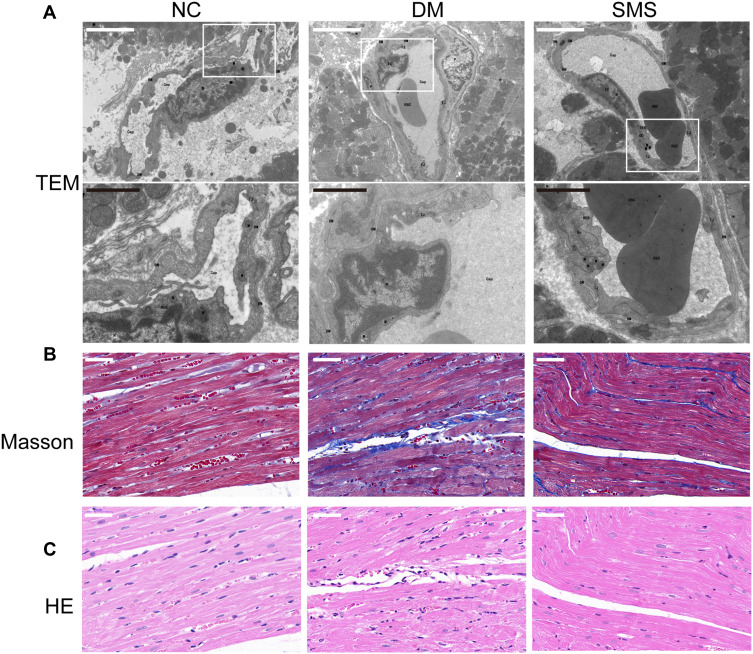
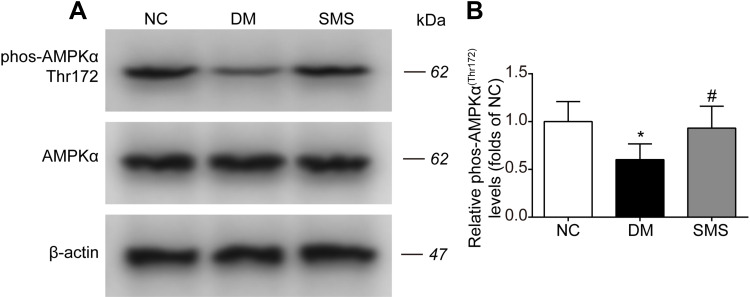
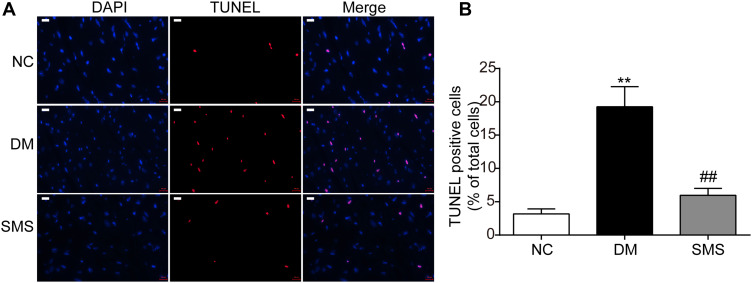
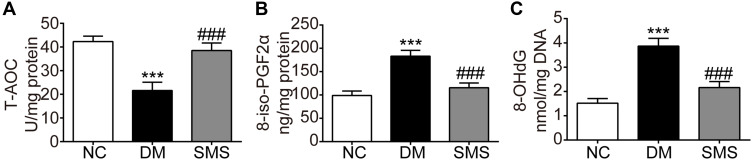
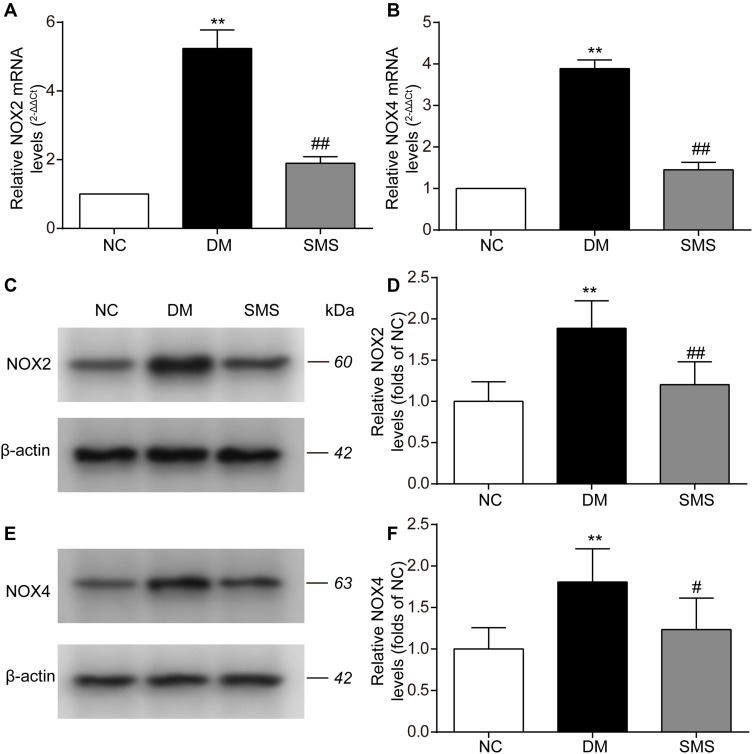
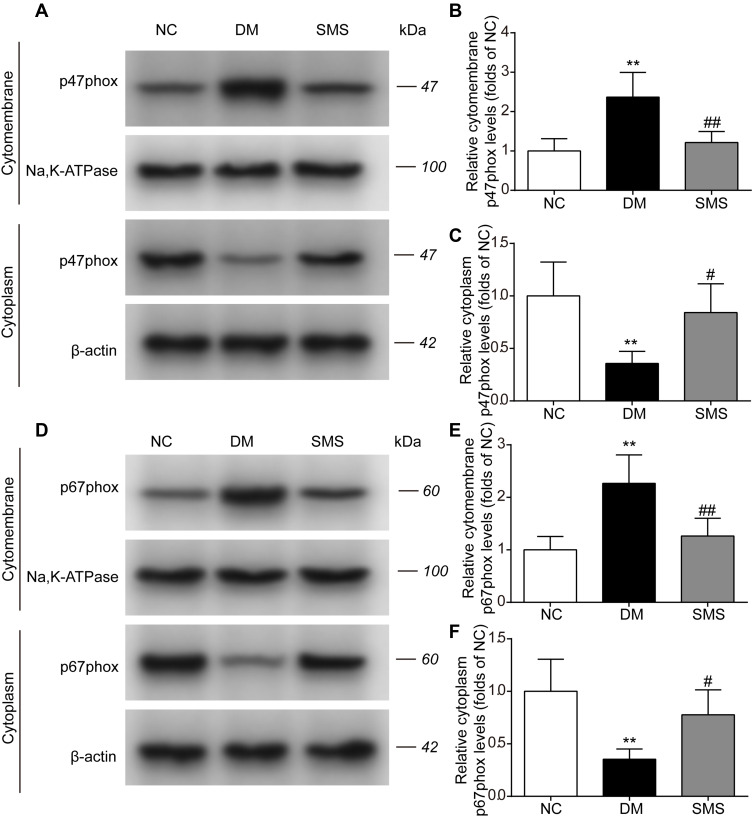
Diabetes led to excessive collagen content, fibrosis, and apoptosis in the myocardium. Oxidative stress in diabetic hearts was indicated by low levels of T-AOC, high levels of 8-iso-PGF2α and 8-OHdG, inactivation of AMPKα, elevated expression of NOX2 and NOX4 and translocation of NOX isoforms p47phox and p67phox. Treatment with SMS for 10 weeks resulted in the alleviation of diabetes-associated myocardial structure abnormalities and apoptosis. Additionally, SMS attenuated the accumulation of oxidative stress markers in myocardial tissue. Further investigation showed that SMS was able to reverse the levels of oxidative stress-associated proteins NOX2 and NOX4 in the DM rats. Moreover, SMS treatment blunted the translocation of NADPH oxidase isoforms p47phox and p67phox as well. Furthermore, SMS promoted the activation of AMPK in the cardiac tissue of diabetic rats.
These findings indicate that SMS exhibits therapeutic properties against diabetic cardiomyopathy by attenuating myocardial oxidative damage via activation of AMPKα and inhibition of NOX signaling.
生脉散(SMS)传统上用于治疗缺血性心脑血管疾病。最近,多项研究报道了SMS对糖尿病动物的心脏保护作用。然而,其潜在机制尚未完全阐明。在本研究中,我们调查了SMS是否通过减轻烟酰胺腺嘌呤二核苷酸磷酸氧化酶(NOX)介导的氧化应激对糖尿病性心肌病(DCM)发挥有益作用。
将SD大鼠随机分为阴性对照组(NC)、糖尿病组(DM)和SMS治疗组(SMS)。观察心肌结构改变、细胞凋亡及氧化应激生物标志物。此外,为探究SMS的保护机制,评估了AMPKα的激活、NOX相关蛋白的表达及转位。
糖尿病导致心肌中胶原蛋白含量过多、纤维化和细胞凋亡。糖尿病心脏中的氧化应激表现为总抗氧化能力(T-AOC)水平降低、8-异前列腺素F2α(8-iso-PGF2α)和8-羟基脱氧鸟苷(8-OHdG)水平升高、AMPKα失活、NOX2和NOX4表达升高以及NOX亚型p47phox和p67phox转位。用SMS治疗10周可减轻糖尿病相关的心肌结构异常和细胞凋亡。此外,SMS减轻了心肌组织中氧化应激标志物的积累。进一步研究表明,SMS能够逆转糖尿病大鼠中氧化应激相关蛋白NOX2和NOX4的水平。此外,SMS治疗还抑制了NADPH氧化酶亚型p47phox和p67phox的转位。此外,SMS促进了糖尿病大鼠心脏组织中AMPK的激活。
这些发现表明,SMS通过激活AMPKα和抑制NOX信号传导减轻心肌氧化损伤,从而对糖尿病性心肌病具有治疗作用。