Department of Psychology, University of Cambridge, Cambridge, UK.
Behavioural and Clinical Neuroscience Institute, University of Cambridge, Cambridge, UK.
Philos Trans R Soc Lond B Biol Sci. 2021 Apr 12;376(1822):20200424. doi: 10.1098/rstb.2020.0424. Epub 2021 Feb 22.
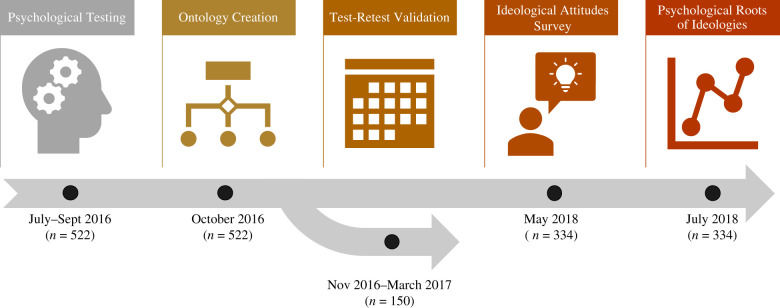
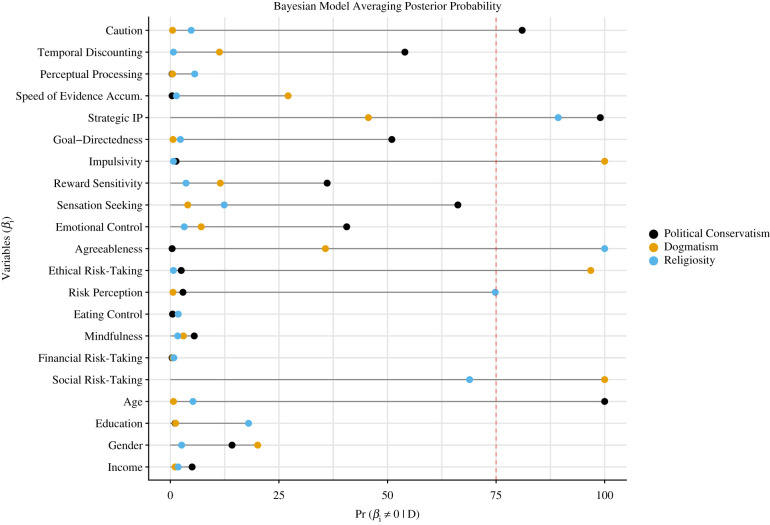
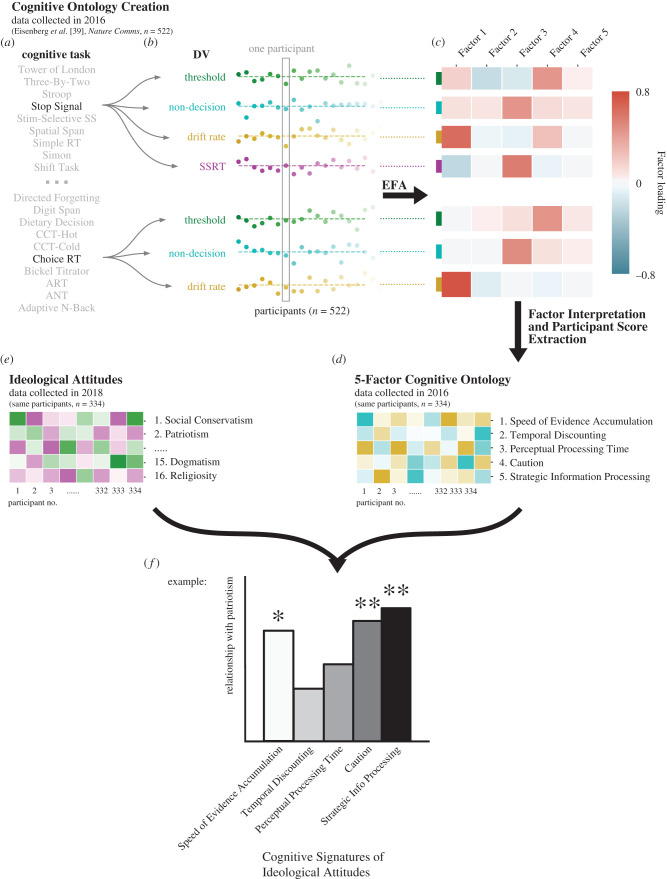
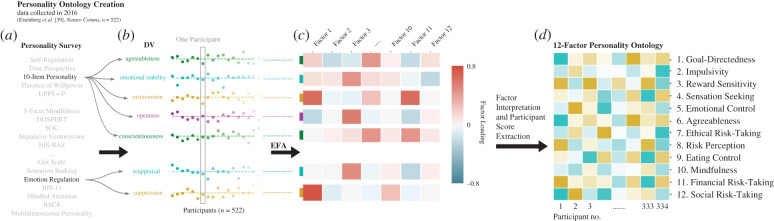
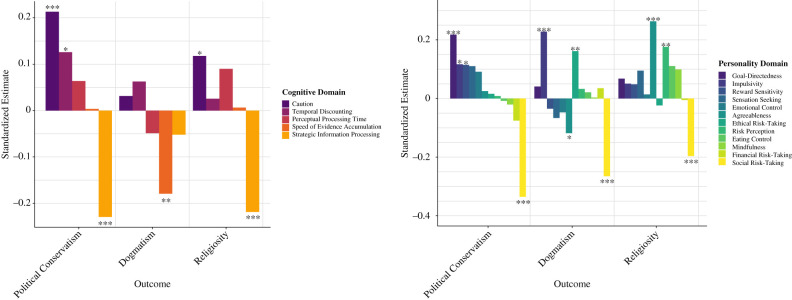
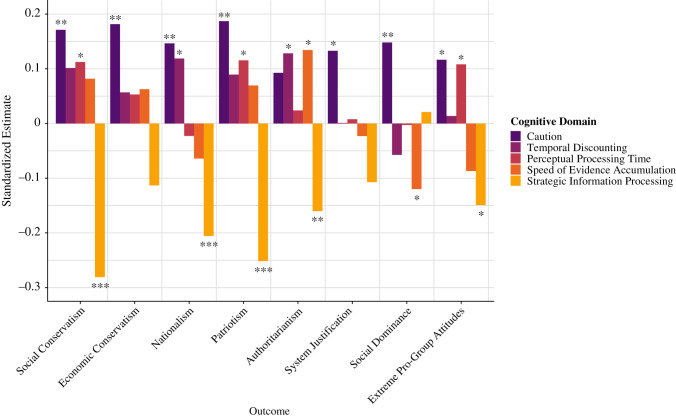
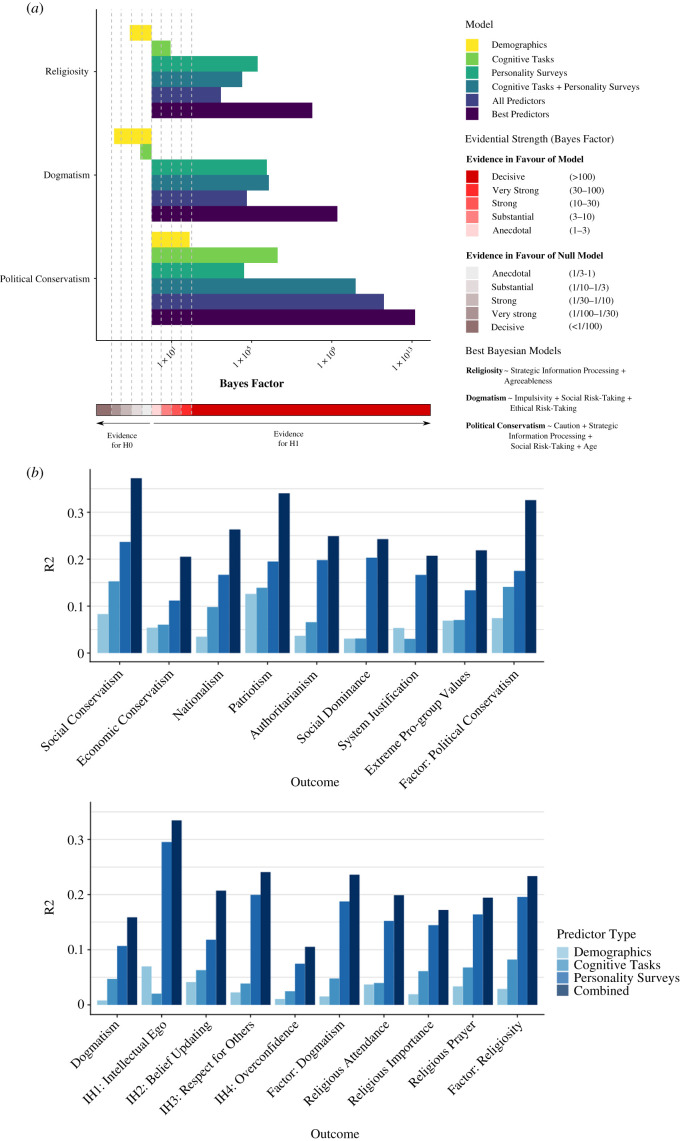
Although human existence is enveloped by ideologies, remarkably little is understood about the relationships between ideological attitudes and psychological traits. Even less is known about how cognitive dispositions-individual differences in how information is perceived and processed- sculpt individuals' ideological worldviews, proclivities for extremist beliefs and resistance (or receptivity) to evidence. Using an unprecedented number of cognitive tasks ( = 37) and personality surveys ( = 22), along with data-driven analyses including drift-diffusion and Bayesian modelling, we uncovered the specific psychological signatures of political, nationalistic, religious and dogmatic beliefs. Cognitive and personality assessments consistently outperformed demographic predictors in accounting for individual differences in ideological preferences by 4 to 15-fold. Furthermore, data-driven analyses revealed that individuals' ideological attitudes mirrored their cognitive decision-making strategies. Conservatism and nationalism were related to greater caution in perceptual decision-making tasks and to reduced strategic information processing, while dogmatism was associated with slower evidence accumulation and impulsive tendencies. Religiosity was implicated in heightened agreeableness and risk perception. Extreme pro-group attitudes, including violence endorsement against outgroups, were linked to poorer working memory, slower perceptual strategies, and tendencies towards impulsivity and sensation-seeking-reflecting overlaps with the psychological profiles of conservatism and dogmatism. Cognitive and personality signatures were also generated for ideologies such as authoritarianism, system justification, social dominance orientation, patriotism and receptivity to evidence or alternative viewpoints; elucidating their underpinnings and highlighting avenues for future research. Together these findings suggest that ideological worldviews may be reflective of low-level perceptual and cognitive functions. This article is part of the theme issue 'The political brain: neurocognitive and computational mechanisms'.
虽然人类的存在被意识形态所包围,但人们对意识形态态度与心理特征之间的关系知之甚少。人们对认知倾向(个体感知和处理信息的差异)如何塑造个体的意识形态世界观、极端信仰的倾向以及对证据的抵制(或接受)更是知之甚少。通过使用前所未有的认知任务数量(=37)和人格调查数量(=22),以及包括漂移扩散和贝叶斯建模在内的数据驱动分析,我们发现了政治、民族主义、宗教和教条信仰的具体心理特征。认知和人格评估在解释意识形态偏好的个体差异方面,始终比人口统计学预测因素高出 4 到 15 倍。此外,数据驱动分析表明,个体的意识形态态度反映了他们的认知决策策略。保守主义和民族主义与感知决策任务中的更大谨慎以及减少的策略信息处理相关,而教条主义与较慢的证据积累和冲动倾向相关。宗教与更高的亲和力和风险感知有关。极端的亲群体态度,包括对群体外群体的暴力认可,与较差的工作记忆、较慢的感知策略以及冲动和寻求刺激的倾向有关,这反映了与保守主义和教条主义的心理特征重叠。还为独裁主义、系统辩护、社会支配倾向、爱国主义和对证据或替代观点的接受等意识形态生成了认知和人格特征;阐明了它们的基础,并强调了未来研究的途径。这些发现表明,意识形态世界观可能反映了低水平的感知和认知功能。本文是主题问题“政治大脑:神经认知和计算机制”的一部分。