Tesfaye Bekalu Amare, Berhe Abera Hadgu, Wondafrash Dawit Zewdu, Berhe Derbew Fikadu
Department of Pharmacology and Toxicology, School of Pharmacy, Mekelle University, Mekelle, Ethiopia.
J Exp Pharmacol. 2021 Feb 16;13:147-160. doi: 10.2147/JEP.S270038. eCollection 2021.
Globally, cardiovascular diseases (CVDs) are becoming the major cause of death. is one of endogenous plant which treats a wide range of disease conditions including heart diseases. However, there is limited information on safety and efficacy of the plant.
To evaluate the in vitro antioxidant, the in vivo cardioprotective activity of crude extract and solvent fractions of leaves on cyclophosphamide-induced myocardial injury.
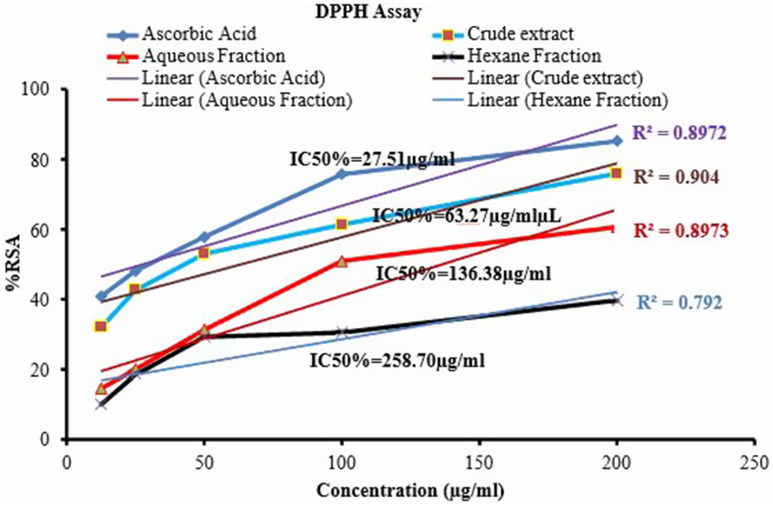
The cardioprotective activity of the crude extract, aqueous and hexane fraction of leaves was evaluated based on anatomical, biochemical and histopathological methods. The in vitro antioxidant activity of the plant was also assayed in terms of free radical scavenging activity (RSA).
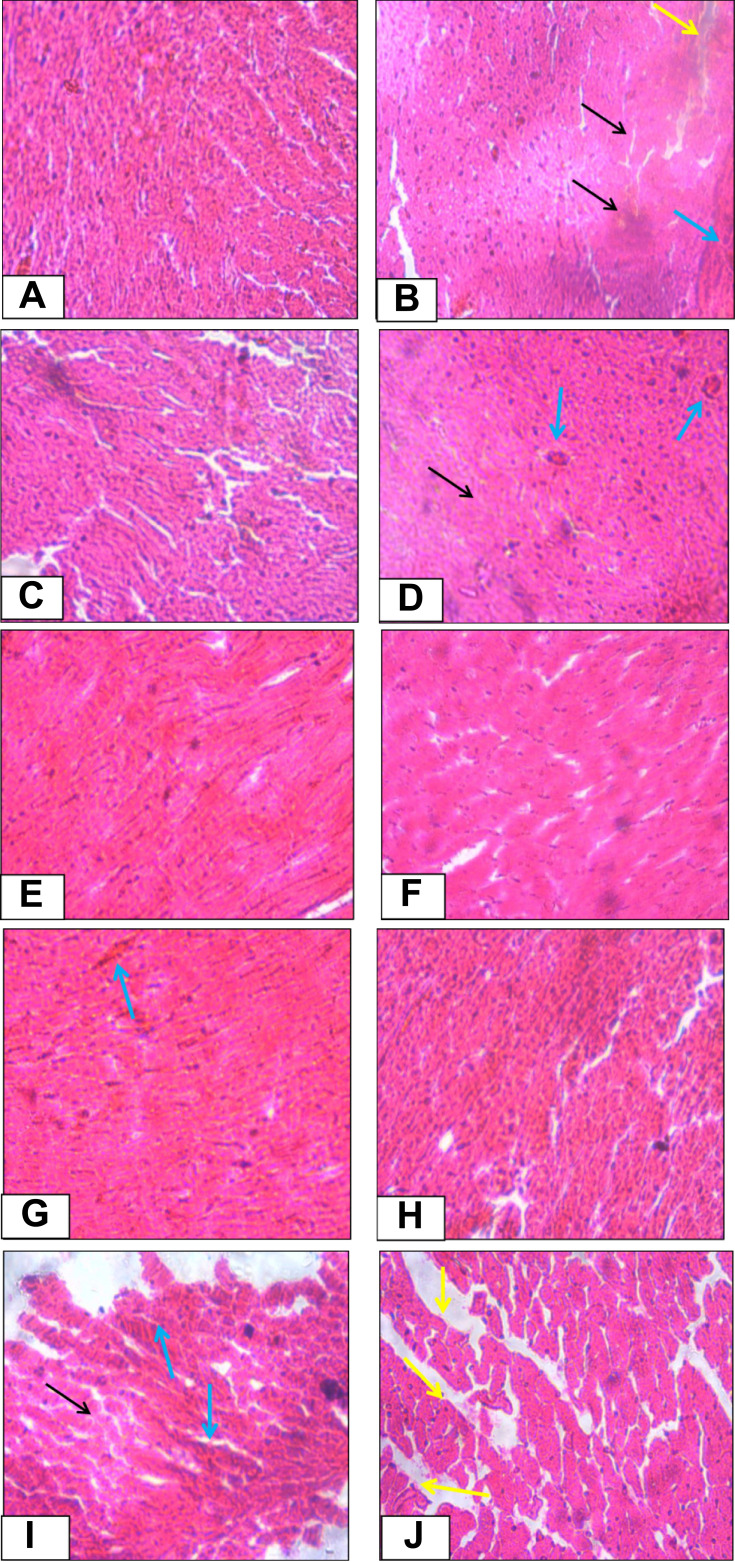
Crude extract and solvent fractions of significantly prevented the deleterious effect of cyclophosphamide on body weight (P<0.001), heart weight to body ratio (P<0.01), cardiac biomarkers including troponin I (P<0.01), alanine transaminase (ALT) (P<0.001), aspartate aminotransferase (AST) (P<0.01) and lipid profiles including triglycerides (P<0.001) and total cholesterol (P<0.01). The histopathological study confirmed presence of necrosis, oedema and haemorrhage on cyclophosphamide alone-treated groups while the 200mg/kg and 400mg/kg of the crude extract and aqueous fraction showed normal cardiocytes. The antioxidant assay of plant exhibited free radical scavenging activity of inhibitory concentration of 50% (IC) for the crude extract with the values of 63.27µg/mL, aqueous fraction with the values of 136.38µg/mL and hexane fraction with the values of 258.70µg/mL.
Crude extract and solvent fractions of leaves have cardioprotective activities. The cardioprotective effect could be attributed to the antioxidant activity of the plant extracts. However, this requires further in-depth understanding.
在全球范围内,心血管疾病(CVDs)正成为主要的死亡原因。[植物名称]是一种能治疗包括心脏病在内的多种疾病的内生植物。然而,关于该植物安全性和有效性的信息有限。
评估[植物名称]叶粗提物及其溶剂萃取物对环磷酰胺诱导的心肌损伤的体外抗氧化及体内心脏保护活性。
基于解剖学、生物化学和组织病理学方法评估[植物名称]叶粗提物、水相和己烷萃取物的心脏保护活性。还通过自由基清除活性(RSA)测定该植物的体外抗氧化活性。
[植物名称]叶粗提物及其溶剂萃取物显著预防了环磷酰胺对体重(P<0.001)、心脏重量与体重比(P<0.01)、包括肌钙蛋白I(P<0.01)、丙氨酸转氨酶(ALT)(P<0.001)、天冬氨酸转氨酶(AST)(P<0.01)在内的心脏生物标志物以及包括甘油三酯(P<0.001)和总胆固醇(P<0.01)在内的血脂谱的有害影响。组织病理学研究证实,单独使用环磷酰胺处理的组存在坏死、水肿和出血,而粗提物和水相萃取物200mg/kg和400mg/kg剂量组显示心肌细胞正常。[植物名称]的抗氧化试验显示,粗提物的半数抑制浓度(IC50)自由基清除活性值为63.27μg/mL,水相萃取物为136.38μg/mL,己烷萃取物为258.70μg/mL。
[植物名称]叶粗提物及其溶剂萃取物具有心脏保护活性。这种心脏保护作用可能归因于植物提取物的抗氧化活性。然而,这需要进一步深入了解。