Department of Geography Geospatial Sciences and Earth Observation, Faculty of Science, University of Zimbabwe, MP167 Mount Pleasant, Harare, Zimbabwe.
Department of Clinical Veterinary Studies, Faculty of Veterinary Science, University of Zimbabwe, MP167 Mount Pleasant, Harare, Zimbabwe.
BMC Vet Res. 2021 Feb 27;17(1):91. doi: 10.1186/s12917-021-02792-2.
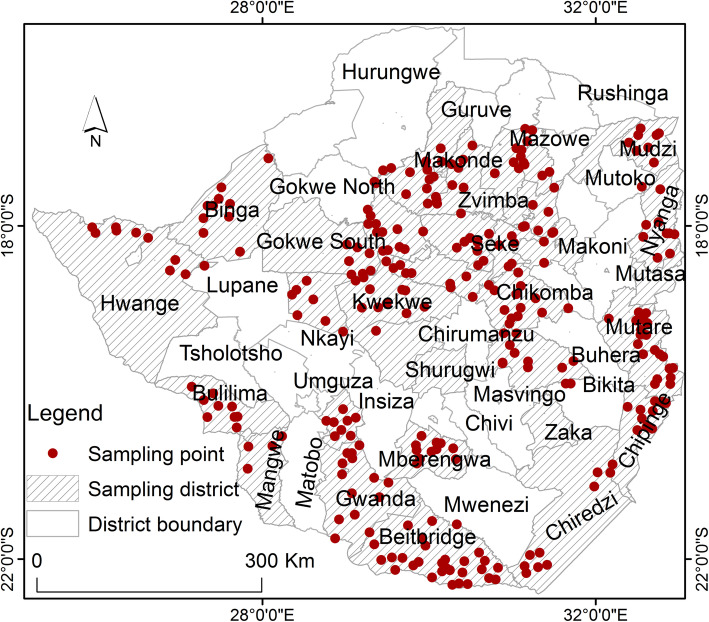
Ticks transmit several diseases that result in high morbidity and mortality in livestock. Tick-borne diseases are an economic burden that negatively affect livestock production, cost countries billions of dollars through vaccine procurement and other disease management efforts. Thus, understanding the spatial distribution of tick hotspots is critical for identifying potential areas of high tick-borne disease transmission and setting up priority areas for targeted tick disease management. In this study, optimised hotspot analysis was applied to detect hotspots and coldspots of 14 common tick species in Zimbabwe. Data on the spatial distribution of tick species were obtained from the Epidemiology Unit of the Division of Veterinary Field Services of Zimbabwe.
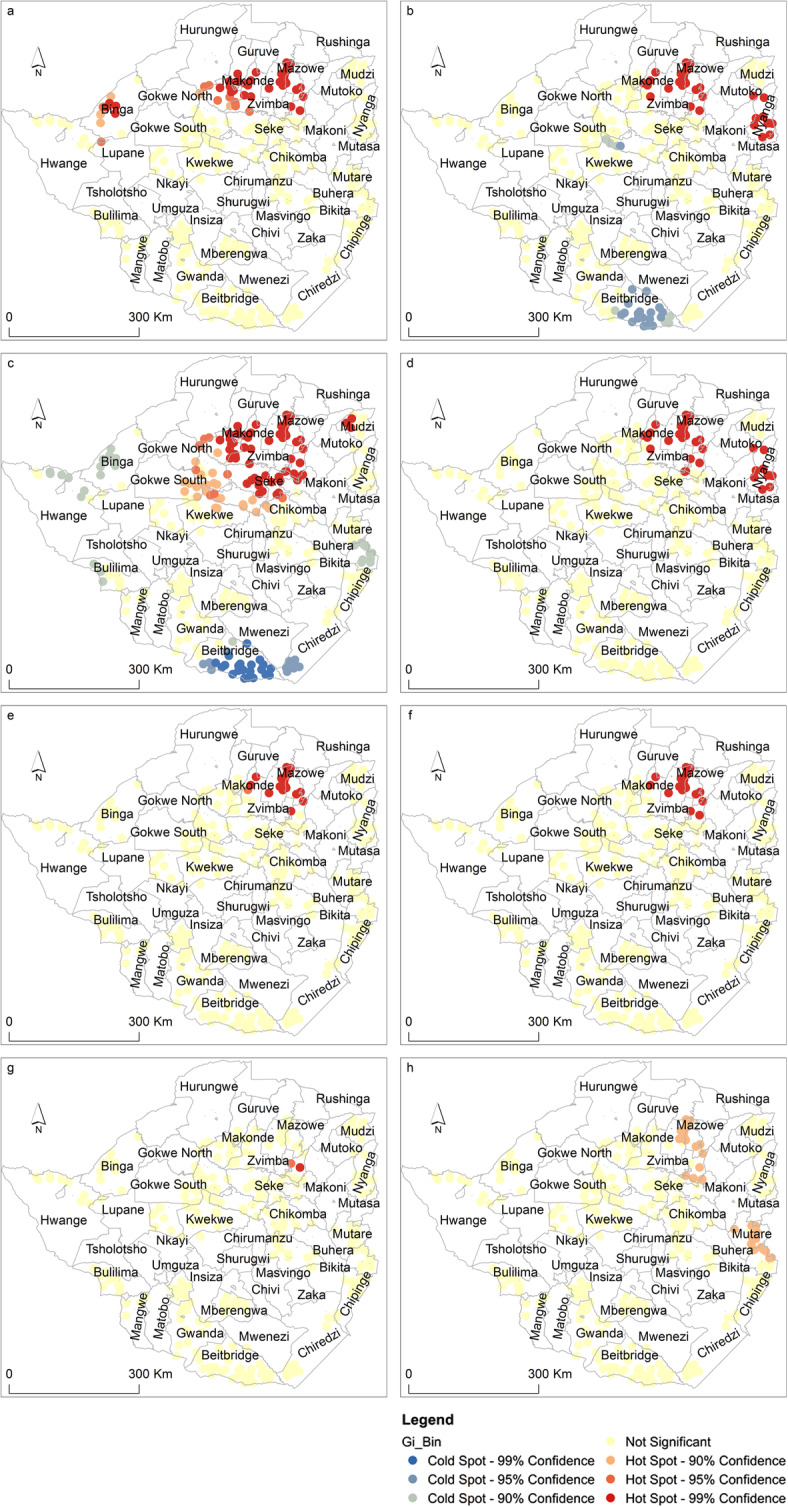
A total of 55,133 ticks were collected with Rhipicephalus decoloratus being the most common species (28.7%), followed by Amblyomma hebraeum (20.6%), and Rhipicephalus sanguineus sensu lato (0.06%) being the least common species. Results also showed that tick hotspots are species-specific with particular tick species occupying defined localities in the country. For instance, Amblyomma variegatum, Rhipicephalus appendiculatus, Rhipicephalus decoloratus, Rhipicephalus compostus, Rhipicephalus microplus, Rhipicephalus pravus, and Rhipicephalus simus were concentrated in the north and north eastern districts of the country. In contrast, Amblyomma hebraeum, Hyalomma rufipes, Hyalomma trancatum and Rhipicephalus evertsi evertsi were prevalent in the southern districts of Zimbabwe.
The occurrence of broadly similar hotspots of several tick species in different districts suggests presence of spatial overlaps in the niche of the tick species. As ticks are vectors of several tick-borne diseases, there is high likelihood of multiple disease transmission in the same geographic region. This study is the first in Zimbabwe to demonstrate unique spatial patterns in the distribution of several tick species across the country. The results of this study provide an important opportunity for the development of spatially-targeted tick-borne disease management strategies.
蜱传播多种疾病,导致牲畜发病率和死亡率高。蜱传疾病是一种经济负担,通过疫苗采购和其他疾病管理工作,给各国造成数十亿美元的损失。因此,了解蜱虫热点的空间分布对于确定潜在的高蜱传疾病传播区域以及为有针对性的蜱病管理设定优先区域至关重要。在这项研究中,优化了热点分析,以检测津巴布韦 14 种常见蜱种的热点和冷点。蜱种空间分布数据来自津巴布韦兽医现场服务司流行病学股。
共采集了 55133 只蜱,其中 Rhipicephalus decoloratus 最为常见(28.7%),其次是 Amblyomma hebraeum(20.6%),而 Rhipicephalus sanguineus sensu lato 则是最不常见的物种(0.06%)。结果还表明,蜱热点是特定于物种的,特定的蜱种在该国的特定地区存在。例如,Amblyomma variegatum、Rhipicephalus appendiculatus、Rhipicephalus decoloratus、Rhipicephalus compostus、Rhipicephalus microplus、Rhipicephalus pravus 和 Rhipicephalus simus 集中在该国的北部和东北部地区。相比之下,Amblyomma hebraeum、Hyalomma rufipes、Hyalomma trancatum 和 Rhipicephalus evertsi evertsi 在津巴布韦南部地区较为常见。
不同地区几种蜱种出现广泛相似的热点表明,这些蜱种的生态位存在空间重叠。由于蜱是多种蜱传疾病的媒介,在同一地理区域内很可能会发生多种疾病的传播。这项研究是津巴布韦首次展示该国几种蜱种分布的独特空间模式。该研究结果为制定有针对性的蜱传疾病管理策略提供了重要机会。