Diaz Santiago, Ariza-Suarez Daniel, Ramdeen Raisa, Aparicio Johan, Arunachalam Nirmala, Hernandez Carlos, Diaz Harold, Ruiz Henry, Piepho Hans-Peter, Raatz Bodo
Bean Program, Agrobiodiversity Area, International Center for Tropical Agriculture (CIAT), Cali, Colombia.
Institute of Crop Science, University of Hohenheim, Hohenheim, Germany.
Front Plant Sci. 2021 Feb 11;11:622213. doi: 10.3389/fpls.2020.622213. eCollection 2020.
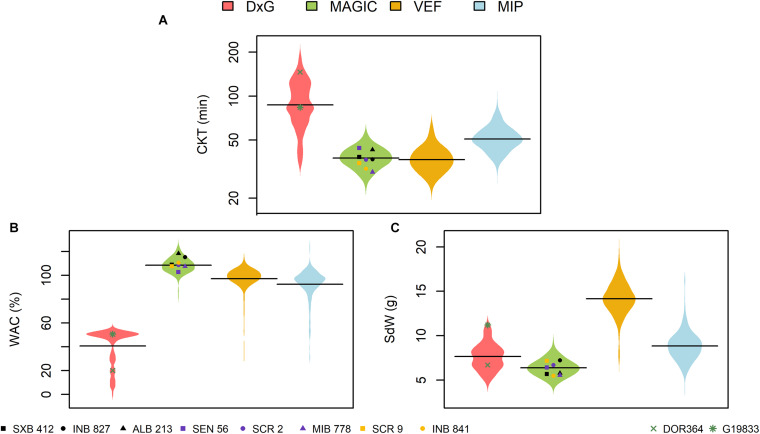
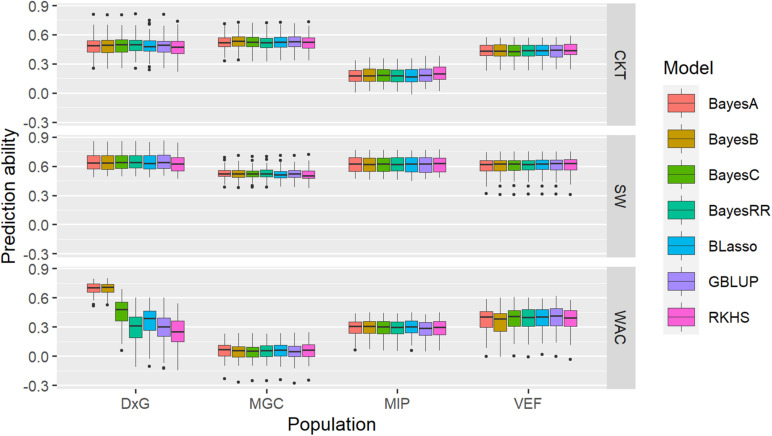
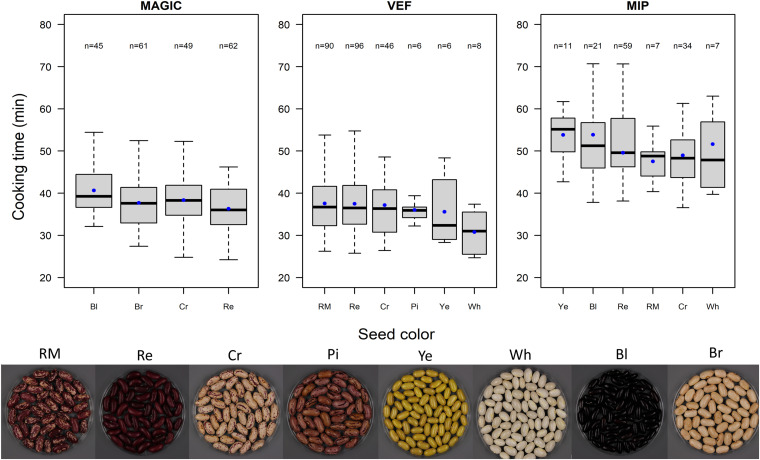
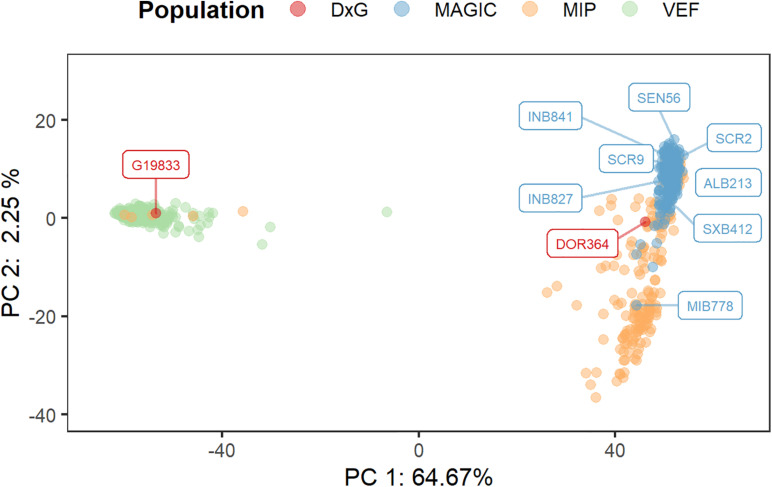
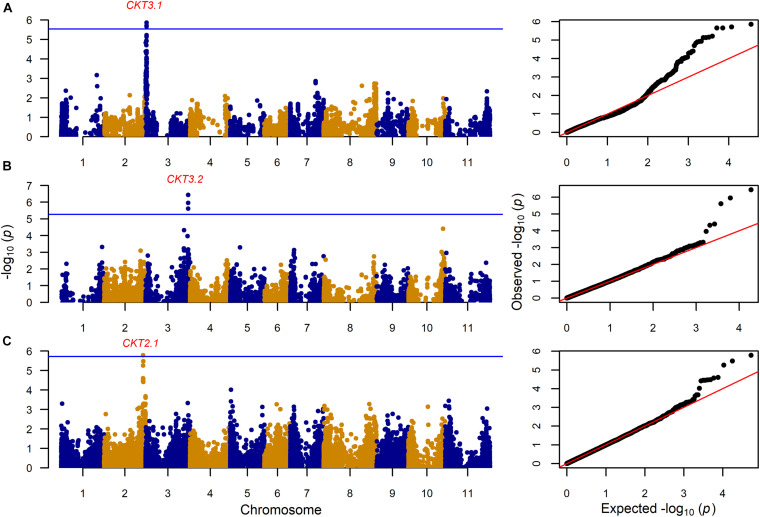
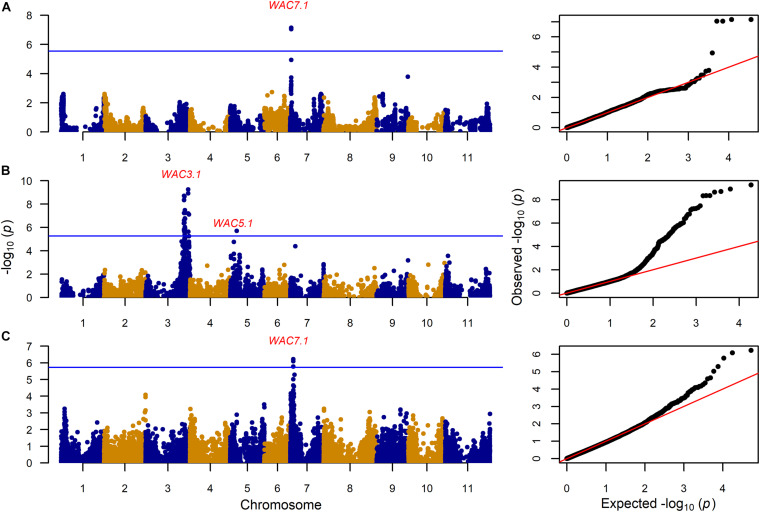
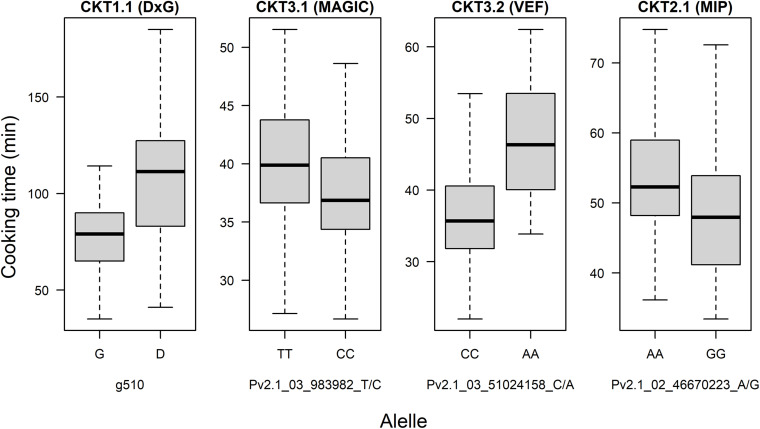
Cooking time of the common bean is an important trait for consumer preference, with implications for nutrition, health, and environment. For efficient germplasm improvement, breeders need more information on the genetics to identify fast cooking sources with good agronomic properties and molecular breeding tools. In this study, we investigated a broad genetic variation among tropical germplasm from both Andean and Mesoamerican genepools. Four populations were evaluated for cooking time (CKT), water absorption capacity (WAC), and seed weight (SdW): a bi-parental RIL population (DxG), an eight-parental Mesoamerican MAGIC population, an Andean (VEF), and a Mesoamerican (MIP) breeding line panel. A total of 922 lines were evaluated in this study. Significant genetic variation was found in all populations with high heritabilities, ranging from 0.64 to 0.89 for CKT. CKT was related to the color of the seed coat, with the white colored seeds being the ones that cooked the fastest. Marker trait associations were investigated by QTL analysis and GWAS, resulting in the identification of 10 QTL. In populations with Andean germplasm, an inverse correlation of CKT and WAC, and also a QTL on Pv03 that inversely controls CKT and WAC (CKT3.2/WAC3.1) were observed. WAC7.1 was found in both Mesoamerican populations. QTL only explained a small part of the variance, and phenotypic distributions support a more quantitative mode of inheritance. For this reason, we evaluated how genomic prediction (GP) models can capture the genetic variation. GP accuracies for CKT varied, ranging from good results for the MAGIC population (0.55) to lower accuracies in the MIP panel (0.22). The phenotypic characterization of parental material will allow for the cooking time trait to be implemented in the active germplasm improvement programs. Molecular breeding tools can be developed to employ marker-assisted selection or genomic selection, which looks to be a promising tool in some populations to increase the efficiency of breeding activities.
普通菜豆的烹饪时间是影响消费者偏好的重要性状,对营养、健康和环境都有影响。为了有效地改良种质,育种者需要更多关于遗传学的信息,以识别具有良好农艺性状的快速烹饪资源和分子育种工具。在本研究中,我们调查了来自安第斯和中美洲基因库的热带种质间广泛的遗传变异。对四个群体的烹饪时间(CKT)、吸水能力(WAC)和种子重量(SdW)进行了评估:一个双亲重组自交系群体(DxG)、一个八亲中美洲多亲本高级世代互交群体、一个安第斯(VEF)和一个中美洲(MIP)育种系面板。本研究共评估了922个品系。在所有群体中均发现了显著的遗传变异,且遗传力较高,CKT的遗传力范围为0.64至0.89。CKT与种皮颜色有关,白色种子烹饪速度最快。通过QTL分析和全基因组关联研究(GWAS)研究了标记性状关联,共鉴定出10个QTL。在含有安第斯种质的群体中,观察到CKT与WAC呈负相关,并且在Pv03上有一个反向控制CKT和WAC的QTL(CKT3.2/WAC3.1)。在两个中美洲群体中均发现了WAC7.1。QTL仅解释了一小部分变异,表型分布支持更具数量性的遗传模式。因此,我们评估了基因组预测(GP)模型如何捕获遗传变异。CKT的GP准确性各不相同,从MAGIC群体的良好结果(0.55)到MIP面板中的较低准确性(0.22)。亲本材料的表型特征将使烹饪时间性状能够在活跃的种质改良计划中得以应用。可以开发分子育种工具来采用标记辅助选择或基因组选择,在某些群体中,基因组选择似乎是提高育种活动效率的一种有前景的工具。