Tarnecki Andrea M, Levi Noah J, Resley Matthew, Main Kevan
Marine Immunology Program, Mote Marine Laboratory, 1600 Ken Thompson Parkway, Sarasota, FL, 34236, USA.
Biology Department, Wabash College, 301 West Wabash Avenue, Crawfordsville, IN, 47933, USA.
Anim Microbiome. 2021 Mar 2;3(1):21. doi: 10.1186/s42523-021-00085-5.
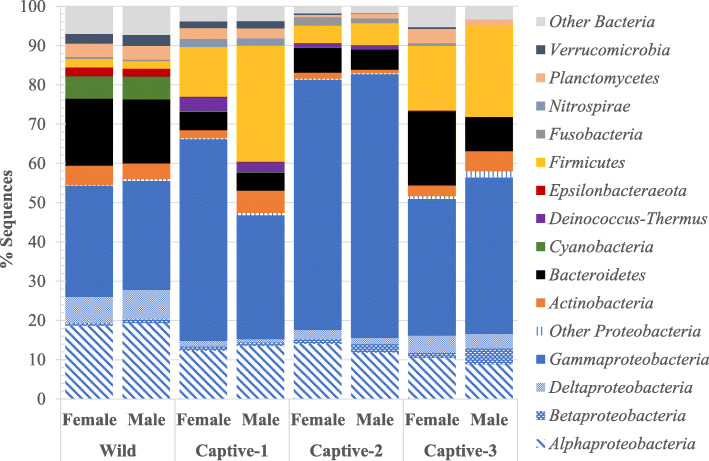
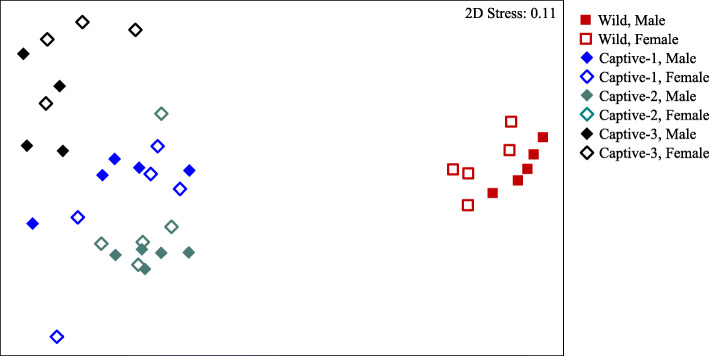
The environment exerts a strong influence on the fish external microbiota, with lower diversity and increased abundances of opportunistic bacterial groups characterizing cultured fish compared to their wild counterparts. Deviation from a healthy external microbiota structure has been associated with increased susceptibility to bacterial pathogens. Treatment of wild-caught broodstock with copper sulfate for the removal of external parasites is a common aquaculture practice. Despite the microbiota's importance to fish health, the effects of copper sulfate on mucosal bacterial communities and their ability to recover following this chemical treatment have not been examined. The skin microbiota of adult common snook was characterized from wild individuals (Wild), and wild-caught fish maintained in recirculating aquaculture systems (RAS) immediately following a month-long copper sulfate treatment (Captive-1), and then two-weeks (Captive-2) and 2 years (Captive-3) after cessation of copper treatment.
The skin microbiota of wild fish were characterized by high diversity and taxa including Synechocococcus, SAR11, and a member of the Roseobacter clade. Bacterial diversity decreased in Captive individuals during the 2-year sampling period. Captive fish harbored greater abundances of Firmicutes, which may reflect glycan differences between aquaculture and natural feeds. Bacterial taxa with copper resistance mechanisms and indicative of metal contamination were enriched in Captive-1 and Captive-2 fish. Vibrionaceae were dominant in Captive fish, particularly immediately and 2 weeks following copper treatment. Based on our observations and previous literature, our results suggest putatively beneficial taxa amass over time in captivity. Within 2 years, Captive individuals harbored Bacillus which contains numerous probiotic candidates and the complex carbon degraders of the family Saprospiraceae. Predicted butanoate metabolism exceeded that of Wild fish, and its reported roles in immunity and energy provision suggest a prebiotic effect for fishes.
The mucosal microbiota contains bacterial taxa that may act as bioindicators of environmental pollution. Increases in mutualistic groups indicate a return to a beneficial skin microbiota following copper sulfate treatment. Our data also suggests that vastly different taxa, influenced by environmental conditions, can be associated with adult fish without noticeable health impairment, perhaps due to establishment of various mutualists to maintain fish mucosal health.
环境对鱼类体表微生物群有很大影响,与野生鱼类相比,养殖鱼类的微生物多样性较低,机会性细菌类群的丰度增加。健康的体表微生物群结构出现偏差与对细菌病原体的易感性增加有关。用硫酸铜处理野生亲鱼以去除体外寄生虫是水产养殖中的常见做法。尽管微生物群对鱼类健康很重要,但硫酸铜对黏膜细菌群落的影响以及化学处理后其恢复能力尚未得到研究。对成年普通斯诺克鱼的皮肤微生物群进行了特征分析,样本来自野生个体(野生组)、经过为期一个月的硫酸铜处理后立即饲养在循环水养殖系统(RAS)中的野生捕获鱼(圈养1组),以及在停止铜处理两周(圈养2组)和两年(圈养3组)后的鱼。
野生鱼类的皮肤微生物群具有高度多样性,包含蓝藻细菌、SAR11以及红杆菌属的一个成员等分类群。在为期两年的采样期内,圈养个体的细菌多样性降低。圈养鱼体内厚壁菌门的丰度更高,这可能反映了水产养殖饲料和天然饲料之间的聚糖差异。具有铜抗性机制且指示金属污染的细菌分类群在圈养1组和圈养2组的鱼中富集。弧菌科在圈养鱼中占主导地位,尤其是在铜处理后立即和两周时。根据我们的观察和以往文献,我们的结果表明,假定有益的分类群在圈养过程中会随着时间积累。在两年内,圈养个体体内出现了芽孢杆菌属,其中包含许多益生菌候选菌株以及腐生螺旋菌科的复杂碳降解菌。预测的丁酸代谢超过了野生鱼类,其在免疫和能量供应方面的作用表明对鱼类有益生元效应。
黏膜微生物群包含可能作为环境污染生物指标的细菌分类群。互利共生类群的增加表明硫酸铜处理后皮肤微生物群恢复到有益状态。我们的数据还表明,受环境条件影响的截然不同的分类群可能与成年鱼相关,而不会对健康造成明显损害,这可能是由于建立了各种互利共生关系来维持鱼类黏膜健康。