Zhang Dongdong, Yin Changchang, Hunold Katherine M, Jiang Xiaoqian, Caterino Jeffrey M, Zhang Ping
Department of Biomedical Informatics, The Ohio State University, Columbus, OH 43210, USA.
Department of Computer Science and Engineering, The Ohio State University, Columbus, OH 43210, USA.
Patterns (N Y). 2021 Jan 19;2(2):100196. doi: 10.1016/j.patter.2020.100196. eCollection 2021 Feb 12.
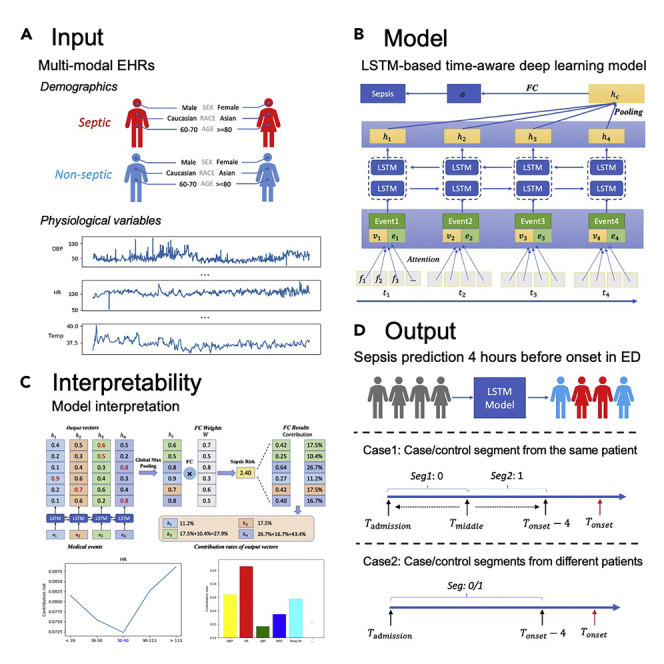
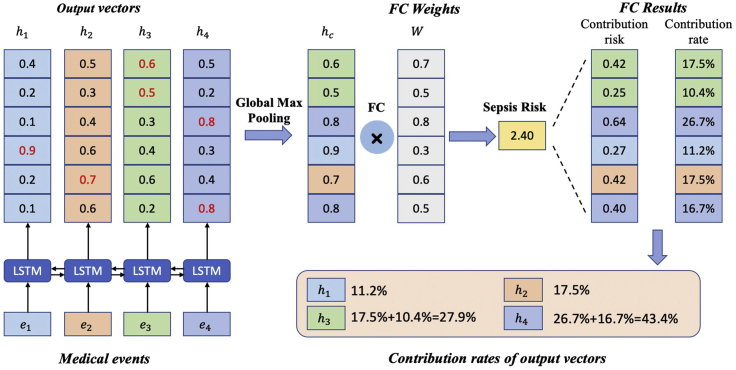
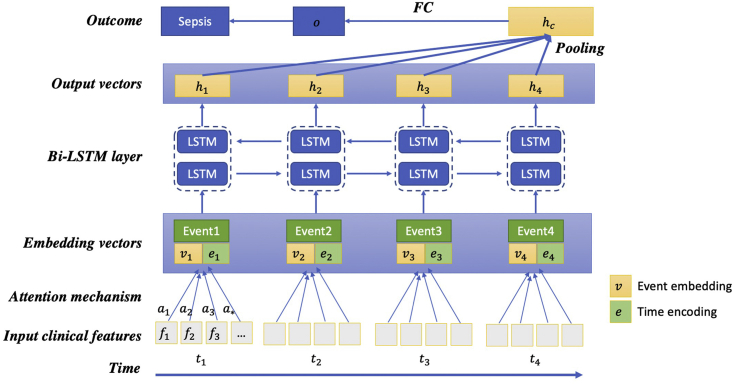
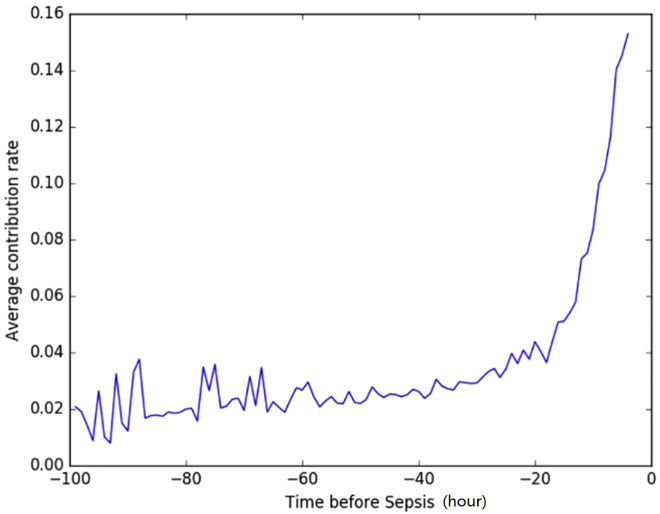
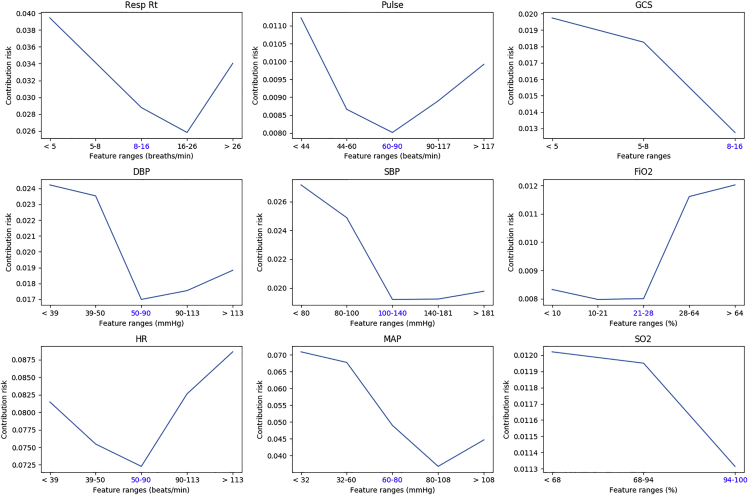
Sepsis is a life-threatening condition with high mortality rates and expensive treatment costs. Early prediction of sepsis improves survival in septic patients. In this paper, we report our top-performing method in the 2019 DII National Data Science Challenge to predict onset of sepsis 4 h before its diagnosis on electronic health records of over 100,000 unique patients in emergency departments. A long short-term memory (LSTM)-based model with event embedding and time encoding is leveraged to model clinical time series and boost prediction performance. Attention mechanism and global max pooling techniques are utilized to enable interpretation for the deep-learning model. Our model achieved an average area under the curve of 0.892 and was selected as one of the winners of the challenge for both prediction accuracy and clinical interpretability. This study paves the way for future intelligent clinical decision support, helping to deliver early, life-saving care to the bedside of septic patients.
脓毒症是一种危及生命的疾病,死亡率高且治疗费用昂贵。早期预测脓毒症可提高脓毒症患者的生存率。在本文中,我们报告了在2019年DII国家数据科学挑战赛中表现最佳的方法,该方法可根据急诊科超过100,000名独特患者的电子健康记录,在脓毒症诊断前4小时预测其发病情况。利用基于长短期记忆(LSTM)的模型,结合事件嵌入和时间编码,对临床时间序列进行建模并提高预测性能。使用注意力机制和全局最大池化技术,以实现对深度学习模型的解释。我们的模型平均曲线下面积达到0.892,因其预测准确性和临床可解释性而被选为挑战赛的获胜者之一。本研究为未来的智能临床决策支持铺平了道路,有助于为脓毒症患者床边提供早期的救命护理。