Lou Jianyao, Zhou Yunxiang, Feng Zengyu, Ma Mindi, Yao Yihan, Wang Yali, Deng Yongchuan, Wu Yulian
Department of General Surgery, The Second Affiliated Hospital, School of Medicine, Zhejiang University, Hangzhou, China.
Department of Surgical Oncology, The Second Affiliated Hospital, School of Medicine, Zhejiang University, Hangzhou, China.
Front Oncol. 2021 Feb 16;10:616952. doi: 10.3389/fonc.2020.616952. eCollection 2020.
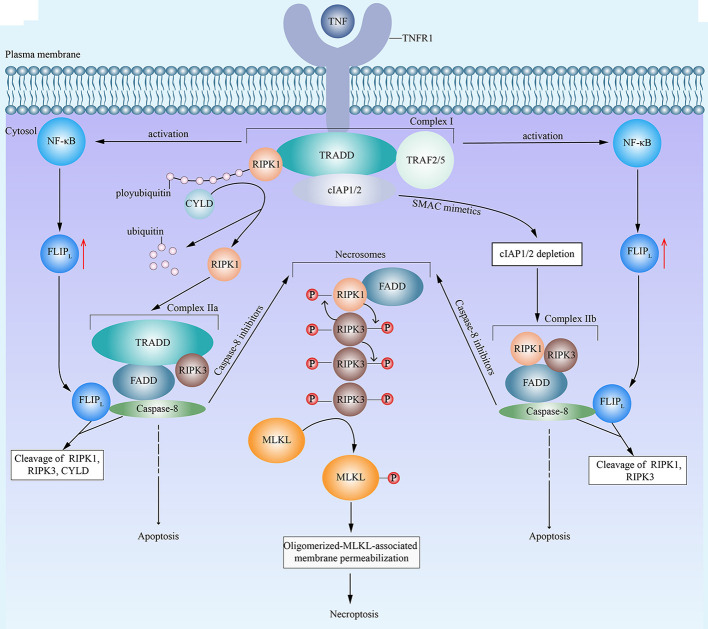
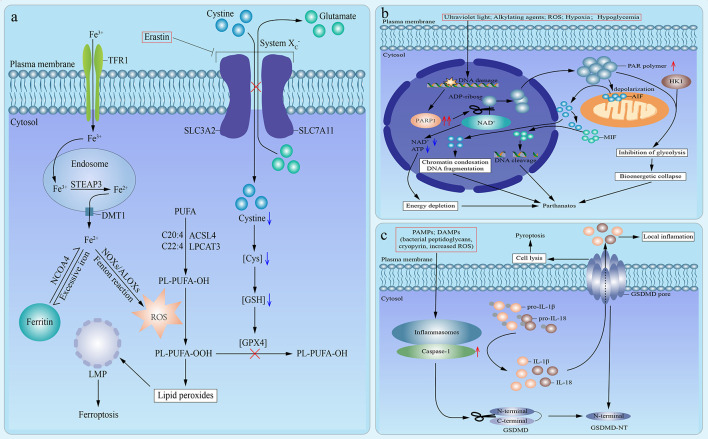
Regulated necrosis is an emerging type of cell death independent of caspase. Recently, with increasing findings of regulated necrosis in the field of biochemistry and genetics, the underlying molecular mechanisms and signaling pathways of regulated necrosis are gradually understood. Nowadays, there are several modes of regulated necrosis that are tightly related to cancer initiation and development, including necroptosis, ferroptosis, parthanatos, pyroptosis, and so on. What's more, accumulating evidence shows that various compounds can exhibit the anti-cancer effect inducing regulated necrosis in cancer cells, which indicates that caspase-independent regulated necrosis pathways are potential targets in cancer management. In this review, we expand the molecular mechanisms as well as signaling pathways of multiple modes of regulated necrosis. We also elaborate on the roles they play in tumorigenesis and discuss how each of the regulated necrosis pathways could be therapeutically targeted.
程序性坏死是一种独立于半胱天冬酶的新型细胞死亡方式。近年来,随着生物化学和遗传学领域对程序性坏死的研究发现不断增加,程序性坏死的潜在分子机制和信号通路逐渐被人们所了解。目前,有几种程序性坏死模式与癌症的发生和发展密切相关,包括坏死性凋亡、铁死亡、PARP 依赖性细胞坏死、焦亡等。此外,越来越多的证据表明,各种化合物可以通过诱导癌细胞发生程序性坏死来发挥抗癌作用,这表明不依赖半胱天冬酶的程序性坏死途径是癌症治疗的潜在靶点。在这篇综述中,我们阐述了多种程序性坏死模式的分子机制和信号通路。我们还详细讨论了它们在肿瘤发生中的作用,并探讨了如何将每种程序性坏死途径作为治疗靶点。