School of Public Health, Curtin University of Technology, Bentley, WA 6102, Australia.
The Menzies Institute for Medical Research, University of Tasmania, 17 Liverpool St, Hobart, TAS 7000, Australia.
Int J Mol Sci. 2021 Feb 19;22(4):2079. doi: 10.3390/ijms22042079.
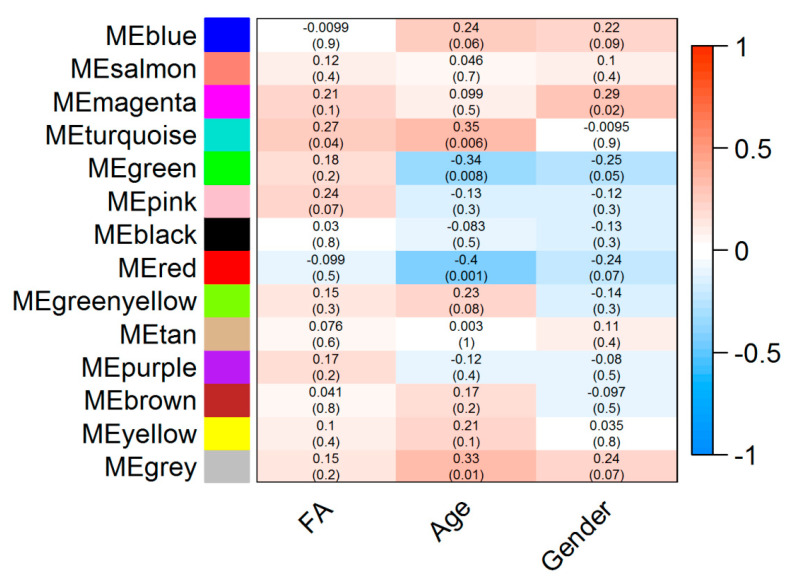
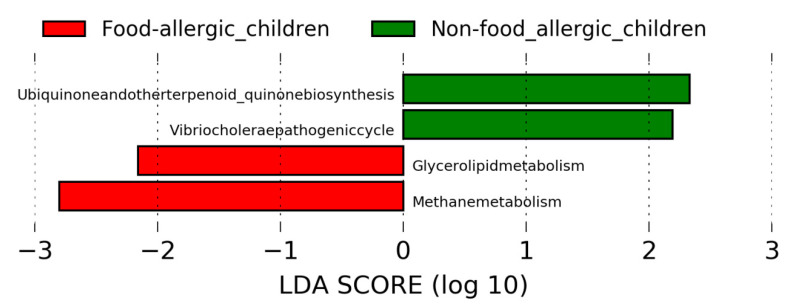
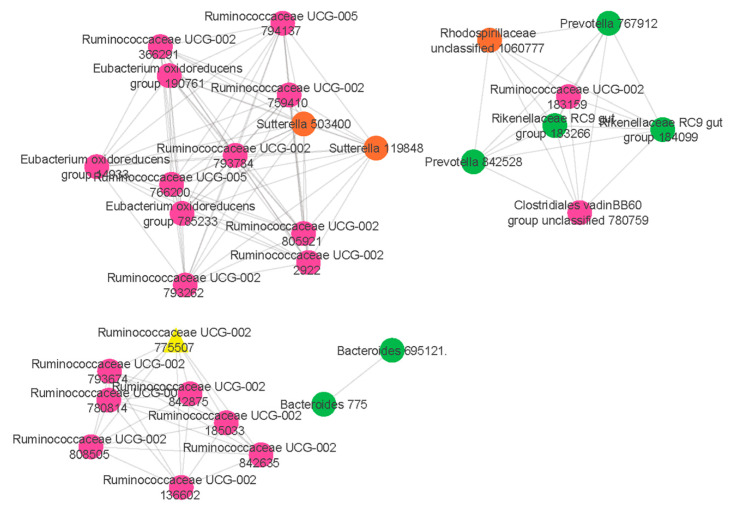
The development of food allergy has been reported to be related with the changes in the gut microbiome, however the specific microbe associated with the pathogenesis of food allergy remains elusive. This study aimed to comprehensively characterize the gut microbiome and identify individual or group gut microbes relating to food-allergy using 16S rRNA gene sequencing with network analysis. Faecal samples were collected from children with IgE-mediated food allergies ( = 33) and without food allergy ( = 27). Gut microbiome was profiled by 16S rRNA gene sequencing. OTUs obtained from 16S rRNA gene sequencing were then used to construct a co-abundance network using Weighted Gene Co-expression Network Analysis (WGCNA) and mapped onto Kyoto Encyclopedia of Genes and Genomes (KEGG) pathways. We identified a co-abundance network module to be positively correlated with IgE-mediated food allergy and this module was characterized by a hub taxon, namely (phylum Firmicutes). Functional pathway analysis of all the gut microbiome showed enrichment of methane metabolism and glycerolipid metabolism in the gut microbiome of food-allergic children and enrichment of ubiquinone and other terpenoid-quinone biosynthesis in the gut microbiome of non-food allergic children. We concluded that may play determinant roles in gut microbial community structure and function leading to the development of IgE-mediated food allergy.
食物过敏的发展据报道与肠道微生物组的变化有关,然而与食物过敏发病机制相关的确切微生物仍然难以捉摸。本研究旨在通过 16S rRNA 基因测序结合网络分析,全面描述肠道微生物组,并确定与食物过敏相关的个体或群体肠道微生物。采集了 33 名 IgE 介导的食物过敏儿童和 27 名无食物过敏儿童的粪便样本。通过 16S rRNA 基因测序对肠道微生物组进行了分析。然后,使用加权基因共表达网络分析(WGCNA)将从 16S rRNA 基因测序中获得的 OTUs 构建为共丰度网络,并映射到京都基因与基因组百科全书(KEGG)途径。我们确定了一个与 IgE 介导的食物过敏呈正相关的共丰度网络模块,该模块的特征是一个枢纽分类群,即 (厚壁菌门)。对所有肠道微生物组的功能途径分析表明,食物过敏儿童的肠道微生物组中存在甲烷代谢和甘油脂代谢的富集,而非食物过敏儿童的肠道微生物组中存在泛醌和其他萜类醌生物合成的富集。我们得出结论, 可能在肠道微生物群落结构和功能的发展中起决定作用,导致 IgE 介导的食物过敏。