Hygiene and Public Health Section, Department of Medicine and Surgery, University of Perugia, Piazza Lucio Severi, 06132 Perugia, Italy.
Forensic Medicine, Forensic Science and Sports Medicine Section, Department of Medicine and Surgery, University of Perugia, Piazza Lucio Severi, 06132 Perugia, Italy.
Int J Environ Res Public Health. 2021 Feb 18;18(4):1967. doi: 10.3390/ijerph18041967.
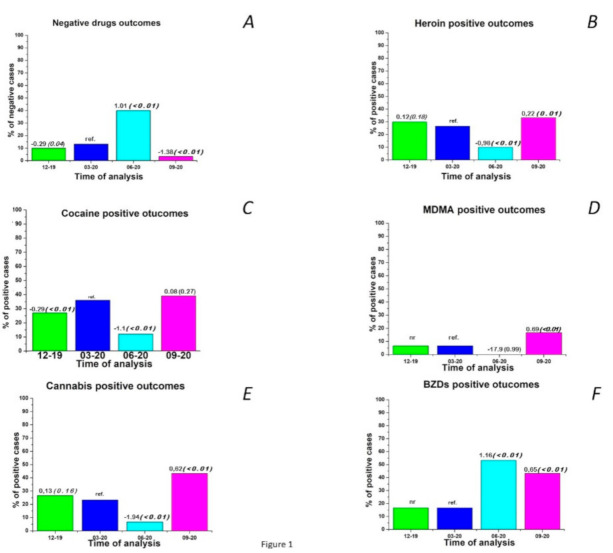
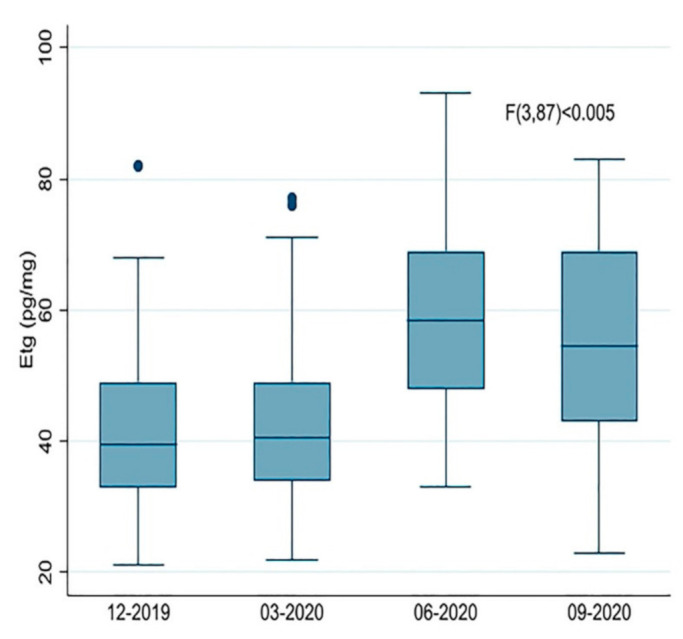
From 22 March until 18 May 2020, a complete lockdown in Italy was ordered as a countermeasure against the COVID-19 pandemic. Social isolation measures affect some populations more than others, and people with drug and/or alcohol disorders (SUDs) are more likely to be adversely affected. This study presents, for the first time, laboratory data on the use of alcohol and drugs in a high-risk population during Italy's first wave of the COVID-19 pandemic. Thirty subjects with SUDs were monitored for the use of illicit drugs and alcohol every 3 months before, during and after the lockdown, by hair analysis. The number of samples positive for heroin, cocaine, MDMA and cannabis fell considerably during the lockdown and then resumed to pre-lockdown levels when the period of confinement was over. Interestingly, the consumption of benzodiazepines and alcohol followed the opposite trend; both the number of benzodiazepine-positive samples and the level of alcohol consumption increased and remained high, even at the end of the lockdown. The confinement measures produced significant changes in drug/alcohol use patterns, with a shift toward the use of substances that were more easily accessible, used as self-medication for negative feelings, and used to alleviate the effects of abstinence from drugs that were no longer readily available.
从 2020 年 3 月 22 日至 5 月 18 日,意大利下令全面封锁,以应对 COVID-19 大流行。社会隔离措施对某些人群的影响大于其他人群,而有药物和/或酒精障碍(SUDs)的人更有可能受到不利影响。这项研究首次展示了在意大利 COVID-19 大流行的第一波期间,高危人群中使用酒精和毒品的实验室数据。在封锁期间以及封锁结束后的前 3 个月,通过毛发分析,对 30 名 SUD 患者进行了非法药物和酒精使用监测。在封锁期间,海洛因、可卡因、摇头丸和大麻呈阳性的样本数量大幅下降,然后在禁闭期结束时恢复到封锁前的水平。有趣的是,苯二氮卓类药物和酒精的消费则呈现出相反的趋势;苯二氮卓类药物阳性样本的数量和酒精消费水平都增加了,并保持在较高水平,甚至在封锁结束时也是如此。禁闭措施导致药物/酒精使用模式发生重大变化,转向使用更容易获得的物质,用作治疗负面情绪的自我药物治疗,并用于减轻因不再容易获得而导致的药物戒断的影响。