Nutrigenomics Research Group, Department of Biochemistry and Biotechnology, Universitat Rovira i Virgili, 43007 Tarragona, Spain.
Nutrients. 2021 Feb 20;13(2):679. doi: 10.3390/nu13020679.
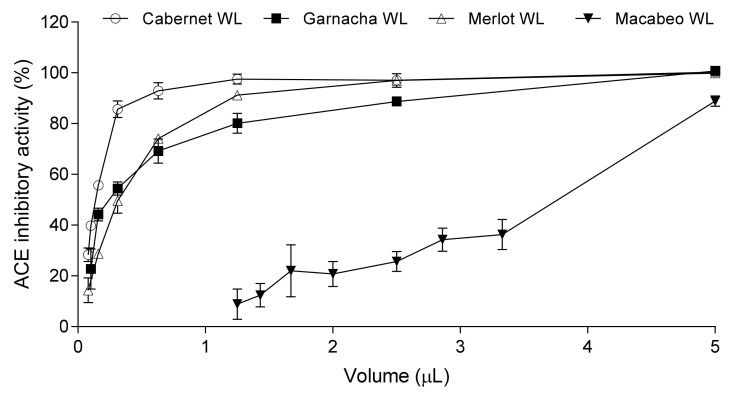
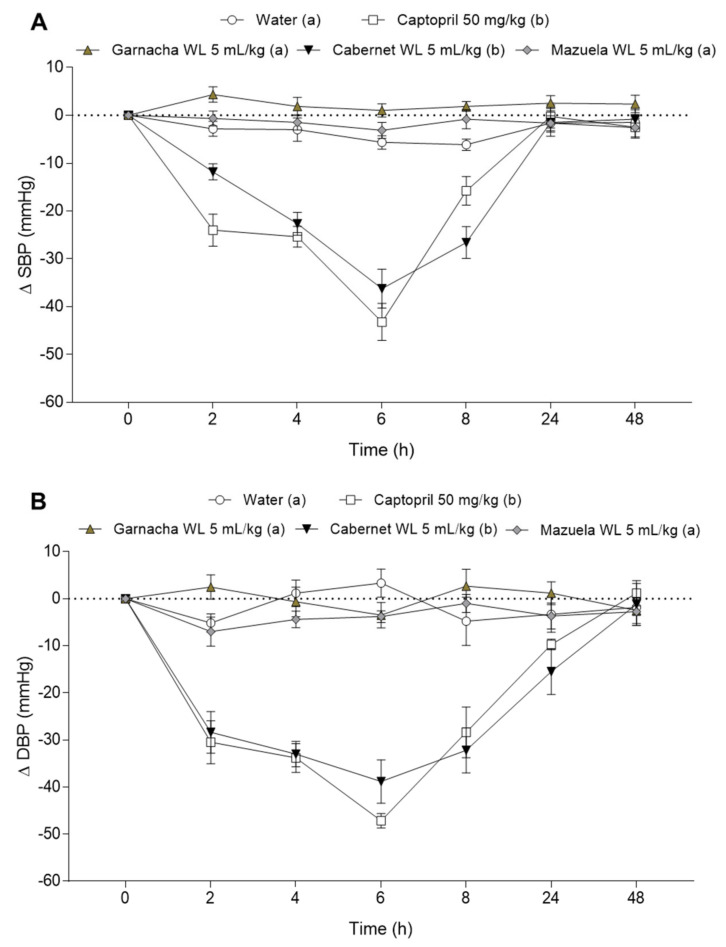
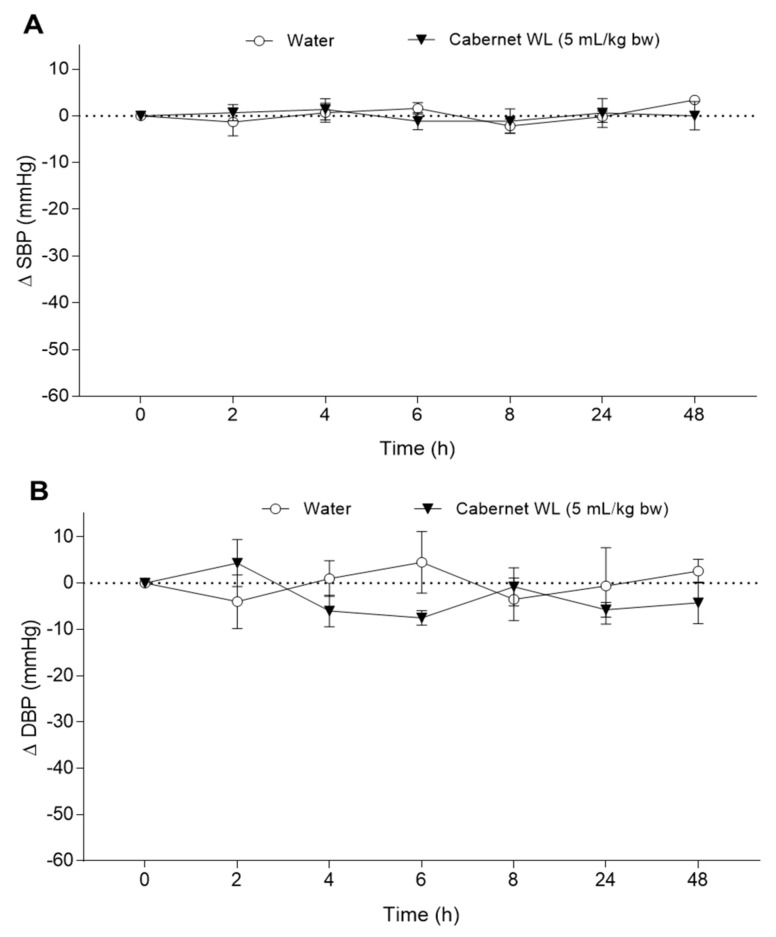
Wine lees (WL) are by-products generated in the winemaking process. The aim of this study was to investigate the angiotensin-converting enzyme inhibitory (ACEi) activity, and the blood pressure (BP) lowering effect of WL from individual grape varieties. The relationship among their activities and phenolic profiles was also studied. Three WL, from Cabernet, Mazuela, and Garnacha grape varieties, were firstly selected based on their ACEi properties. Their phenolic profiles were fully characterized by UHPLC-ESI-Q-TOF-MS. Then, their potential antihypertensive effects were evaluated in spontaneously hypertensive rats (SHR). BP was recorded before and after their oral administrations (2, 4, 6, 8, 24, and 48 h) at a dose of 5 mL/kg bw. Cabernet WL (CWL) exhibited a potent antihypertensive activity, similar to that obtained with the drug Captopril. This BP-lowering effect was related to the high amount of anthocyanins and flavanols present in these lees. In addition, a potential hypotensive effect of CWL was discarded in normotensive Wistar-Kyoto rats. Finally, the ACEi and antihypertensive activities of CWL coming from a different harvest were confirmed. Our results suggest the potential of CWL for controlling arterial BP, opening the door to commercial use within the wine industry.
酒渣(WL)是酿酒过程中的副产品。本研究旨在研究来自不同葡萄品种的 WL 的血管紧张素转化酶抑制(ACEi)活性和降血压(BP)作用。还研究了它们的活性和酚类谱之间的关系。根据 ACEi 特性,首先选择了Cabernet、Mazuela 和 Garnacha 葡萄品种的三种 WL。通过 UHPLC-ESI-Q-TOF-MS 对其酚类谱进行了全面表征。然后,在剂量为 5 mL/kg bw 时,在自发性高血压大鼠(SHR)中评估了它们的潜在降压作用。在口服后(2、4、6、8、24 和 48 h)记录 BP。Cabernet WL(CWL)表现出很强的降压活性,与药物卡托普利的降压活性相似。这种降压作用与这些酒渣中存在的大量花青素和黄烷醇有关。此外,在正常血压的 Wistar-Kyoto 大鼠中,排除了 CWL 的潜在降压作用。最后,证实了来自不同收获期的 CWL 的 ACEi 和降压活性。我们的研究结果表明,CWL 具有控制动脉血压的潜力,为葡萄酒行业的商业用途开辟了道路。