NASA Johnson Space Center, Houston, TX, 77058, USA.
KBR, Houston, TX, 77058, USA.
Sci Rep. 2021 Mar 5;11(1):5293. doi: 10.1038/s41598-021-84242-5.
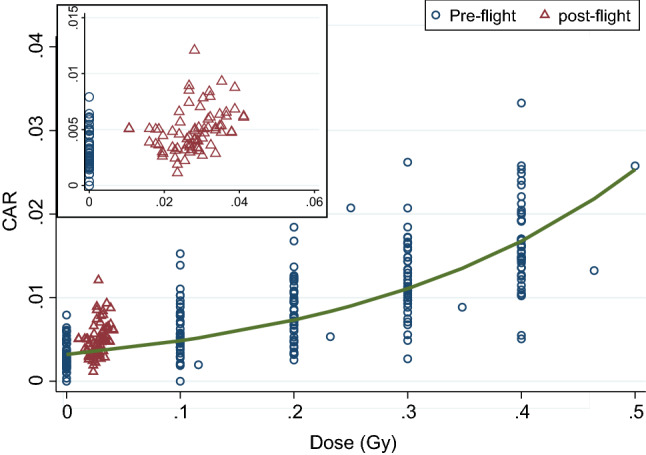
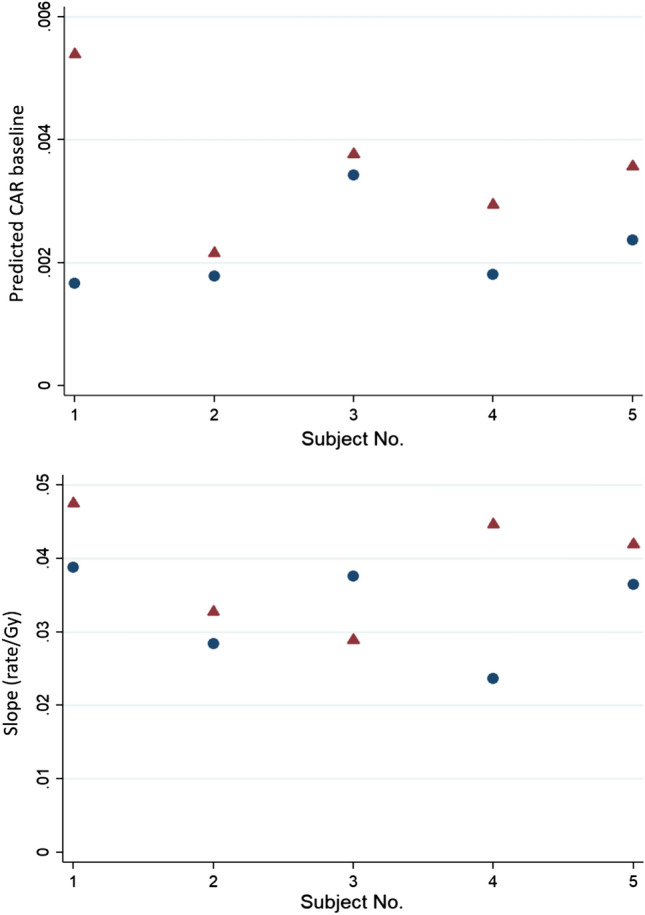
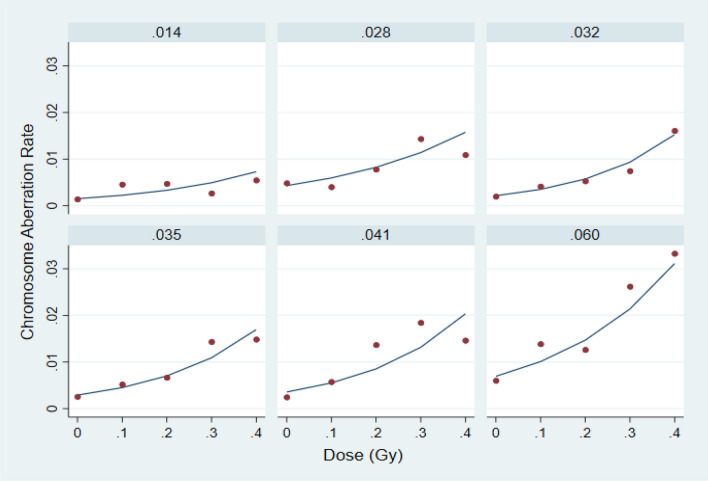
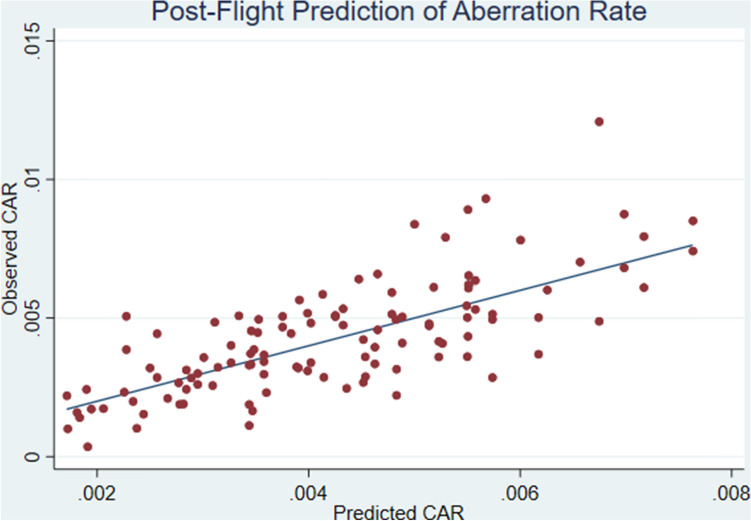
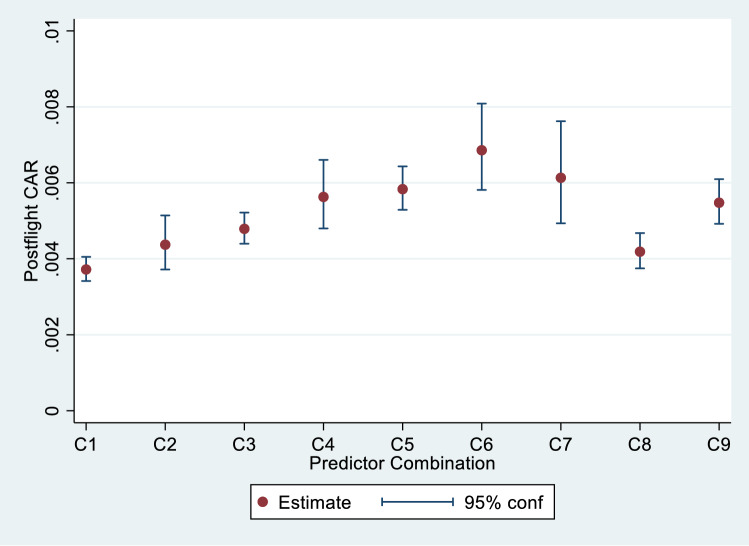
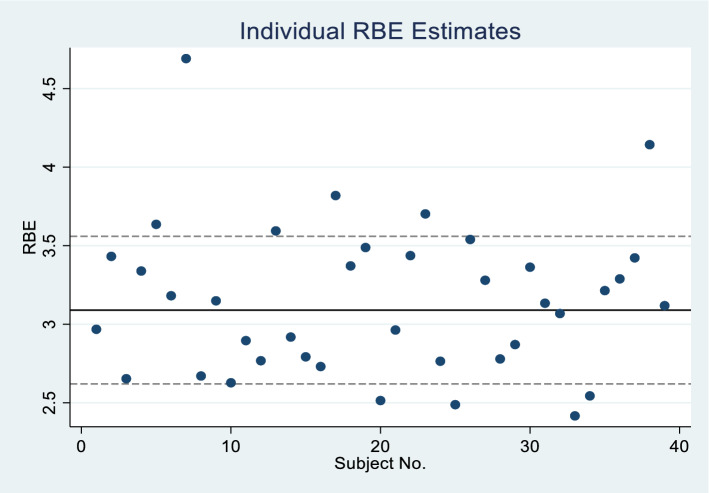
Space radiation consists of energetic protons and other heavier ions. During the International Space Station program, chromosome aberrations in lymphocytes of astronauts have been analyzed to estimate received biological doses of space radiation. More specifically, pre-flight blood samples were exposed ex vivo to varying doses of gamma rays, while post-flight blood samples were collected shortly and several months after landing. Here, in a study of 43 crew-missions, we investigated whether individual radiosensitivity, as determined by the ex vivo dose-response of the pre-flight chromosome aberration rate (CAR), contributes to the prediction of the post-flight CAR incurred from the radiation exposure during missions. Random-effects Poisson regression was used to estimate subject-specific radiosensitivities from the preflight dose-response data, which were in turn used to predict post-flight CAR and subject-specific relative biological effectiveness (RBEs) between space radiation and gamma radiation. Covariates age, gender were also considered. Results indicate that there is predictive value in background CAR as well as radiosensitivity determined preflight for explaining individual differences in post-flight CAR over and above that which could be explained by BFO dose alone. The in vivo RBE for space radiation was estimated to be approximately 3 relative to the ex vivo dose response to gamma irradiation. In addition, pre-flight radiosensitivity tended to be higher for individuals having a higher background CAR, suggesting that individuals with greater radiosensitivity can be more sensitive to other environmental stressors encountered in daily life. We also noted that both background CAR and radiosensitivity tend to increase with age, although both are highly variable. Finally, we observed no significant difference between the observed CAR shortly after mission and at > 6 months post-mission.
太空辐射由高能质子和其他重离子组成。在国际空间站计划期间,分析了宇航员淋巴细胞中的染色体畸变,以估算太空辐射的生物剂量。更具体地说,在飞行前采集血液样本,在体外暴露于不同剂量的伽马射线,而在飞行后则在着陆后不久和几个月后采集血液样本。在这里,在对 43 名机组人员任务的研究中,我们研究了个体放射敏感性,通过飞行前染色体畸变率(CAR)的体外剂量反应来确定,是否有助于预测任务期间辐射暴露后的飞行后 CAR。使用随机效应泊松回归从飞行前剂量反应数据中估算个体的放射敏感性,然后将其用于预测飞行后 CAR 和空间辐射与伽马辐射之间的个体特定相对生物效应(RBE)。还考虑了年龄、性别等协变量。结果表明,在背景 CAR 以及飞行前确定的放射敏感性方面都具有预测价值,可以解释飞行后 CAR 的个体差异,而不仅仅是 BFO 剂量本身可以解释的差异。与体外对伽马照射的剂量反应相比,太空辐射的体内 RBE 约为 3。此外,对于背景 CAR 较高的个体,飞行前的放射敏感性往往较高,这表明放射敏感性较高的个体可能对日常生活中遇到的其他环境应激源更为敏感。我们还注意到,背景 CAR 和放射敏感性都倾向于随年龄增长而增加,尽管两者都高度可变。最后,我们观察到任务后不久和任务后 6 个月以上的观察到的 CAR 之间没有显著差异。