Life Science Division, Institute of Advanced Study in Science and Technology, Guwahati, Assam, India.
Biodiversity Research Center, Academia Sinica, Nankang, Taipei, Taiwan.
Mol Biol Evol. 2021 Jun 25;38(7):2715-2731. doi: 10.1093/molbev/msab060.
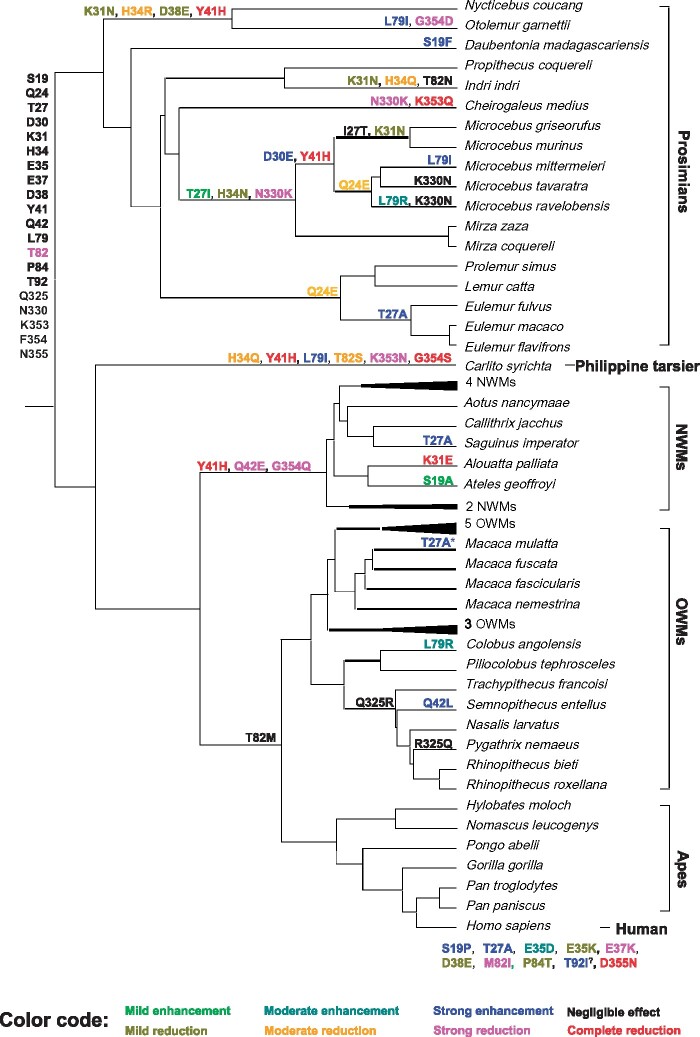
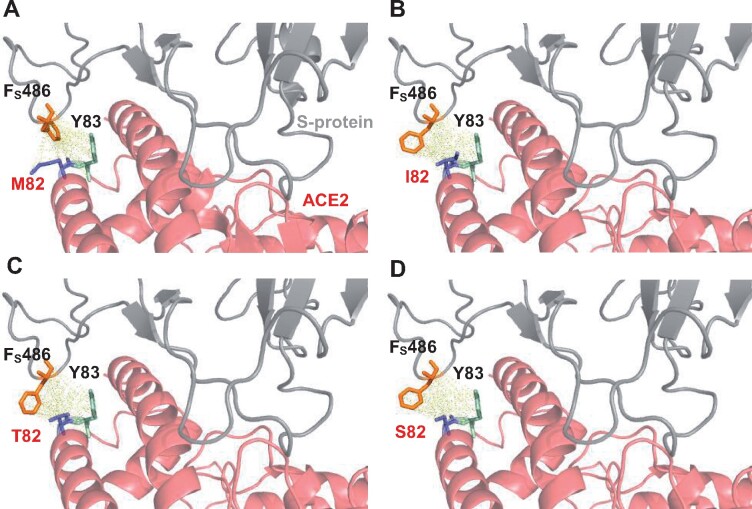
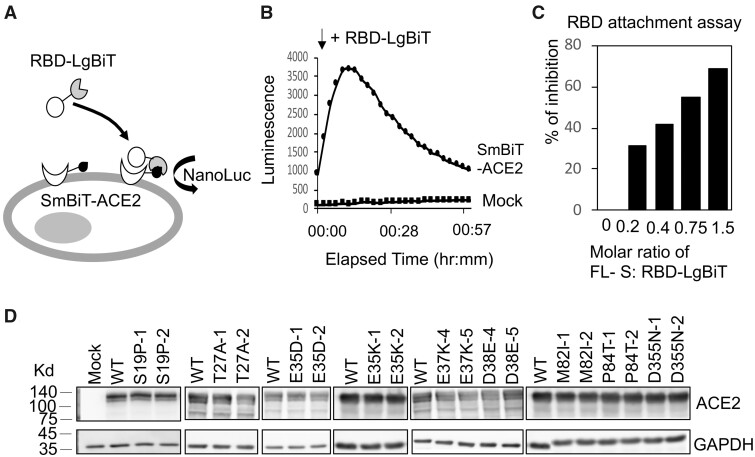
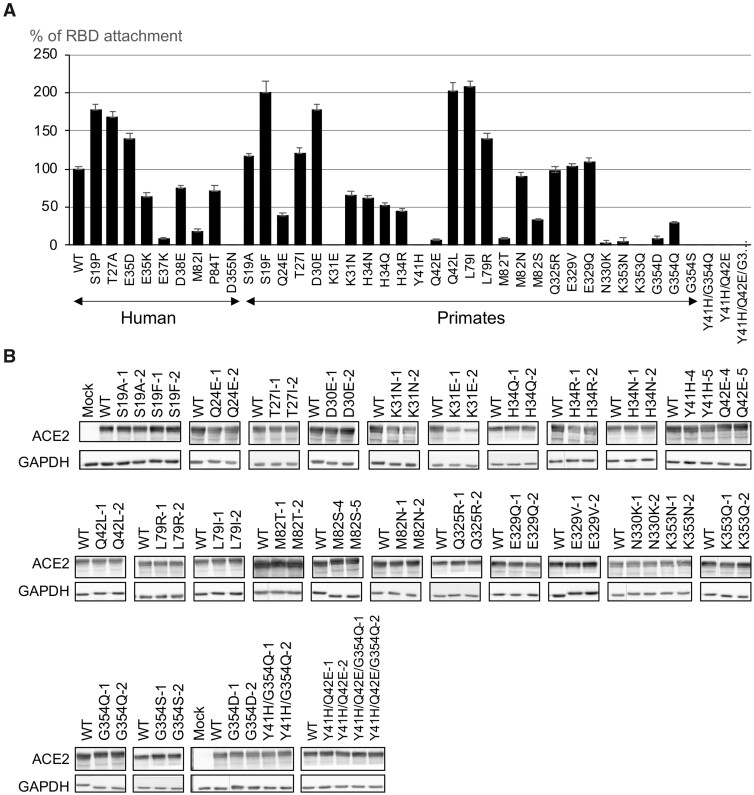
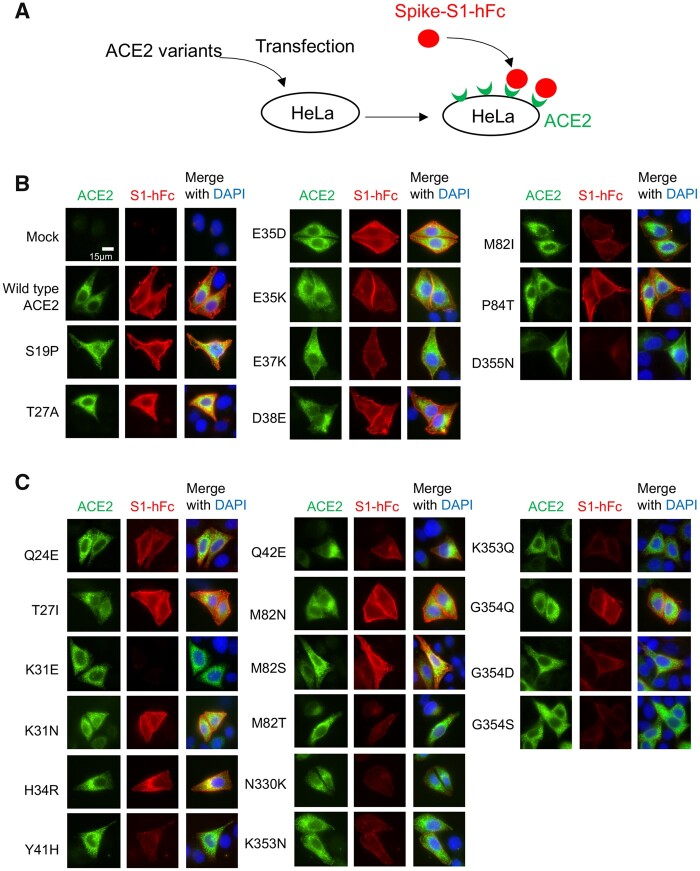
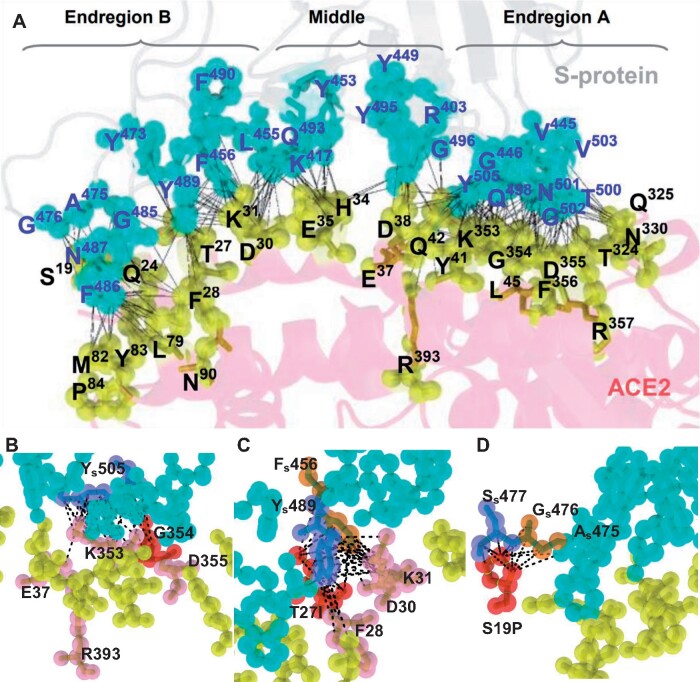
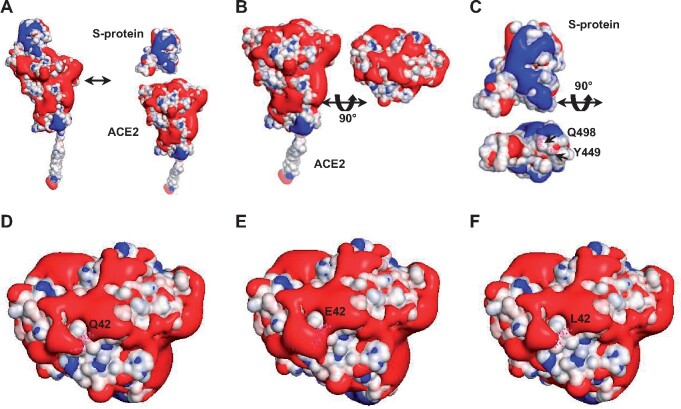
SARS-CoV-2 infects humans through the binding of viral S-protein (spike protein) to human angiotensin I converting enzyme 2 (ACE2). The structure of the ACE2-S-protein complex has been deciphered and we focused on the 27 ACE2 residues that bind to S-protein. From human sequence databases, we identified nine ACE2 variants at ACE2-S-protein binding sites. We used both experimental assays and protein structure analysis to evaluate the effect of each variant on the binding affinity of ACE2 to S-protein. We found one variant causing complete binding disruption, two and three variants, respectively, strongly and mildly reducing the binding affinity, and two variants strongly enhancing the binding affinity. We then collected the ACE2 gene sequences from 57 nonhuman primates. Among the 6 apes and 20 Old World monkeys (OWMs) studied, we found no new variants. In contrast, all 11 New World monkeys (NWMs) studied share four variants each causing a strong reduction in binding affinity, the Philippine tarsier also possesses three such variants, and 18 of the 19 prosimian species studied share one variant causing a strong reduction in binding affinity. Moreover, one OWM and three prosimian variants increased binding affinity by >50%. Based on these findings, we proposed that the common ancestor of primates was strongly resistant to and that of NWMs was completely resistant to SARS-CoV-2 and so is the Philippine tarsier, whereas apes and OWMs, like most humans, are susceptible. This study increases our understanding of the differences in susceptibility to SARS-CoV-2 infection among primates.
SARS-CoV-2 通过病毒 S 蛋白(刺突蛋白)与人类血管紧张素转化酶 2(ACE2)的结合感染人类。ACE2-S 蛋白复合物的结构已被破译,我们专注于与 S 蛋白结合的 27 个 ACE2 残基。从人类序列数据库中,我们在 ACE2-S 蛋白结合位点鉴定了 9 个 ACE2 变体。我们使用实验测定和蛋白质结构分析来评估每个变体对 ACE2 与 S 蛋白结合亲和力的影响。我们发现一个变体导致完全结合破坏,另外两个和三个变体分别强烈和轻度降低结合亲和力,而两个变体强烈增强结合亲和力。然后,我们从 57 种非人类灵长类动物中收集 ACE2 基因序列。在所研究的 6 种猿类和 20 种旧大陆猴(OWM)中,我们没有发现新的变体。相比之下,在所研究的 11 种新大陆猴(NWM)中,每种变体都导致结合亲和力强烈降低,菲律宾眼镜猴也具有三种这种变体,所研究的 19 种灵长类物种中有 18 种共享一种变体,导致结合亲和力强烈降低。此外,一种 OWM 和三种灵长类变体增加了 >50%的结合亲和力。基于这些发现,我们提出灵长类动物的共同祖先对 SARS-CoV-2 具有很强的抵抗力,而新大陆猴的共同祖先则完全具有抵抗力,菲律宾眼镜猴也是如此,而猿类和 OWM 与大多数人类一样,易感染。这项研究增加了我们对灵长类动物对 SARS-CoV-2 感染易感性差异的理解。