Department of Electrical and Electronics Engineering, Bitlis Eren University, Bitlis, Turkey.
Department of Computer Engineering, Bitlis Eren University, Bitlis, Turkey.
J Digit Imaging. 2021 Apr;34(2):263-272. doi: 10.1007/s10278-021-00434-5. Epub 2021 Mar 5.
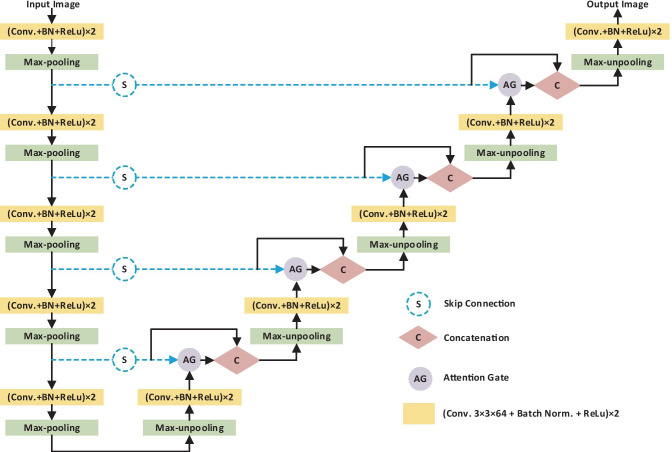
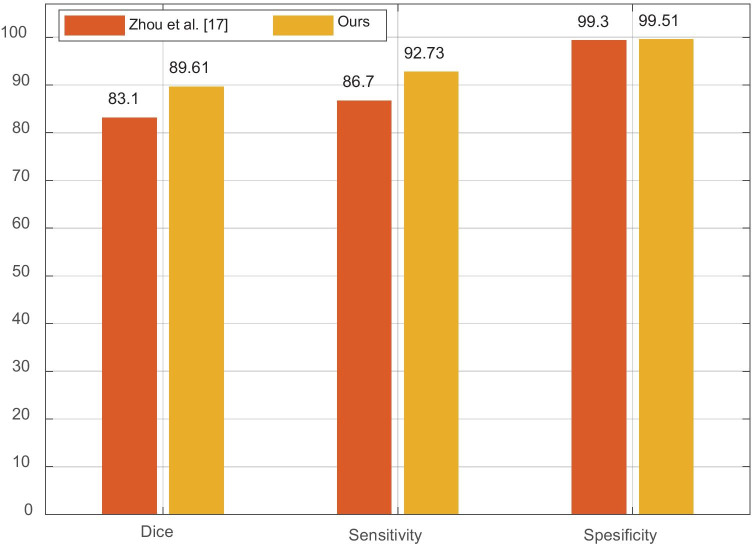
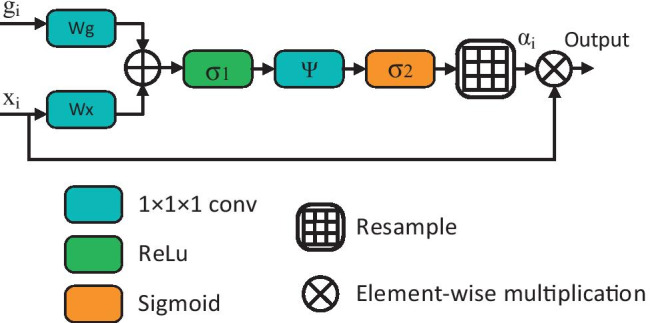
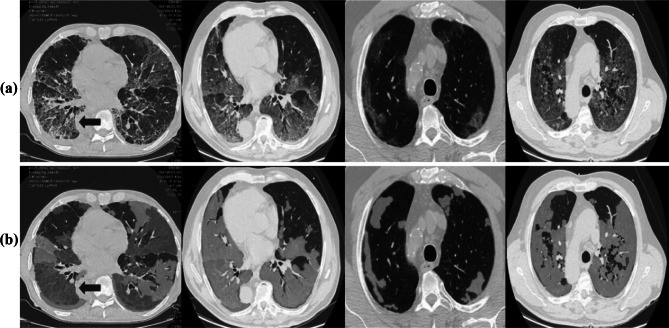
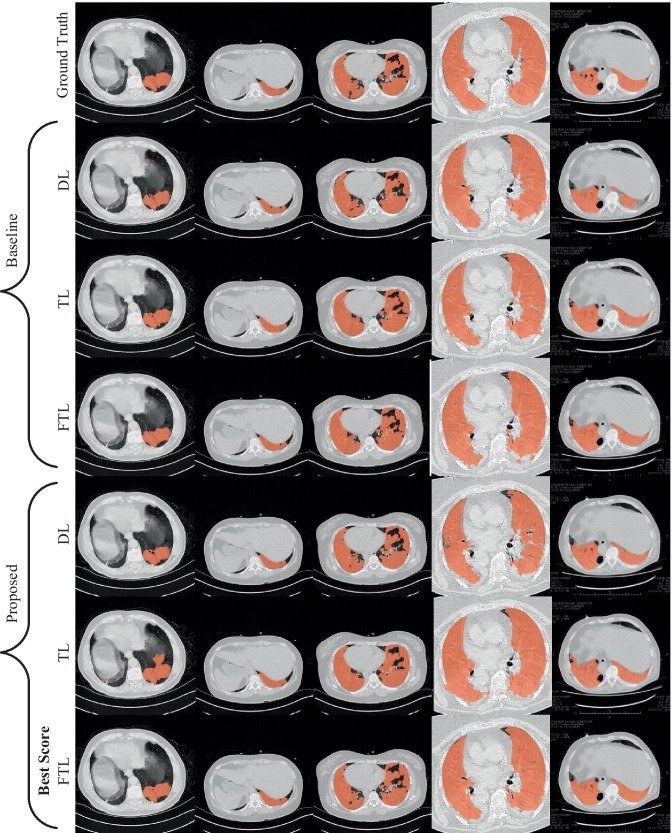
Coronavirus (COVID-19) is a pandemic, which caused suddenly unexplained pneumonia cases and caused a devastating effect on global public health. Computerized tomography (CT) is one of the most effective tools for COVID-19 screening. Since some specific patterns such as bilateral, peripheral, and basal predominant ground-glass opacity, multifocal patchy consolidation, crazy-paving pattern with a peripheral distribution can be observed in CT images and these patterns have been declared as the findings of COVID-19 infection. For patient monitoring, diagnosis and segmentation of COVID-19, which spreads into the lung, expeditiously and accurately from CT, will provide vital information about the stage of the disease. In this work, we proposed a SegNet-based network using the attention gate (AG) mechanism for the automatic segmentation of COVID-19 regions in CT images. AGs can be easily integrated into standard convolutional neural network (CNN) architectures with a minimum computing load as well as increasing model precision and predictive accuracy. Besides, the success of the proposed network has been evaluated based on dice, Tversky, and focal Tversky loss functions to deal with low sensitivity arising from the small lesions. The experiments were carried out using a fivefold cross-validation technique on a COVID-19 CT segmentation database containing 473 CT images. The obtained sensitivity, specificity, and dice scores were reported as 92.73%, 99.51%, and 89.61%, respectively. The superiority of the proposed method has been highlighted by comparing with the results reported in previous studies and it is thought that it will be an auxiliary tool that accurately detects automatic COVID-19 regions from CT images.
冠状病毒(COVID-19)是一种大流行疾病,它突然引起了原因不明的肺炎病例,并对全球公共卫生造成了毁灭性影响。计算机断层扫描(CT)是 COVID-19 筛查的最有效工具之一。由于在 CT 图像中可以观察到一些特定的模式,例如双侧、外周和基底为主的磨玻璃样混浊、多灶性斑片状实变、周边分布的“疯狂铺路石”模式,这些模式已被宣布为 COVID-19 感染的发现。对于 COVID-19 患者的监测、诊断和肺内病变的分割,从 CT 中迅速准确地对 COVID-19 进行分析,可以提供有关疾病阶段的重要信息。在这项工作中,我们提出了一种基于 SegNet 的网络,该网络使用注意力门(AG)机制对 CT 图像中的 COVID-19 区域进行自动分割。AG 可以轻松集成到标准卷积神经网络(CNN)架构中,计算负载最小,同时提高模型精度和预测准确性。此外,还基于骰子、Tversky 和焦点 Tversky 损失函数来评估所提出网络的性能,以处理由于小病灶导致的低敏感性问题。该实验采用五折交叉验证技术,在包含 473 张 CT 图像的 COVID-19 CT 分割数据库上进行。报告的灵敏度、特异性和骰子分数分别为 92.73%、99.51%和 89.61%。与之前的研究报告结果进行比较,突出了所提出方法的优越性,它被认为是一种从 CT 图像中准确检测自动 COVID-19 区域的辅助工具。