Liang Wenyi, Zhou Kun, Jian Ping, Chang Zihao, Zhang Qiunan, Liu Yuqi, Xiao Shuiming, Zhang Lanzhen
School of Traditional Chinese Medicine, Beijing University of Chinese Medicine, Beijing, China.
Institute of Chinese Materia Medica, China Academy of Chinese Medical Sciences, Beijing, China.
Front Pharmacol. 2021 Feb 12;12:622841. doi: 10.3389/fphar.2021.622841. eCollection 2021.
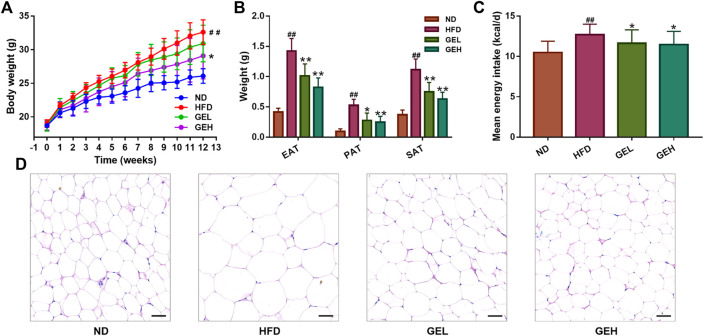
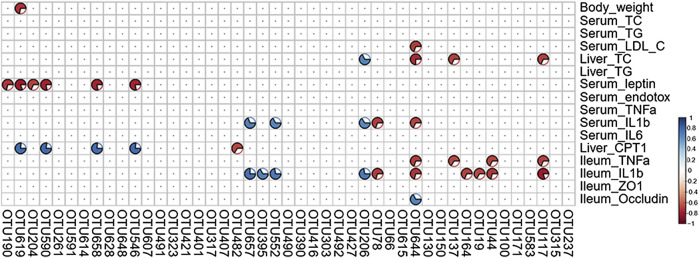
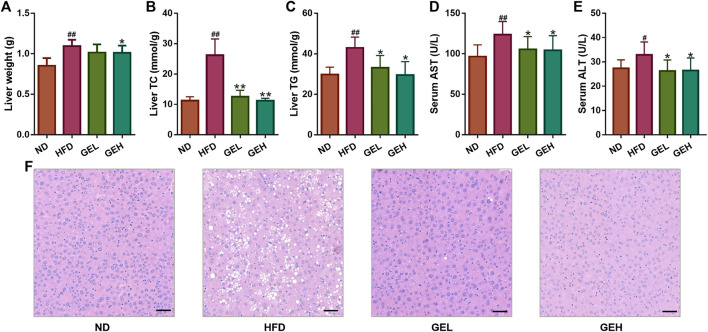
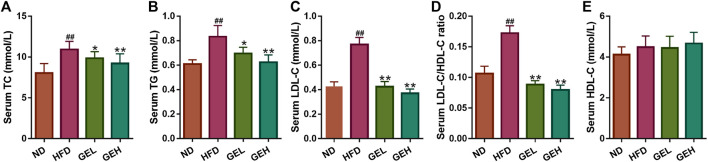
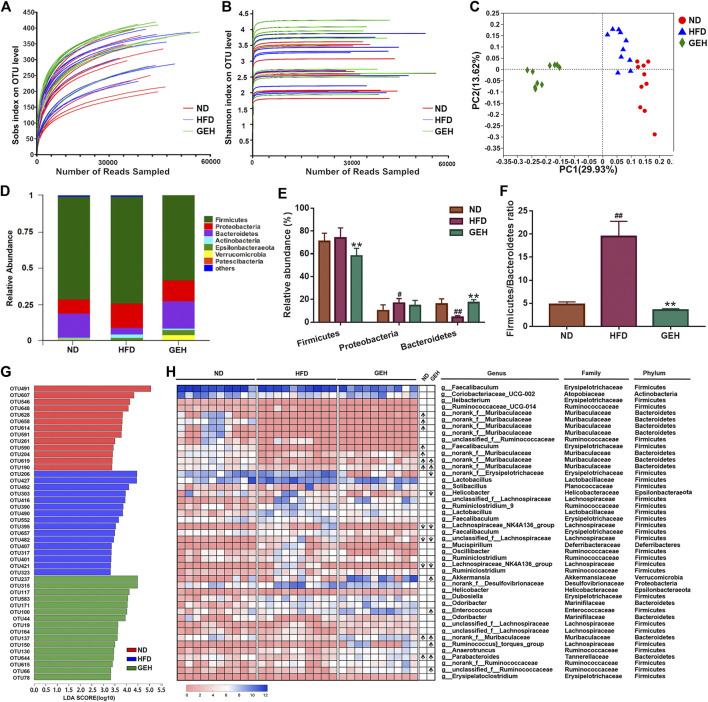
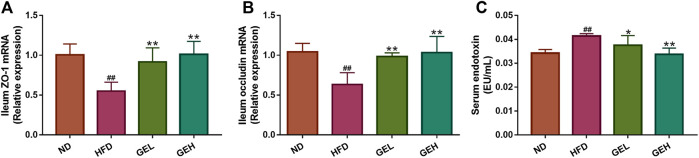
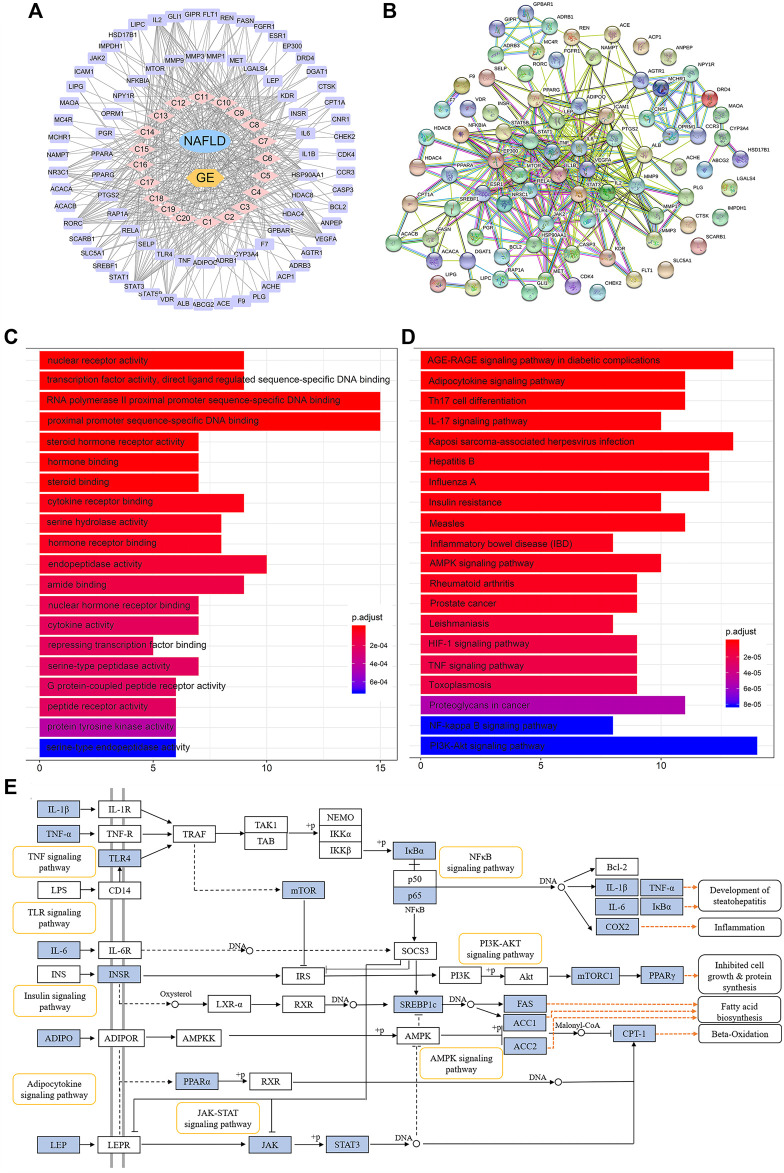
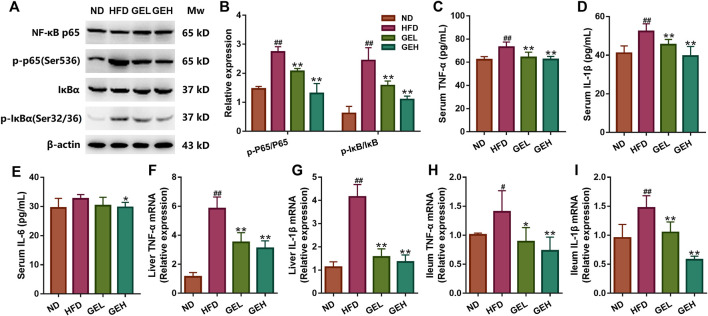
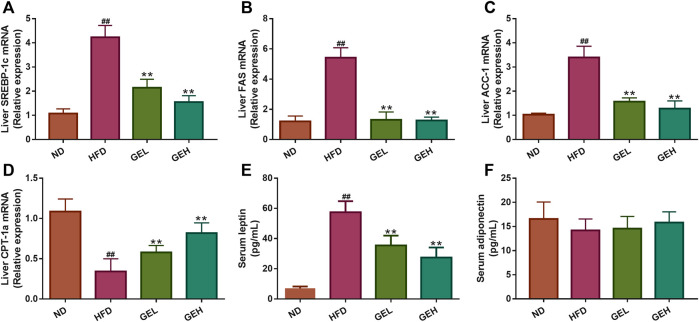
Ginseng, the root and rhizome of C. A. Mey., is a famous herbal medicine, and its major ginsenosides exert beneficial effects on nonalcoholic fatty liver disease (NAFLD). Due to the multicomponent and multitarget features of ginsenosides, their detailed mechanisms remain unclear. This study aimed to explore the role of ginsenosides on NAFLD and the potential mechanisms mediated by the gut microbiota and related molecular processes. C57BL/6J mice were fed a high-fat diet (HFD) supplemented or not supplemented with ginsenoside extract (GE) for 12 weeks. A strategy that integrates bacterial gene sequencing, serum pharmacochemistry and network pharmacology was applied. The results showed that GE significantly alleviated HFD-induced NAFLD symptoms in a dose-dependent manner. Furthermore, GE treatment modulated the HFD-induced imbalance in the gut microbiota and alleviated dysbiosis-mediated gut leakage and metabolic endotoxemia. Additionally, 20 components were identified in the mouse plasma after the oral administration of GE, and they interacted with 82 NAFLD-related targets. A network analysis revealed that anti-inflammatory effects and regulation of the metabolic balance might be responsible for the effects of GE on NAFLD. A validation experiment was then conducted, and the results suggested that GE suppressed NF-κB/IκB signaling activation and decreased the release and mRNA levels of proinflammatory factors (TNF-α, IL-1β and IL-6). Additionally, GE promoted hepatic lipolytic genes (CPT-1a), inhibited lipogenic genes (SREBP-1c, FAS, ACC-1) and improved leptin resistance. These findings imply that the benefits of GE are involved in modulating the gut microbiota, enhancing the gut barrier function, restoring the energy balance, and alleviating metabolic inflammation. Moreover, GE might serve as a potential agent for the prevention of NAFLD through the integration of prebiotic, anti-inflammatory and energy-regulatory effects.
人参,即五加科人参属植物的根及根茎,是一种著名的草药,其主要人参皂苷对非酒精性脂肪性肝病(NAFLD)具有有益作用。由于人参皂苷具有多成分、多靶点的特点,其具体机制仍不清楚。本研究旨在探讨人参皂苷在NAFLD中的作用以及由肠道微生物群介导的潜在机制和相关分子过程。将C57BL/6J小鼠喂食12周含或不含人参皂苷提取物(GE)的高脂饮食(HFD)。应用了一种整合细菌基因测序、血清药物化学和网络药理学的策略。结果表明,GE以剂量依赖性方式显著减轻了HFD诱导的NAFLD症状。此外,GE治疗调节了HFD诱导的肠道微生物群失衡,并减轻了由生态失调介导的肠道渗漏和代谢性内毒素血症。此外,口服GE后在小鼠血浆中鉴定出20种成分,它们与82个NAFLD相关靶点相互作用。网络分析表明,抗炎作用和代谢平衡调节可能是GE对NAFLD产生作用的原因。随后进行了验证实验,结果表明GE抑制了NF-κB/IκB信号激活,并降低了促炎因子(TNF-α、IL-1β和IL-6)的释放和mRNA水平。此外,GE促进肝脏脂肪分解基因(CPT-1a),抑制脂肪生成基因(SREBP-1c、FAS、ACC-1)并改善瘦素抵抗。这些发现表明,GE的益处涉及调节肠道微生物群、增强肠道屏障功能、恢复能量平衡和减轻代谢炎症。此外,GE可能通过整合益生元、抗炎和能量调节作用,作为预防NAFLD的潜在药物。