Zhou Jian-Min, Zhang Hai-Jun, Wu Shu-Geng, Qiu Kai, Fu Yu, Qi Guang-Hai, Wang Jing
Laboratory of Quality and Safety Risk Assessment for Animal Products on Feed Hazards (Beijing) of the Ministry of Agriculture and Rural Affairs, Feed Research Institute, Chinese Academy of Agricultural Sciences, Beijing, China.
Front Microbiol. 2021 Feb 22;12:635333. doi: 10.3389/fmicb.2021.635333. eCollection 2021.
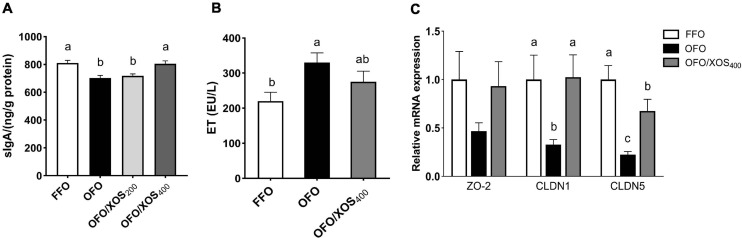
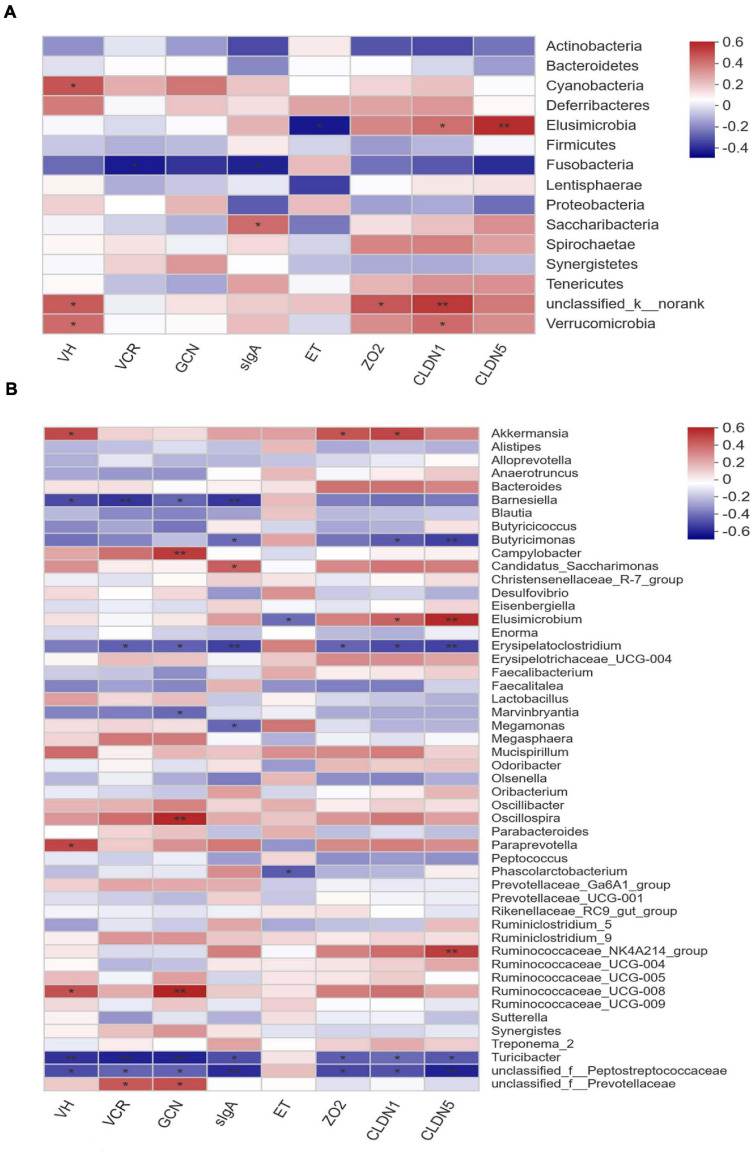
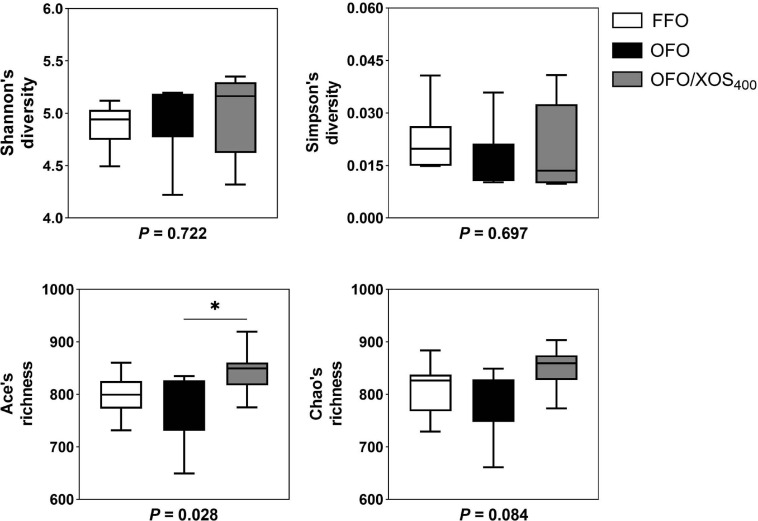
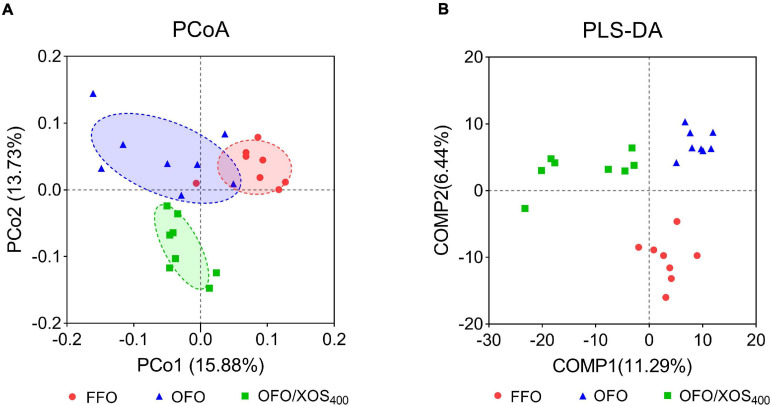
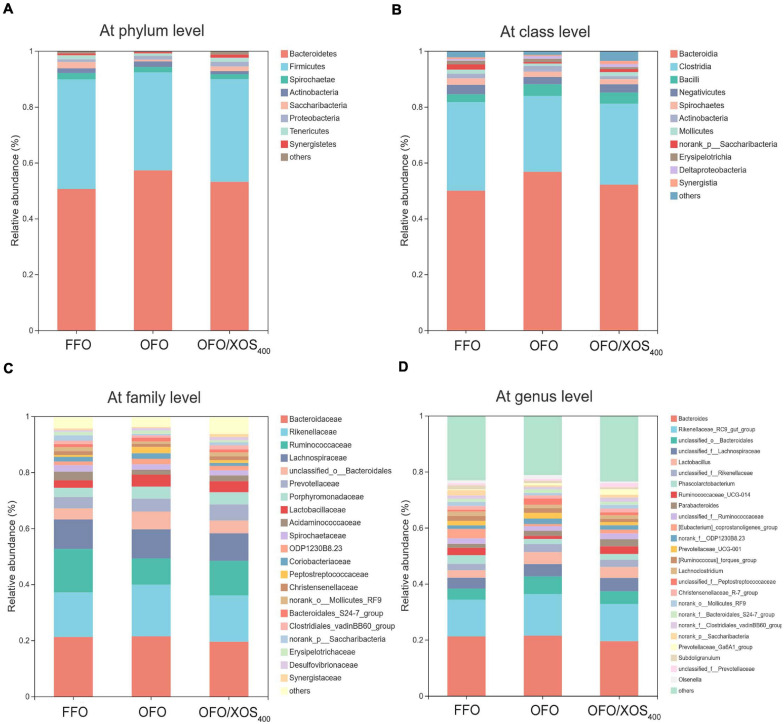
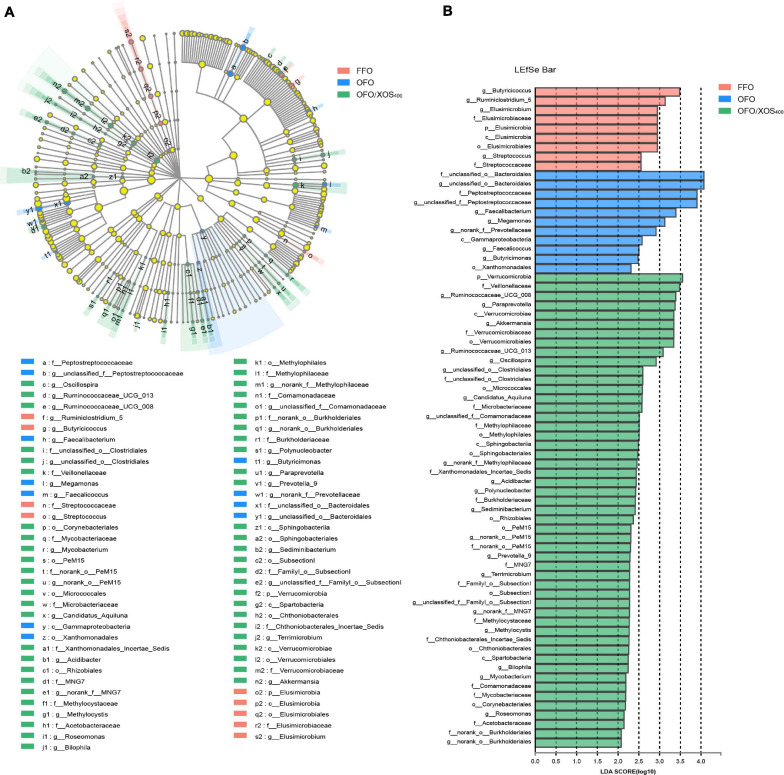
Our previous study indicated that dietary xylooligosaccharide (XOS) supplementation improved feed efficiency, ileal morphology, and nutrient digestibility in laying hens. The objective of this study was to evaluate the mitigative effects of XOS on intestinal mucosal barrier impairment and microbiota dysbiosis induced by oxidized fish oil (OFO) in laying hens. A total of 384 Hy-Line Brown layers at 50 weeks of age were randomly divided into four dietary treatments, including the diets supplemented with 20 g/kg of fresh fish oil (FFO group) or 20 g/kg of oxidized fish oil (OFO group), and the OFO diets with XOS addition at 200 mg/kg (OFO/XOS group) or 400 mg/kg (OFO/XOS group). Each treatment had eight replicates with 12 birds each. The OFO treatment decreased ( < 0.05) the production performance of birds from 7 to 12 weeks of the experiment, reduced ( < 0.05) ileal mucosal secretory immunoglobulin A (sIgA) content, and increased ( < 0.05) serum endotoxin concentration, as well as downregulated ( < 0.05) mRNA expression of claudin-1 () and claudin-5 () in the ileal mucosa at the end of the experiment. Dietary XOS addition (400 mg/kg) recovered ( < 0.05) these changes and further improved ( < 0.05) ileal villus height (VH) and the villus height-to-crypt depth ratio (VCR). In addition, OFO treatment altered cecal microbial composition of layers, and these alterations were probably involved in OFO-induced ileal mucosal impairment as causes or consequences. Supplemental XOS remodeled cecal microbiota of layers fed the OFO diet, characterized by an elevation in microbial richness and changes in microbial composition, including increases in , , (), , , and , along with a decrease in The increased abundance of () had positive correlations with the improved ileal VH and ileal mucosal expression of . The abundance of decreased by XOS addition was negatively associated with ileal VH, VCR, ileal mucosal sIgA content, and the relative expression of zonula occludens-2, , and . Collectively, supplemental XOS alleviated OFO-induced intestinal mucosal barrier dysfunction and performance impairment in laying hens, which could be at least partially attributed to the modulation of gut microbiota.
我们之前的研究表明,在蛋鸡日粮中添加低聚木糖(XOS)可提高饲料效率、改善回肠形态并提高养分消化率。本研究的目的是评估XOS对氧化鱼油(OFO)诱导的蛋鸡肠道黏膜屏障损伤和微生物群失调的缓解作用。将384只50周龄的海兰褐蛋鸡随机分为四种日粮处理组,包括添加20 g/kg新鲜鱼油的日粮(FFO组)或20 g/kg氧化鱼油的日粮(OFO组),以及添加200 mg/kg XOS的OFO日粮(OFO/XOS组)或400 mg/kg XOS的OFO日粮(OFO/XOS组)。每个处理组有8个重复,每个重复12只鸡。在实验的第7至12周,OFO处理降低了(P<0.05)蛋鸡的生产性能,降低了(P<0.05)回肠黏膜分泌型免疫球蛋白A(sIgA)含量,增加了(P<0.05)血清内毒素浓度,并在实验结束时下调了(P<0.05)回肠黏膜中claudin-1(Claudin-1)和claudin-5(Claudin-5)的mRNA表达。日粮中添加XOS(400 mg/kg)可恢复(P<0.05)这些变化,并进一步提高(P<0.05)回肠绒毛高度(VH)和绒毛高度与隐窝深度之比(VCR)。此外,OFO处理改变了蛋鸡盲肠微生物组成,这些改变可能作为原因或结果参与了OFO诱导的回肠黏膜损伤。补充XOS重塑了饲喂OFO日粮的蛋鸡盲肠微生物群,其特征是微生物丰富度增加和微生物组成变化,包括双歧杆菌属(Bifidobacterium)、真杆菌属(Eubacterium)、乳杆菌属(Lactobacillus)(L. johnsonii)、拟杆菌属(Bacteroides)、粪杆菌属(Faecalibacterium)和梭菌属(Clostridium)(C. coccoides)增加,以及大肠杆菌属(Escherichia coli)减少。双歧杆菌属(Bifidobacterium)丰度的增加与回肠VH的改善和Claudin-1的回肠黏膜表达呈正相关。添加XOS后大肠杆菌属(Escherichia coli)丰度的降低与回肠VH、VCR、回肠黏膜sIgA含量以及紧密连接蛋白-2(ZO-2)、Claudin-1和Claudin-5的相对表达呈负相关。总体而言,补充XOS可减轻OFO诱导的蛋鸡肠道黏膜屏障功能障碍和生产性能损害,这至少部分归因于对肠道微生物群的调节。