Iranmanesh Yasaman, Jiang Biao, Favour Okoye C, Dou Zhangqi, Wu Jiawei, Li Jinfan, Sun Chongran
School of Medicine, Zhejiang University, Hangzhou, China.
Department of Radiology, The 2nd Affiliated Hospital of Zhejiang University Medical School, Hangzhou, China.
Front Oncol. 2021 Feb 22;11:582694. doi: 10.3389/fonc.2021.582694. eCollection 2021.
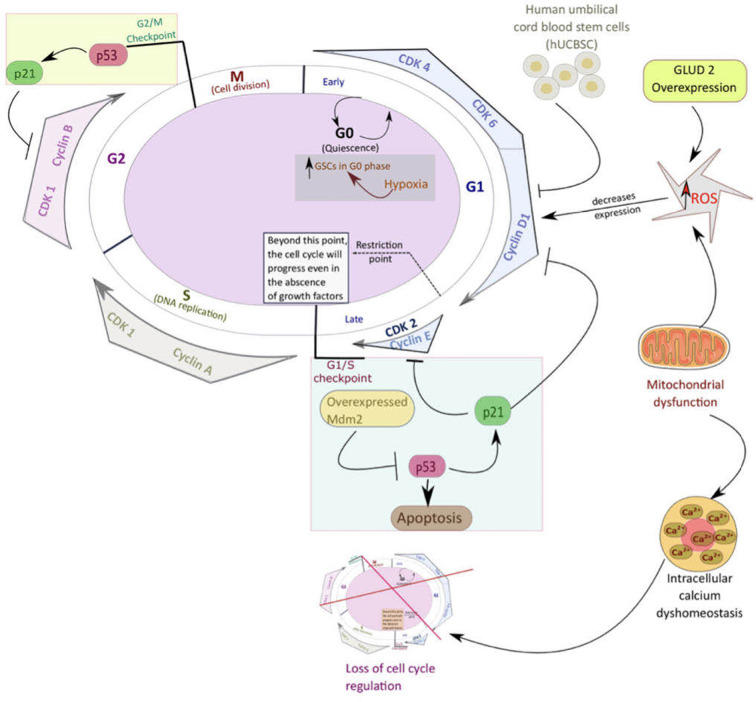
Glioblastoma (GBM), one of the deadliest primary brain malignancies, is characterized by a high recurrence rate due to its limited response to existing therapeutic strategies such as chemotherapy, radiation therapy, and surgery. Several mechanisms and pathways have been identified to be responsible for GBM therapeutic resistance. Glioblastoma stem cells (GSCs) are known culprits of GBM resistance to therapy. GSCs are characterized by their unique self-renewal, differentiating capacity, and proliferative potential. They form a heterogeneous population of cancer stem cells within the tumor and are further divided into different subpopulations. Their distinct molecular, genetic, dynamic, and metabolic features distinguish them from neural stem cells (NSCs) and differentiated GBM cells. Novel therapeutic strategies targeting GSCs could effectively reduce the tumor-initiating potential, hence, a thorough understanding of mechanisms involved in maintaining GSCs' stemness cannot be overemphasized. The mitochondrion, a regulator of cellular physiological processes such as autophagy, cellular respiration, reactive oxygen species (ROS) generation, apoptosis, DNA repair, and cell cycle control, has been implicated in various malignancies (for instance, breast, lung, and prostate cancer). Besides, the role of mitochondria in GBM has been extensively studied. For example, when stressors, such as irradiation and hypoxia are present, GSCs utilize specific cytoprotective mechanisms like the activation of mitochondrial stress pathways to survive the harsh environment. Proliferating GBM cells exhibit increased cytoplasmic glycolysis in comparison to terminally differentiated GBM cells and quiescent GSCs that rely more on oxidative phosphorylation (OXPHOS). Furthermore, the Warburg effect, which is characterized by increased tumor cell glycolysis and decreased mitochondrial metabolism in the presence of oxygen, has been observed in GBM. Herein, we highlight the importance of mitochondria in the maintenance of GSCs.
胶质母细胞瘤(GBM)是最致命的原发性脑恶性肿瘤之一,由于其对化疗、放疗和手术等现有治疗策略的反应有限,其特点是复发率高。已经确定了几种机制和途径与GBM的治疗耐药性有关。胶质母细胞瘤干细胞(GSCs)是GBM治疗耐药的已知罪魁祸首。GSCs的特点是具有独特的自我更新、分化能力和增殖潜力。它们在肿瘤内形成异质性的癌症干细胞群体,并进一步分为不同的亚群。它们独特的分子、遗传、动态和代谢特征使它们与神经干细胞(NSCs)和分化的GBM细胞区分开来。针对GSCs的新型治疗策略可以有效降低肿瘤起始潜能,因此,深入了解维持GSCs干性的机制至关重要。线粒体是细胞生理过程的调节因子,如自噬、细胞呼吸、活性氧(ROS)生成、细胞凋亡、DNA修复和细胞周期控制,已被证明与多种恶性肿瘤(如乳腺癌、肺癌和前列腺癌)有关。此外,线粒体在GBM中的作用也得到了广泛研究。例如,当存在辐射和缺氧等应激源时,GSCs利用特定的细胞保护机制,如激活线粒体应激途径,在恶劣环境中存活。与终末分化的GBM细胞和更依赖氧化磷酸化(OXPHOS)的静止GSCs相比,增殖的GBM细胞表现出细胞质糖酵解增加。此外,在GBM中还观察到了瓦伯格效应,其特征是在有氧条件下肿瘤细胞糖酵解增加和线粒体代谢减少。在此,我们强调线粒体在维持GSCs中的重要性。