Guarnera Alessia, Podda Pierfrancesco, Santini Elena, Paolantonio Pasquale, Laghi Andrea
Department of Surgical and Medical Sciences and Translational Medicine, Sapienza University of Rome - Sant'Andrea University Hospital, Via di Grottarossa, 1035-1039, 00189, Rome, Italy.
Department of Radiology, San Giovanni Addolorata Hospital, Via Dell'Amba Aradam 9, 00184, Rome, Italy.
Insights Imaging. 2021 Mar 11;12(1):34. doi: 10.1186/s13244-021-00967-x.
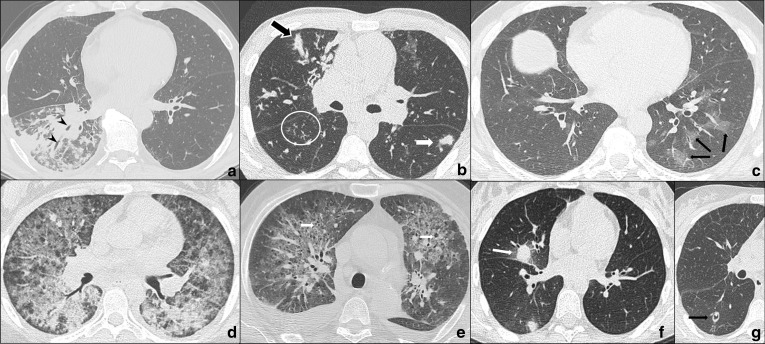
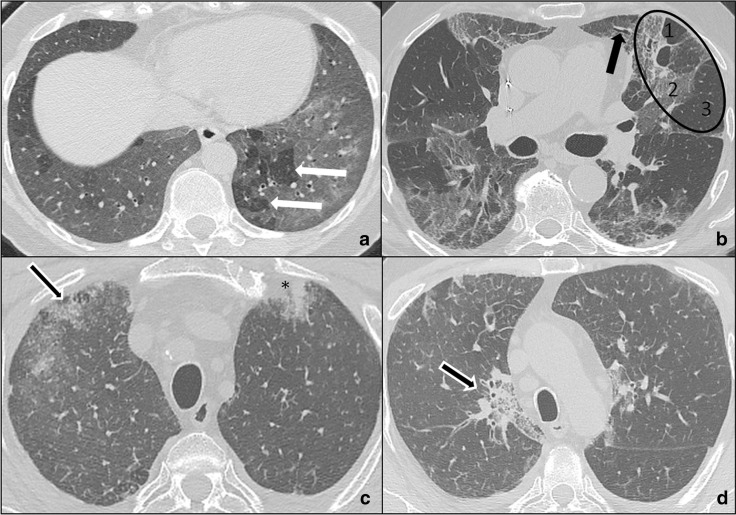
COVID-19 pneumonia represents the most severe pandemic of the twenty-first century and has crucial clinical, social and economical implications. The scientific community has focused attention and resources on clinical and radiological features of COVID-19 pneumonia. Few papers analysing the vast spectrum of differential diagnoses have been published.
Complexity of differential diagnosis lays in the evidence of similar radiological findings as ground-glass opacities, crazy paving pattern and consolidations in COVID-19 pneumonia and a multitude of other lung diseases. Differential diagnosis is and will be extremely important during and after the pandemic peak, when there are fewer COVID-19 pneumonia cases. The aim of our pictorial essay is to schematically present COVID-19 pneumonia most frequent differential diagnoses to help the radiologist face the current COVID-19 pneumonia challenge.
Clinical data, laboratory tests and imaging are pillars of a trident, which allows to reach a correct diagnosis in order to grant an excellent allocation of human and economical resources. The radiologist has a pivotal role in the early diagnosis of COVID-19 pneumonia because he may raise suspicion of the pathology and help to avoid COVID-19 virus spread.
新型冠状病毒肺炎(COVID-19肺炎)是21世纪最严重的大流行病,具有至关重要的临床、社会和经济影响。科学界已将注意力和资源集中在COVID-19肺炎的临床和放射学特征上。很少有分析广泛鉴别诊断范围的论文发表。
鉴别诊断的复杂性在于COVID-19肺炎与许多其他肺部疾病存在类似的放射学表现,如磨玻璃影、铺路石样改变和实变。在大流行高峰期及之后,当COVID-19肺炎病例较少时,鉴别诊断现在和将来都极为重要。我们这篇图文并茂的文章旨在示意性地展示COVID-19肺炎最常见的鉴别诊断,以帮助放射科医生应对当前COVID-19肺炎的挑战。
临床数据、实验室检查和影像学是三叉戟的支柱,这有助于做出正确诊断,从而实现人力和经济资源的优化配置。放射科医生在COVID-早期诊断中起着关键作用,因为他可能会提高对该疾病的怀疑,并有助于避免COVID-19病毒传播。