Department of NanoEngineering, University of California San Diego, La Jolla, CA, 92093, USA.
Smart Living Innovation Technology Centre, Department of Energy Science and Technology, Myongji University, Yongin, Gyeonggi-do, 17058, Republic of Korea.
Biosens Bioelectron. 2021 May 15;180:113112. doi: 10.1016/j.bios.2021.113112. Epub 2021 Mar 2.
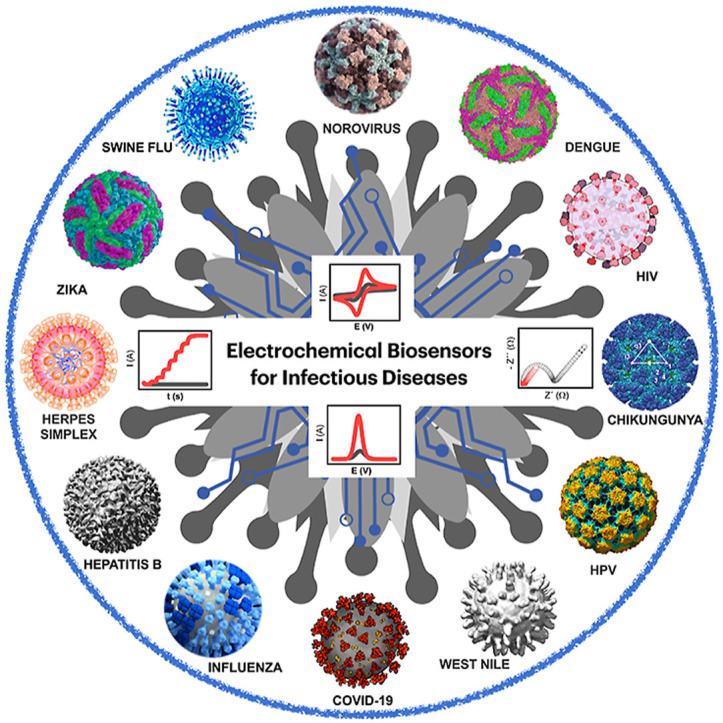
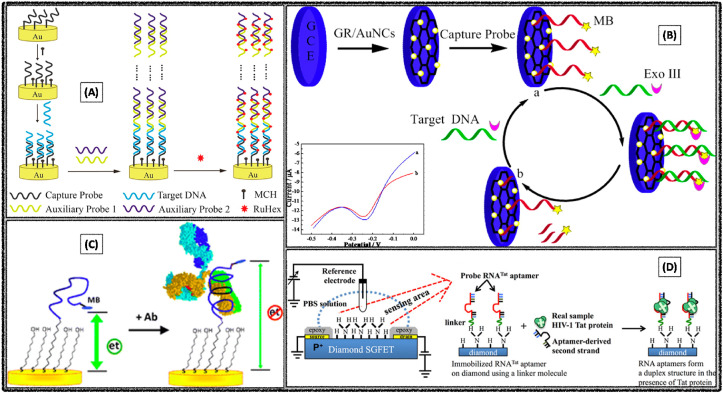
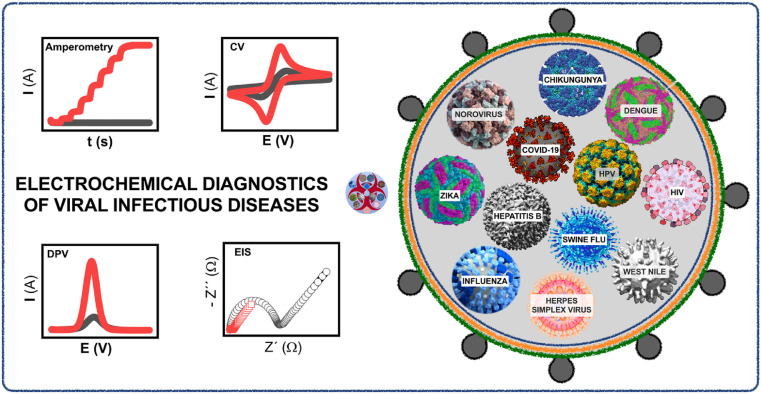
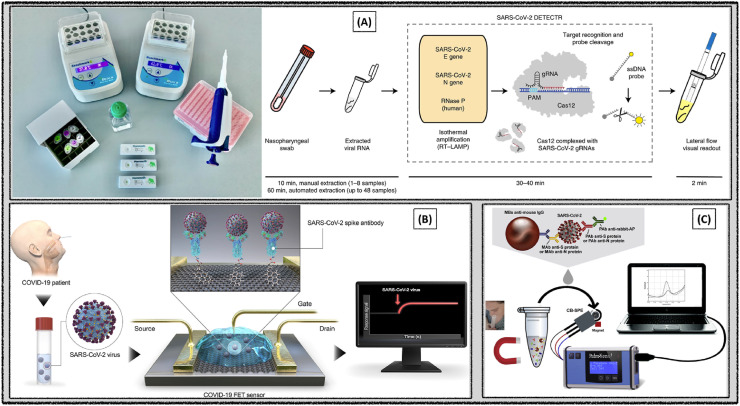
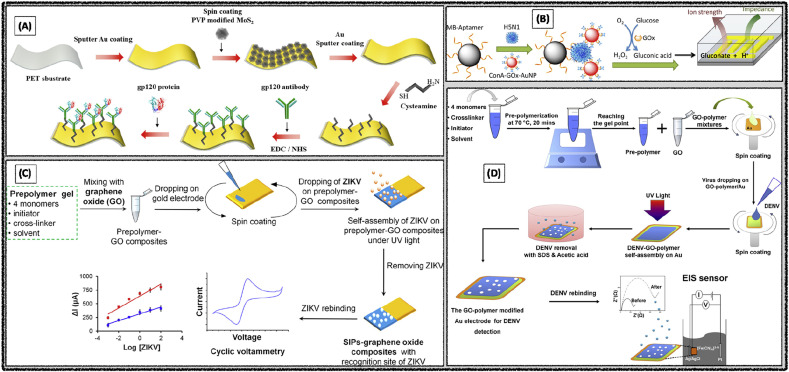
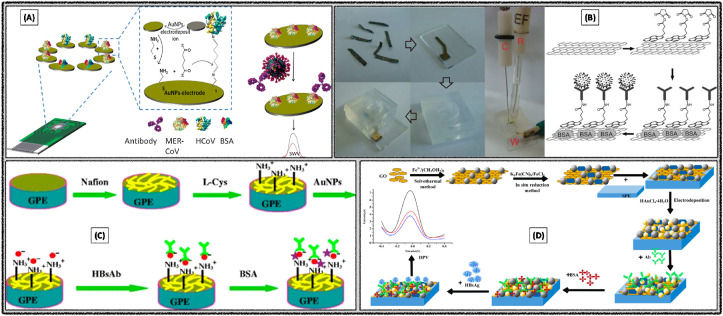
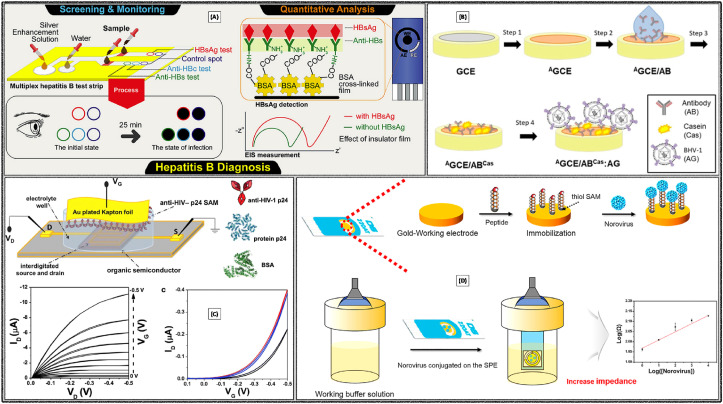
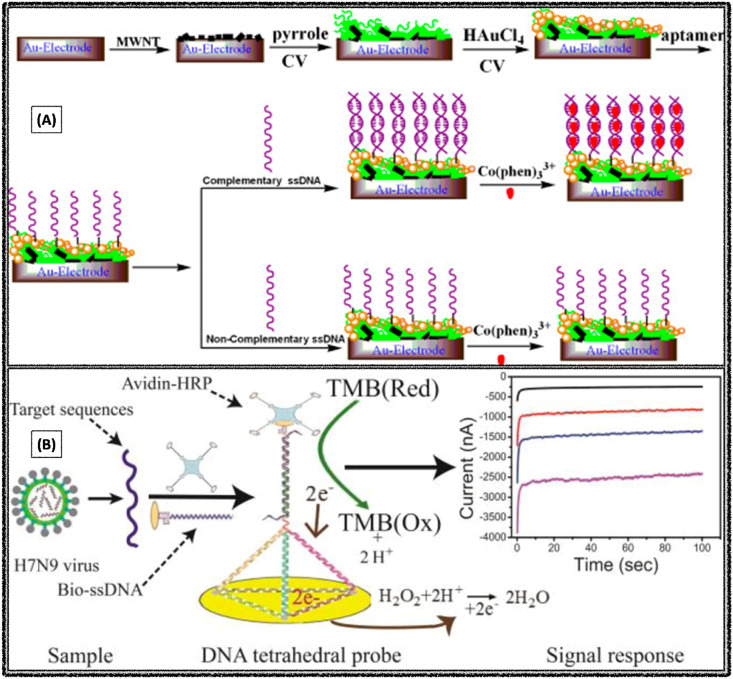
Infectious diseases caused by viruses can elevate up to undesired pandemic conditions affecting the global population and normal life function. These in turn impact the established world economy, create jobless situations, physical, mental, emotional stress, and challenge the human survival. Therefore, timely detection, treatment, isolation and prevention of spreading the pandemic infectious diseases not beyond the originated town is critical to avoid global impairment of life (e.g., Corona virus disease - 2019, COVID-19). The objective of this review article is to emphasize the recent advancements in the electrochemical diagnostics of twelve life-threatening viruses namely - COVID-19, Middle east respiratory syndrome (MERS), Severe acute respiratory syndrome (SARS), Influenza, Hepatitis, Human immunodeficiency virus (HIV), Human papilloma virus (HPV), Zika virus, Herpes simplex virus, Chikungunya, Dengue, and Rotavirus. This review describes the design, principle, underlying rationale, receptor, and mechanistic aspects of sensor systems reported for such viruses. Electrochemical sensor systems which comprised either antibody or aptamers or direct/mediated electron transfer in the recognition matrix were explicitly segregated into separate sub-sections for critical comparison. This review emphasizes the current challenges involved in translating laboratory research to real-world device applications, future prospects and commercialization aspects of electrochemical diagnostic devices for virus detection. The background and overall progress provided in this review are expected to be insightful to the researchers in sensor field and facilitate the design and fabrication of electrochemical sensors for life-threatening viruses with broader applicability to any desired pathogens.
由病毒引起的传染病可能会升级为不受欢迎的大流行状况,影响全球人口和正常的生活功能。这反过来又影响了既定的世界经济,造成失业,身体、精神、情绪压力,并对人类生存构成挑战。因此,及时发现、治疗、隔离和预防大流行传染病的传播,使其不超出起源地城镇,对于避免全球生命受损(例如,2019 年冠状病毒病,COVID-19)至关重要。本文的目的是强调电化学诊断十二种危及生命的病毒的最新进展,即 - COVID-19、中东呼吸综合征(MERS)、严重急性呼吸综合征(SARS)、流感、肝炎、人类免疫缺陷病毒(HIV)、人乳头瘤病毒(HPV)、寨卡病毒、单纯疱疹病毒、基孔肯雅热、登革热和轮状病毒。本文描述了用于此类病毒的传感器系统的设计、原理、基本原理、受体和机械方面。电化学传感器系统包括抗体或适体或直接/介导电子转移在识别基质中,被明确分为单独的小节进行关键比较。本文强调了将实验室研究转化为实际设备应用所涉及的当前挑战,以及电化学诊断设备用于病毒检测的未来前景和商业化方面。本文提供的背景和总体进展有望为传感器领域的研究人员提供有价值的见解,并促进具有更广泛适用性的针对危及生命的病毒的电化学传感器的设计和制造。