Department of Materials Science and Engineering, Lehigh University, Bethlehem, PA, 18015, USA.
Department of Biological Sciences, Lehigh University, Bethlehem, PA, 18015, USA.
Sci Rep. 2021 Mar 11;11(1):5763. doi: 10.1038/s41598-021-85050-7.
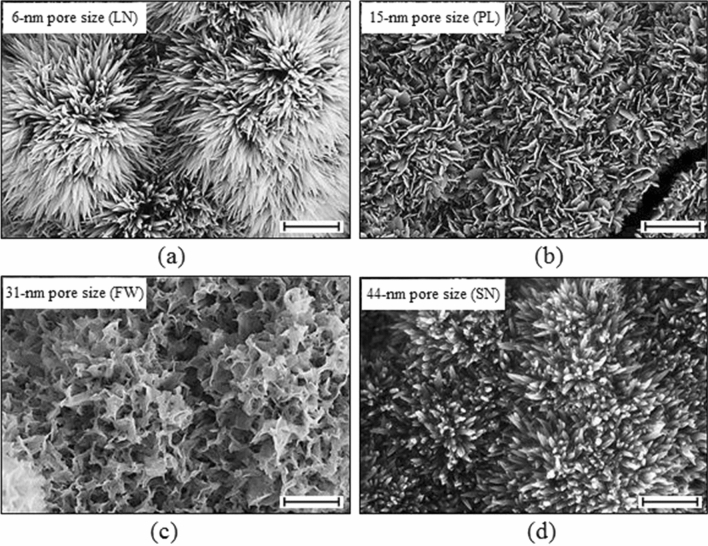
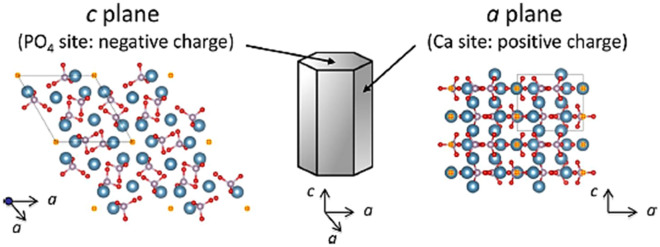
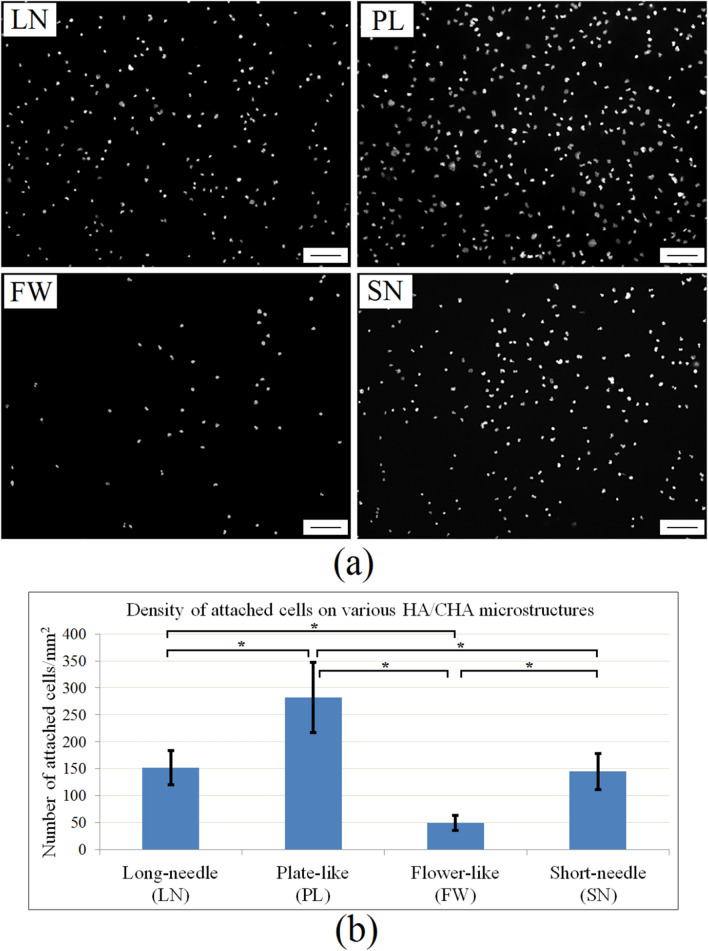
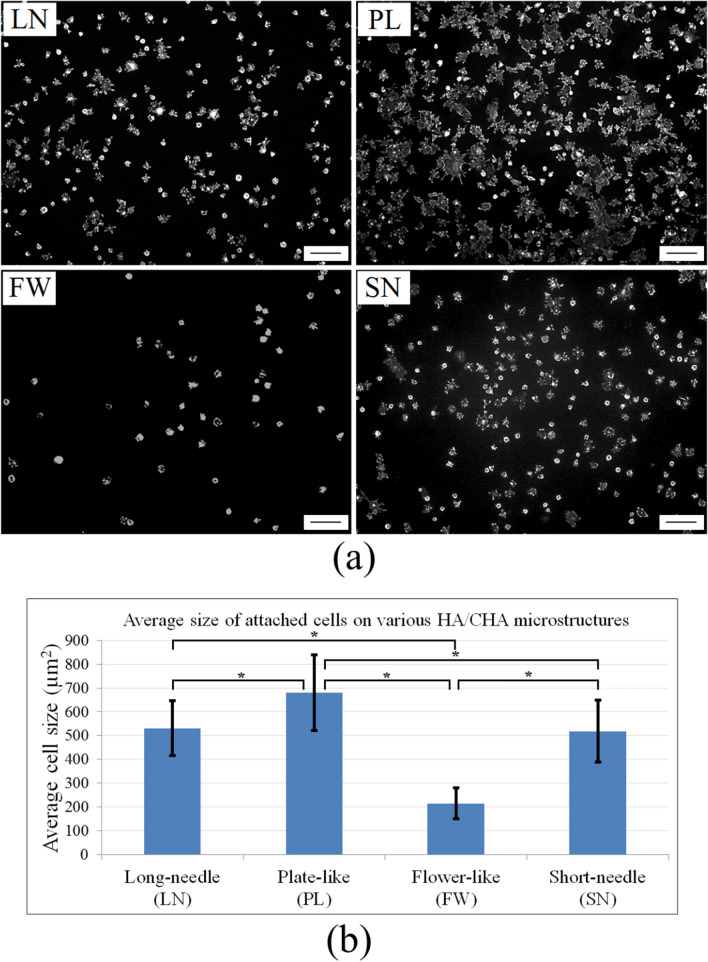
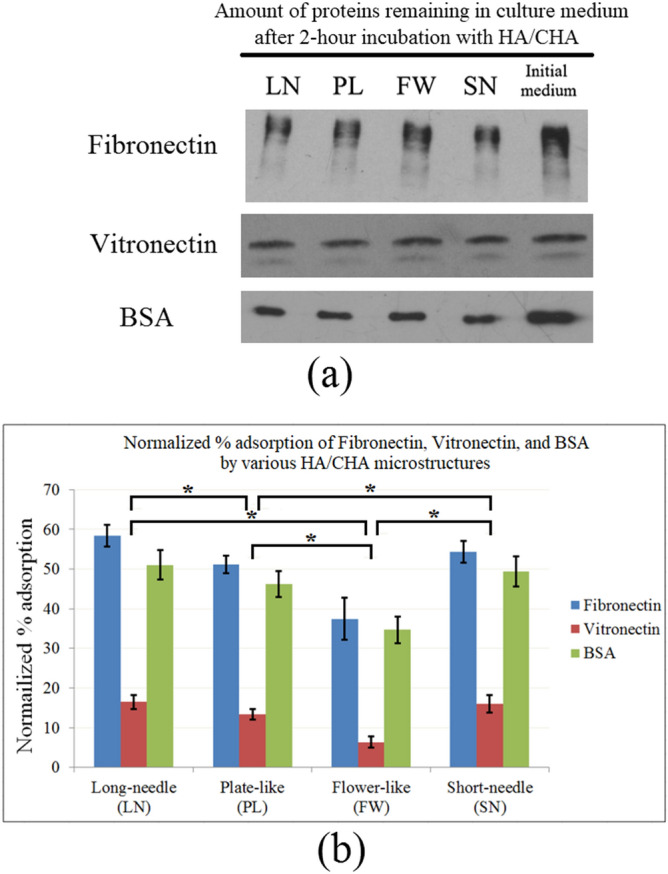
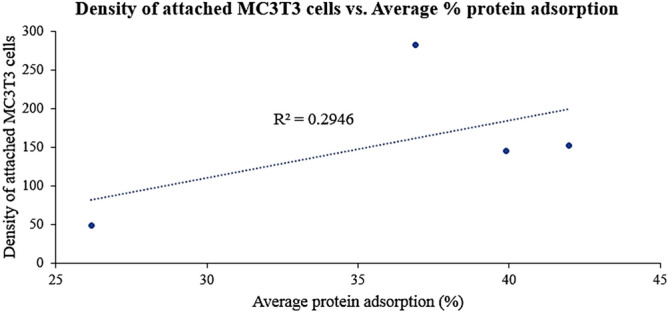
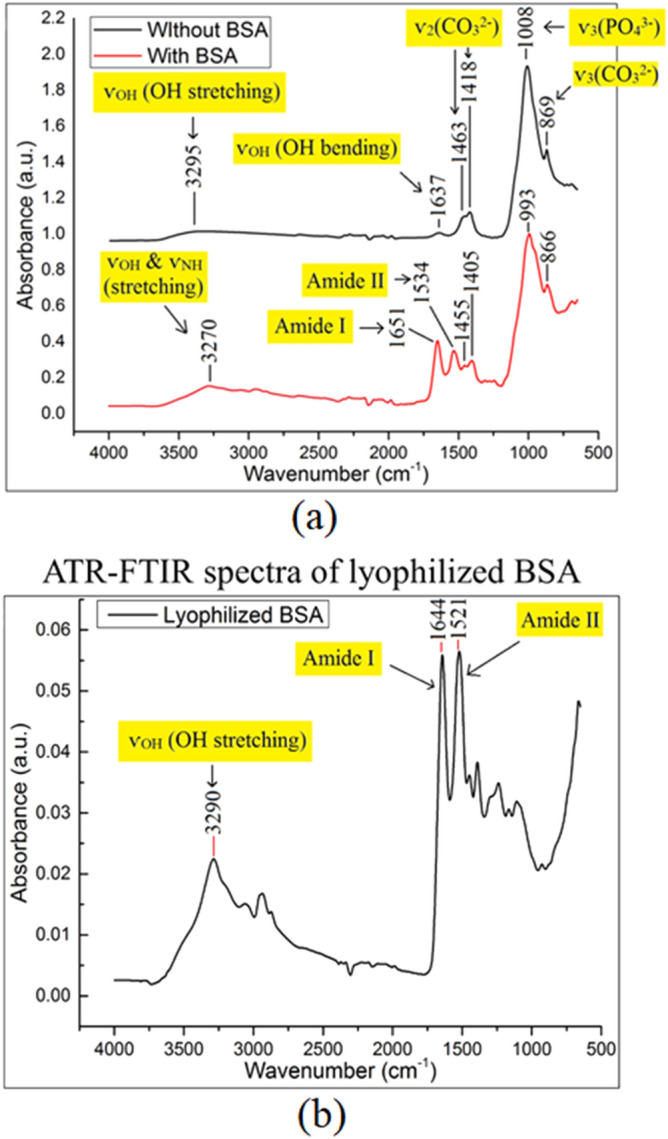
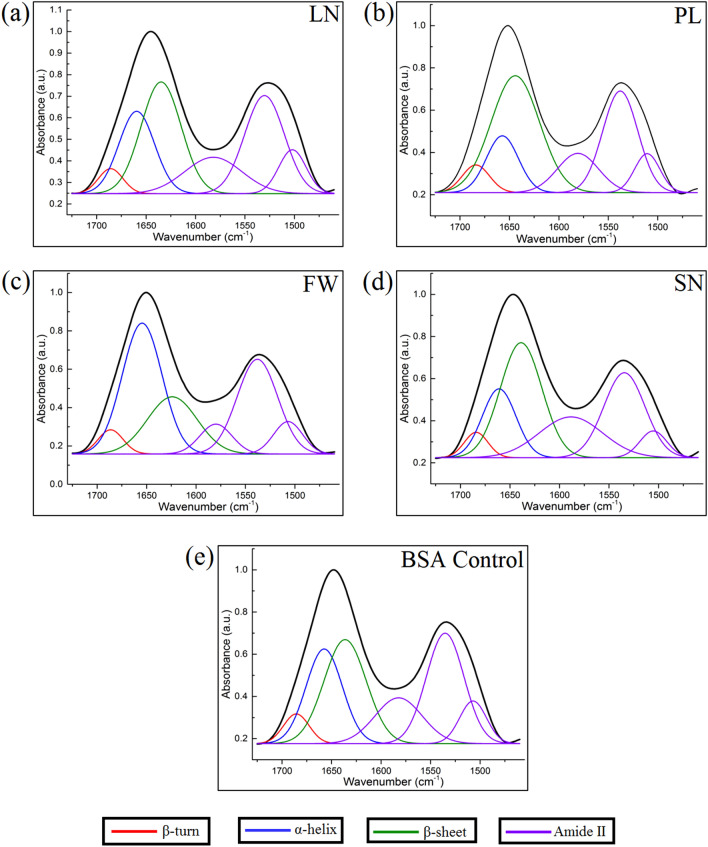
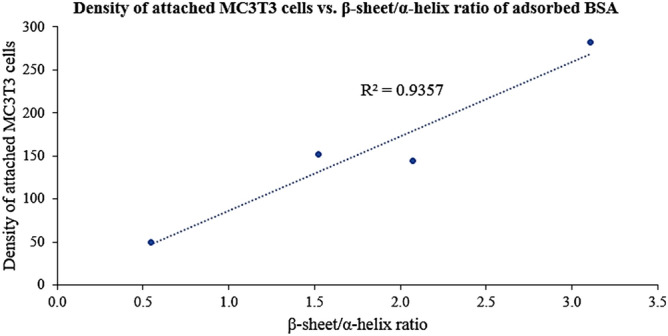
The nanostructure of engineered bioscaffolds has a profound impact on cell response, yet its understanding remains incomplete as cells interact with a highly complex interfacial layer rather than the material itself. For bioactive glass scaffolds, this layer comprises of silica gel, hydroxyapatite (HA)/carbonated hydroxyapatite (CHA), and absorbed proteins-all in varying micro/nano structure, composition, and concentration. Here, we examined the response of MC3T3-E1 pre-osteoblast cells to 30 mol% CaO-70 mol% SiO porous bioactive glass monoliths that differed only in nanopore size (6-44 nm) yet resulted in the formation of HA/CHA layers with significantly different microstructures. We report that cell response, as quantified by cell attachment and morphology, does not correlate with nanopore size, nor HA/CHO layer micro/nano morphology, or absorbed protein amount (bovine serum albumin, BSA), but with BSA's secondary conformation as indicated by its β-sheet/α-helix ratio. Our results suggest that the β-sheet structure in BSA interacts electrostatically with the HA/CHA interfacial layer and activates the RGD sequence of absorbed adhesion proteins, such as fibronectin and vitronectin, thus significantly enhancing the attachment of cells. These findings provide new insight into the interaction of cells with the scaffolds' interfacial layer, which is vital for the continued development of engineered tissue scaffolds.
工程生物支架的纳米结构对细胞反应有深远影响,但由于细胞与高度复杂的界面层相互作用,而不是与材料本身相互作用,因此对其的理解仍不完整。对于生物活性玻璃支架,该层由硅胶、羟基磷灰石 (HA)/碳酸化羟基磷灰石 (CHA) 和吸附蛋白组成 - 所有这些都具有不同的微/纳米结构、组成和浓度。在这里,我们研究了 MC3T3-E1 前成骨细胞对 30 mol% CaO-70 mol% SiO 多孔生物活性玻璃单体的反应,这些单体仅在纳米孔大小(6-44nm)上有所不同,但导致 HA/CHA 层的微观结构有很大差异。我们报告说,细胞反应,如细胞附着和形态的定量,与纳米孔大小、HA/CHO 层的微/纳米形态或吸附蛋白量(牛血清白蛋白,BSA)无关,而是与 BSA 的二级构象有关,如β-折叠/α-螺旋比。我们的结果表明,BSA 中的β-折叠结构与 HA/CHA 界面层静电相互作用,并激活吸附的粘附蛋白(如纤连蛋白和 vitronectin)中的 RGD 序列,从而显著增强细胞的附着。这些发现为细胞与支架界面层的相互作用提供了新的见解,这对于工程组织支架的持续发展至关重要。